
Best daily barrier creams for diaper rash prevention (2026)
The best daily barrier creams don’t just treat diaper rash — they help prevent it from starting. Pediatric dermatologists broadly recommend applying a diaper barrier cream at every change to create a protective shield between your baby’s skin and the moisture, friction, and acidity that cause rash. We reviewed the top daily barrier creams for spreadability, protection duration, ingredient safety, and ease of cleanup to find the ones worth using at every single change. A calm diaper change helps the cream go on cleanly, too — if cold wipes make your baby squirm and smear what you just applied, a wipe warmer keeps them still enough to protect the skin properly.
See our top pick on Amazon → $12.97
Our top 3 daily barrier creams at a glance
Short on time? These are the best daily barrier creams we recommend for every diaper change.
Why trust Pediatric Picks?
We evaluated daily barrier creams across five criteria: moisture barrier effectiveness (based on the barrier ingredient and its labeled concentration), spreadability and ease of application during fast diaper changes, ingredient safety (avoiding petroleum contamination concerns, fragrance, and known irritants) cross-referenced with the EWG Skin Deep database, ease of cleanup at the next change, and value per ounce for daily use.
We assessed each barrier cream against published pediatric safety standards (AAP, the FDA OTC skin-protectant monograph, and the EWG Skin Deep database), verified manufacturer specifications. We do not test products on children.
Best daily barrier creams: side-by-side comparison
| Pick | Product | Key strengths | Watch-outs | Price | Where to buy |
|---|---|---|---|---|---|
| Top Pick | 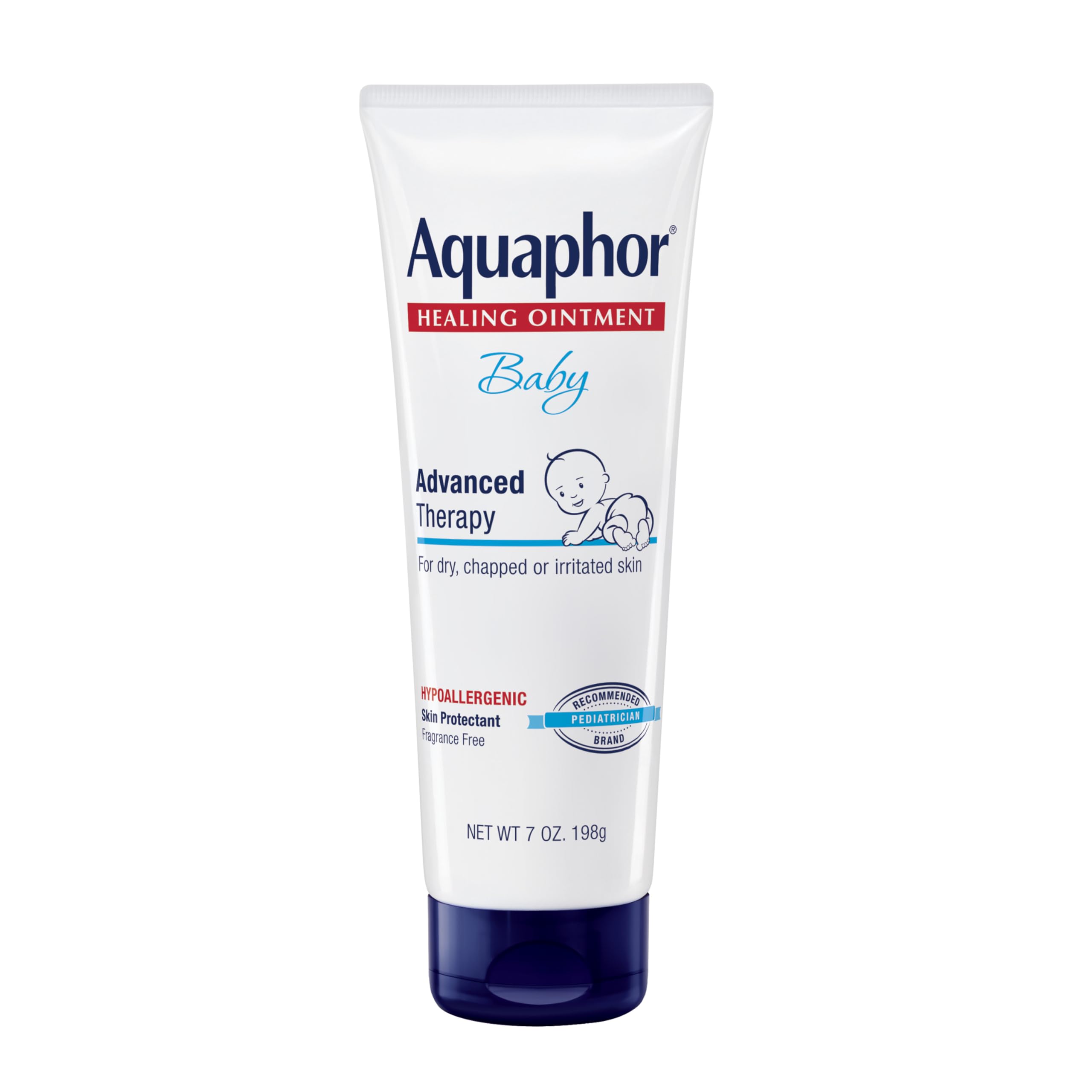 Aquaphor Baby Healing Ointment |
|
| $12.97 / 7oz tube | Check price $12.97 |
| Best Value |  Desitin Daily Defense |
|
| $15.98 / 16oz tube | Check price $15.98 |
| Strongest |  Desitin Maximum Strength |
|
| $7.97 / 4.8oz tube | Check price $7.97 |
Aquaphor Baby Healing Ointment
Check price on Amazon $12.97
Desitin Daily Defense
Check price on Amazon $15.98
Desitin Maximum Strength
Check price on Amazon $7.97
Aquaphor Baby Healing Ointment — full review
Aquaphor Baby Healing Ointment is the #1 pediatrician-recommended daily barrier cream for a reason: it does one thing extraordinarily well — it creates a breathable, semi-occlusive barrier that locks out moisture while allowing oxygen to flow to the skin. This is the fundamental difference between Aquaphor and zinc oxide pastes. Zinc creates a physical wall; Aquaphor creates a breathable shield that lets skin heal naturally underneath.
The formula is elegantly simple: 41% petrolatum as the active barrier, plus panthenol (vitamin B5) for skin repair, glycerin for moisturization, and bisabolol for soothing. It’s preservative-free and fragrance-free, which makes it a gentle choice for newborn skin. The texture is smooth and spreads in a single swipe — critical when you’re changing 10+ diapers daily and need a barrier cream that doesn’t slow you down. The American Academy of Pediatrics specifically recommends petrolatum-based ointments for daily prevention.
As a daily barrier cream, Aquaphor excels at prevention. Apply a thin layer at every change and you create a consistent moisture barrier that significantly reduces rash incidence. The caveat: because it contains no zinc oxide, Aquaphor won’t actively treat an existing rash. If redness appears, switch to a zinc-based cream (like Desitin below) until the rash clears, then return to Aquaphor for daily prevention.
Check price on Amazon → $12.97
Desitin Daily Defense — full review
Desitin Daily Defense is the most versatile daily barrier cream on the market because it bridges prevention and treatment. The 13% zinc oxide concentration is strong enough to actively treat mild redness while remaining gentle enough for daily use at every diaper change. This dual-action approach means you don’t need separate products for prevention and early treatment — Desitin Daily Defense handles both.
The formula also includes aloe barbadensis leaf extract, which may add mild soothing for irritated skin, though the zinc oxide is what does the real barrier work. The cream is also free of parabens, phthalates, fragrance, and dyes — meeting the same ingredient safety standards as premium natural brands at a fraction of the price.
At ~$1.00 per ounce for the 16oz tube, Desitin Daily Defense is among the best cost-per-ounce of any daily barrier cream we recommend. It goes on smoothly, wipes off easily at the next change, and provides reliable protection throughout the day. The only downside: the white zinc residue can transfer to dark clothing and cloth diapers. For families using disposable diapers, this is a non-issue. Desitin Daily Defense is the daily barrier cream we recommend for most families.
Check price on Amazon → $15.98
Desitin Maximum Strength — full review
Desitin Maximum Strength is the nuclear option among daily barrier creams — and it’s the one you reach for when prevention has failed and you need clinical-grade treatment. At 40% zinc oxide, this is the strongest concentration available without a prescription. Zinc oxide at this maximum OTC concentration is a long-established skin protectant used to treat active diaper rash.
The thick, paste-like consistency is deliberate: it stays in place through overnight wear, heavy wetting, and active movement. Where lighter daily barrier creams may wash away, Desitin Maximum Strength is designed to form a thick physical barrier that helps repel moisture through extended overnight wear. This makes it the ideal choice for bedtime application when your baby will be in the same diaper for an extended stretch.
The trade-off for maximum protection is application difficulty. This paste is significantly thicker than Aquaphor or Desitin Daily Defense — it requires more effort to spread evenly and more effort to remove at the next change. Many parents keep coconut oil or warm washcloths on hand specifically for removing maximum-strength zinc pastes. For daily routine use, the lighter options above are more practical. Reserve Desitin Maximum Strength for overnight protection, active rashes, and any time extended diaper exposure is expected. If a rash is severe, blistering, bleeding, or hasn’t improved after a few days of treatment, see your pediatrician. A rash that’s bright red with a sharply defined border or small “satellite” spots beyond the main rash can be a yeast (candida) infection rather than simple irritation — see our guide to antifungal diaper rash creams for what that looks like and how it’s treated differently.
Check price on Amazon → $7.97
How to choose the right daily barrier cream
Not all daily barrier creams serve the same purpose. Here’s how to match the right product to your baby’s needs:
Prevention vs. treatment
For daily prevention on healthy skin, a petrolatum-based ointment like Aquaphor is ideal — it blocks moisture without overkill. For daily use when mild redness is common, a low-concentration zinc oxide cream (10–15%) like Desitin Daily Defense provides ongoing protection plus gentle treatment. Save high-concentration zinc pastes (40%) for active rashes and overnight use.
Spreadability matters for daily use
A daily barrier cream needs to go on fast. If it takes 30 seconds to spread, you’ll skip it when you’re rushing — and consistency is what makes daily barrier creams effective. Choose creamy, smooth formulas for routine changes and reserve thick pastes for targeted treatment.
Zinc oxide concentration guide
0% (petrolatum only): pure moisture barrier for prevention. 10–15%: daily prevention + mild treatment. 20–40%: moderate to severe rash treatment. The higher the zinc concentration, the thicker the cream, the harder to apply, but the stronger the protection. Most babies only need 0–15% for daily use.
Ingredients to avoid
Skip daily barrier creams containing fragrance (irritant), talc (inhalation risk), boric acid (toxic if absorbed), and methylisothiazolinone (known allergen). Also be cautious of nanomaterial zinc oxide — non-nano zinc oxide is considered safer for babies’ developing skin.
Frequently asked questions about daily barrier creams
Yes — this is the #1 recommendation from pediatric dermatologists. The best daily barrier creams work through consistent use, creating an unbroken shield between skin and irritants. Think of it like sunscreen: occasional use doesn’t provide reliable protection. Apply a thin layer at every change, especially at bedtime when exposure time is longest.
No — and trying to scrub it off can actually irritate the skin further. For light daily barrier creams like Aquaphor, simply wipe the soiled area and reapply. For thicker zinc pastes, remove only the dirty outer layer and leave the clean base layer in place. This preserves the protective barrier and reduces friction on already-sensitive skin.
Petrolatum-based creams like Aquaphor can build up on cloth diaper fibers and reduce absorbency over time. Zinc oxide pastes are even harder to wash out. If you use cloth diapers, either use a disposable liner between the cream and the diaper, or choose a cloth-diaper-safe barrier cream specifically formulated to wash out cleanly. Many cloth diaper families use coconut oil as a natural alternative daily barrier.
The terms overlap, but generally: daily barrier creams are preventive products designed for use at every change on healthy skin (low zinc or petrolatum-based). Diaper rash creams are treatment products with higher zinc oxide concentrations (20–40%) designed to heal active rash. The best daily barrier creams like Desitin Daily Defense bridge both categories with moderate zinc concentrations that prevent and treat simultaneously.
The best diaper rash prevention is consistent, not complicated: apply a thin barrier at every change, pat the skin fully dry first, and allow a few diaper-free minutes when you can. As an RN, I tell parents a protective layer at each change stops the moisture and friction that trigger rash before redness ever appears.
Our #1 daily barrier cream: Aquaphor Baby
Breathable protection, effortless application, preservative-free formula — the daily barrier cream pediatricians recommend most for preventing diaper rash before it starts.
Check price on Amazon → $12.97
Prices and availability: Prices shown reflect typical Amazon pricing as of April 2026 and may vary. Click any product link for the current price.
Medical disclaimer: Content is for informational and educational purposes only. It does not constitute medical advice or replace professional pediatric consultations.
- Agrawal R. Diaper Dermatitis (Diaper Rash). Medscape Drugs & Diseases (eMedicine); updated Jun 30, 2025. Irritant diaper dermatitis from overhydration, maceration and prolonged urine/feces contact; Candida commonly complicates the rash after 48–72 hours and with antibiotic use.
- Dib R. Diaper Rash. Medscape Drugs & Diseases (eMedicine); updated Jul 31, 2024. Classifies diaper-area rashes — irritant contact dermatitis, intertrigo, candidal diaper dermatitis and others — and their overlap in the diaper region.
- American Academy of Pediatrics. Common Diaper Rashes & Treatments. HealthyChildren.org; last updated Dec 18, 2024. Advises coating the diaper area with a thick layer of a zinc oxide or petrolatum barrier product at changes to prevent and treat diaper dermatitis, and prefers fragrance-free products.