
Water wipes vs. standard wipes: which are best for baby? (2026)
When it comes to water wipes vs standard wipes, the debate centers on ingredient purity versus cleaning power and cost. Water-based wipes use 99%+ purified water with minimal additives, while standard wipes include preservatives, surfactants, and sometimes fragrance for stronger cleaning action. We compared the leading options side-by-side — ingredient lists, preservative and surfactant profiles, third-party certifications, and the dermatology guidance on infant skin barrier care — to help you decide which type your family actually needs. And whichever type you choose, if cold wipes make your baby flinch during winter changes, a wipe warmer keeps them at body temperature so the wipe itself never startles a sleepy newborn.
Our top 3 baby wipes across the spectrum
From purest water wipes to best-performing standard wipes — here’s our pick at each price tier.
Why trust Pediatric Picks?
We evaluated water wipes vs standard wipes across six criteria: ingredient safety using EWG Skin Deep hazard ratings for each component, cleaning-agent content — which surfactants each formula uses and how much of the formula they account for — third-party certifications such as the National Eczema Association Seal of Acceptance and Allergy UK approval, the fiber each wipe is made from, the closure design that determines whether the last wipe in a pack is as moist as the first, and cost per wipe in bulk. We also consulted the American Academy of Dermatology recommendations for infant skin care products.
We paid particular attention to the ingredients most often implicated in redness or irritation on infant skin — fragrance, methylisothiazolinone, phenoxyethanol, benzyl alcohol and propylene glycol — and to the pack closure, because a rigid flip-top lid holds its seal for the life of the pack where an adhesive sticker loses tack.
Water wipes vs standard wipes: side-by-side comparison
| Pick | Product | Key strengths | Watch-outs | Price | Where to buy |
|---|---|---|---|---|---|
| Purest |  WaterWipes Sensitive+ |
|
| $44.97 / 720ct | Check price $44.97 |
| Best Value |  Pampers Aqua Pure |
|
| $44.97 / 896ct | Check price $44.97 |
| Budget | 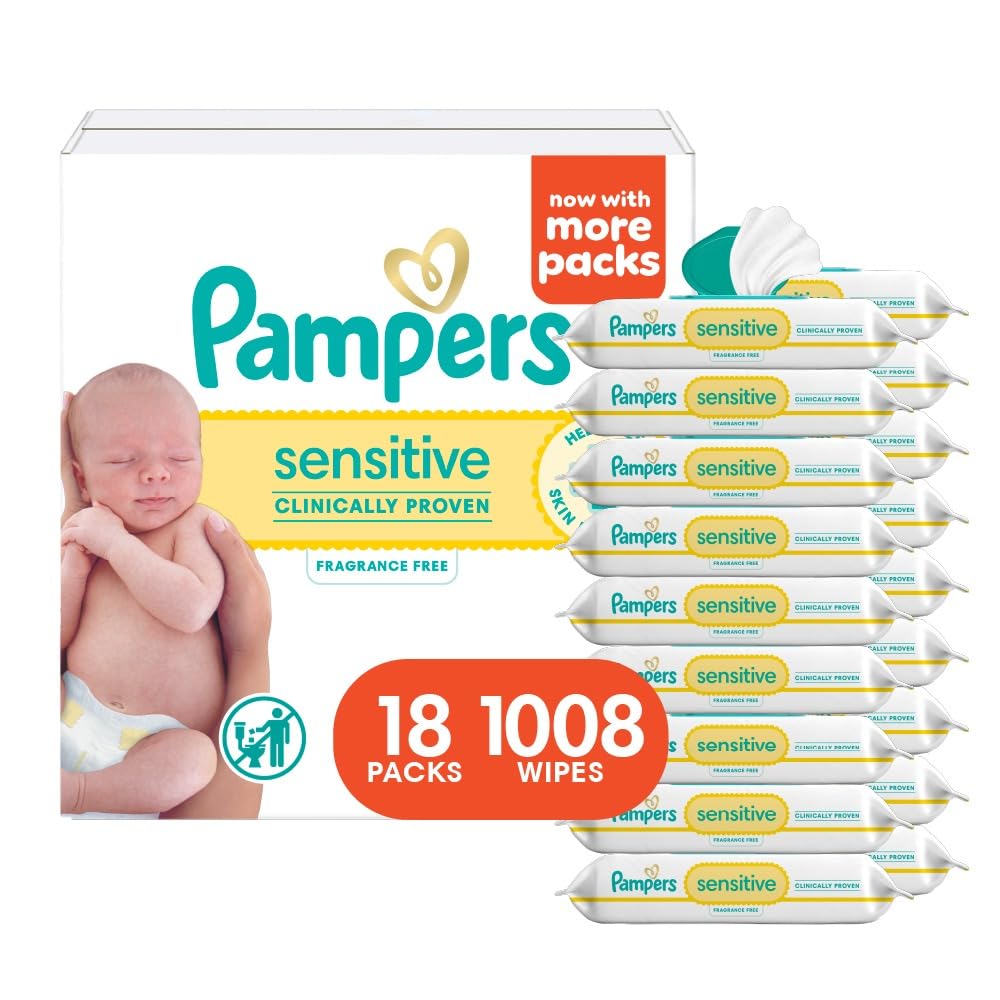 Pampers Sensitive |
|
| $29.97 / 1008ct | Check price $29.97 |
WaterWipes Sensitive+
Check price on Amazon $44.97
Pampers Aqua Pure
Check price on Amazon $44.97
Pampers Sensitive
Check price on Amazon $29.97
WaterWipes Sensitive+ — full review
WaterWipes set the standard for water wipes with the simplest formula on the market: 99.9% purified water and 0.1% fruit and berry extract. That’s it — two ingredients. No preservatives, no surfactants, no fragrance, no phenoxyethanol. For babies with diagnosed eczema, contact dermatitis, or any skin condition where even mild cleansers trigger flare-ups, WaterWipes are widely recommended for very sensitive skin.
The textured surface compensates for the lack of cleaning agents by providing mechanical cleaning power. With no surfactants in the formula, that texture is the only cleaning mechanism, so stubborn dried-on messes typically take two or three wipes where a surfactant-containing wipe needs one. The trade-off is worthwhile when comparing water wipes vs standard wipes for sensitive skin: zero chemical irritation versus slightly more wipe usage. The American Academy of Pediatrics notes that minimizing ingredient exposure on newborn skin is a reasonable precaution during the first weeks.
The packaging is WaterWipes’ weakness. The thin adhesive closure doesn’t always reseal tightly, and an imperfect seal is what produces moisture inconsistency inside a pack — the wipes nearest the opening dry out while the ones further down stay soaked. Once opened, use the pack within a few weeks for best results. Despite this, WaterWipes hold the National Eczema Association Seal of Acceptance and the brand reports its wipes are used in neonatal units across the UK and Ireland.
Check price on Amazon → $44.97
Pampers Aqua Pure — full review
Pampers Aqua Pure splits the difference in the water wipes vs standard wipes debate. The formula is 99% purified water with just 1% gentle cleansers and preservatives — enough to provide real cleaning power while staying far gentler than standard wipes. The water goes through a proprietary five-step purification process that monitors ions and microbes, resulting in a medical-grade base.
The premium cotton construction is Aqua Pure’s differentiator: Pampers builds this wipe on a cotton sheet rather than the synthetic nonwoven used in most baby wipes, which is what accounts for the softer hand-feel. The flip-top packaging is also a significant advantage: a rigid snap lid keeps its seal for the life of the pack, while the adhesive-sticker closure WaterWipes uses loses tack over time and lets the remaining wipes dry out.
The caveat: Aqua Pure wipes are very wet — wet enough that the skin needs a few extra seconds to air-dry before the new diaper goes on. The ingredient list also includes sodium benzoate (a preservative rated low-hazard by EWG) and PEG-40 hydrogenated castor oil (an emulsifier rated low-hazard). These are low-concern ingredients for most babies, but if your child has confirmed contact sensitivities, pure water wipes like WaterWipes remain the safer choice.
Check price on Amazon → $44.97
Pampers Sensitive — full review
Pampers Sensitive represents the best of standard wipes — the category that water wipes are compared against. These are, by Pampers’ count, America’s #1 selling baby wipe — and for good reason: they clean effectively in a single pass, they’re fragrance-free and dermatologist-tested, and at roughly $0.03 per wipe, they’re half the cost of water wipes. For families going through 8–12 diaper changes daily, that cost difference adds up to hundreds of dollars per year.
The cleaning performance is where standard wipes clearly win against water wipes. Pampers Sensitive contains surfactants (PEG-40 hydrogenated castor oil) and preservatives (phenoxyethanol, benzyl alcohol) that help dissolve and lift messes more effectively than pure water. That is where the usage math diverges: one surfactant-containing wipe generally does the work of two to three pure-water wipes. For parents who prioritize efficiency during diaper changes — especially with a squirming toddler — standard wipes are objectively faster.
The ingredient trade-off matters, though. Phenoxyethanol and benzyl alcohol carry moderate hazard ratings on the EWG database. These are considered safe at the concentrations used in baby wipes, but they are the ingredients most likely to trigger reactions in babies with ultra-sensitive skin. If your baby has never had a wipe-related rash on standard wipes, there’s no clinical reason to switch to water wipes. If they have, that’s your signal to move up the purity ladder.
Check price on Amazon → $29.97
How to choose between water wipes and standard wipes
The water wipes vs standard wipes decision comes down to your baby’s skin and your priorities:
Choose water wipes if…
Your baby has diagnosed eczema, contact dermatitis, or any confirmed skin sensitivity. Also choose water wipes for newborns in the first 4–6 weeks when skin barrier function is still developing, or if your baby has experienced redness or irritation from standard wipes.
Choose standard wipes if…
Your baby has no history of wipe-related irritation and you want the best cleaning power at the lowest cost. Standard wipes are also better for toddler messes (hands, faces, surfaces) where cleaning strength matters more than ingredient purity.
The hybrid approach
Using water wipes for the diaper area (where skin is most sensitive and exposure time is longest) and standard wipes for hands, faces, and general cleanup is a reasonable middle ground many parents land on. This balances skin protection with practical cleaning power and keeps costs manageable.
Ingredient red flags to avoid in any wipe
Regardless of whether you choose water wipes or standard wipes, avoid wipes containing fragrance (the #1 irritant), alcohol (causes drying), methylisothiazolinone or MI (known allergen pulled from many products), and propylene glycol (can cause contact dermatitis in sensitive babies).
Frequently asked questions
Yes — many parents choose water wipes for the first several weeks, when a newborn’s skin barrier is still maturing and even mild preservatives can penetrate more readily. The American Academy of Pediatrics notes that minimizing ingredient exposure on newborn skin is a reasonable precaution during this period. After the skin barrier strengthens, you can transition to standard wipes if your baby shows no sensitivity.
It comes down to the ingredient list. Water wipes are about 99% purified water with one or two additives; standard baby wipes add surfactants and preservatives — and sometimes fragrance — for stronger cleaning. Water wipes are gentler on sensitive skin, while standard baby wipes lift stubborn messes in fewer passes.
Not quite. When comparing water wipes vs standard wipes for cleaning power, standard wipes contain surfactants that dissolve and lift messes more effectively. You’ll typically use 2–3 water wipes per change versus 1–2 standard wipes. For routine wet diapers, water wipes work perfectly fine. For messier changes, you may need a few more wipes to get fully clean.
Pure water wipes like WaterWipes use 99.9% water plus a single fruit extract — just two ingredients — so they edge out Pampers Aqua Pure on purity. Aqua Pure is 99% water with 1% gentle cleansers, which cleans a little better and seals tighter thanks to its flip-top lid. For eczema-prone skin, the shorter WaterWipes list wins.
Because water wipes contain minimal or no preservatives, they have a shorter shelf life and are more susceptible to microbial contamination once opened. WaterWipes has addressed this with improved packaging, but it’s still important to seal the pack tightly after each use and finish an opened pack within 4 weeks. Store in a cool, dry place — not in a hot car or direct sunlight.
The Honest Company’s wipes are plant-based and roughly 99% water, but they carry a few botanical ingredients and a mild preservative that pure water wipes like WaterWipes leave out. For a baby with confirmed sensitivities, the shorter WaterWipes formula is the safer bet; for everyday hand and face cleanup, Honest wipes are a soft, thick option.
If your baby has sensitive skin: absolutely. The extra $0.03–$0.04 per wipe may help prevent irritation that can cost far more in barrier cream and pediatrician visits. If your baby does fine on standard wipes with no irritation, there’s no clinical benefit to switching. The water wipes vs standard wipes choice should be driven by your baby’s skin response, not marketing claims about purity.
Our #1 pick for sensitive skin: WaterWipes
Two ingredients. Free of the common irritants found in many wipes. A remarkably pure clean for your baby’s most delicate skin.
Check price on Amazon → $44.97
Prices and availability: Prices shown reflect typical Amazon pricing as of April 2026 and may vary. Click any product link for the current price.
Medical disclaimer: Content is for informational and educational purposes only. It does not constitute medical advice or replace professional pediatric consultations.
- Zabawski EJ. Irritant Contact Dermatitis. Medscape Drugs & Diseases (eMedicine); updated Aug 11, 2025. Nonallergic skin inflammation caused by direct chemical damage to the epidermis, including cumulative irritation from soaps and repeated exposure.
- Silverberg NB. Pediatric Contact Dermatitis. Medscape Drugs & Diseases (eMedicine); updated Mar 19, 2026. Contact dermatitis affects at least a quarter of children; irritant injury damages the protective upper epidermis, and skin protection with emollients is advised.
- Helm TN. Allergic Contact Dermatitis. Medscape Drugs & Diseases (eMedicine); updated Jun 24, 2026. Delayed-type (type IV) hypersensitivity to a specific contact allergen such as fragrance or nickel, producing erythema, edema and vesiculation.