
Steel vs. plastic diaper pails: odor trapping compared (2026)
The steel vs plastic diaper pails debate comes down to one question: which material actually keeps the stink contained? Plastic is porous and absorbs odors over time, while steel is non-porous and theoretically superior. But real-world owner experience reveals it’s more nuanced than the material alone — seal design, lid mechanisms, and bag systems matter just as much. We reviewed the top steel and plastic diaper pails head-to-head to settle the debate and help you choose the right nursery diaper pail.
Our top diaper pail in each category
Best steel pail, best hands-free steel pail, and best budget plastic pail — here are our picks.
Do you actually need a diaper pail?
Short answer: no one strictly needs a diaper pail — a lidded trash can emptied the same day handles newborn wet diapers fine. Where a dedicated pail earns its keep is the poop diaper, the nursery that isn’t steps from an outdoor bin, and the two-plus years of daily changes ahead. Here’s who genuinely benefits and who can skip the purchase.
Why trust Pediatric Picks?
We verified all three picks have no open recalls on the CPSC recall database.
We also reviewed verified owner and parent feedback across each product to identify the most common complaints about steel vs plastic diaper pails over long-term use.
Steel vs plastic diaper pails: side-by-side comparison
| Pick | Product | Key strengths | Watch-outs | Price | Where to buy |
|---|---|---|---|---|---|
| Best Steel | 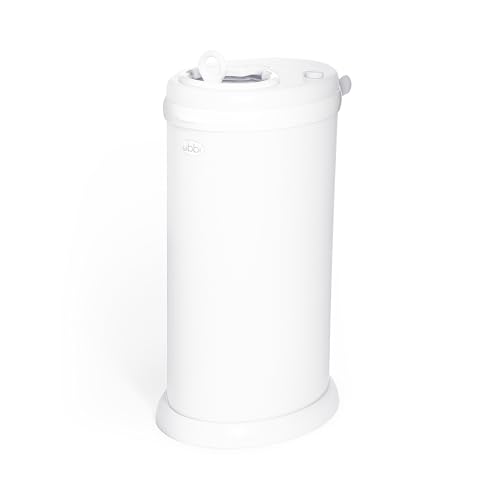 Ubbi Steel Diaper Pail |
|
| ~$69.99 | Check price |
| Best Hands-Free |  Diaper Genie Platinum |
|
| ~$75 | Check price |
| Budget Plastic |  Diaper Genie Complete |
|
| ~$54.99 | Check price |
Ubbi Steel Diaper Pail
Diaper Genie Platinum
Diaper Genie Complete
Ubbi Steel Diaper Pail — full review
The Ubbi Steel Diaper Pail has earned its place as one of the most popular steel diaper pails among parents. The powder-coated steel body is genuinely non-porous — unlike plastic, which has microscopic surface openings that trap odor molecules over time, steel presents a smooth, non-porous surface that can be wiped clean. In long-term owner reviews, Ubbi pails still in service at 18 months are consistently described as odor-neutral after a wipe-down, while plastic pails of the same age are repeatedly reported to hold a permanent smell.
The rubber gasket seals around the sliding lid are what make the Ubbi’s odor containment work. Steel alone isn’t enough — it’s the combination of non-porous material and airtight seals that creates an effective odor barrier. When comparing steel vs plastic diaper pails, this dual approach is what separates the Ubbi from pails that are just one or the other. The sliding lid design also minimizes the air exchange when depositing a diaper, unlike flip-top lids that release a burst of contained odor.
The biggest advantage for budget-conscious families: Ubbi accepts any standard tall kitchen trash bag. Over 2.5 years of diapering, the savings compared to proprietary refill systems add up to $200–$400. A Glad OdorShield bag paired with the steel pail creates an excellent odor containment system at a fraction of the cost of branded refills. The only drawback is the lack of a foot pedal — you need a free hand to slide the lid open — and removing a full bag through the top requires some maneuvering.
Diaper Genie Platinum — full review
The Diaper Genie Platinum represents Diaper Genie’s answer to the steel vs plastic diaper pails debate — and it combines the best of both worlds. The outer body is stainless steel for durability and odor resistance, while the internal mechanism retains the proven foot-pedal and odor-locking clamp system that made Diaper Genie famous. At 27 inches tall, it’s the most ergonomic option — you don’t need to bend down to deposit diapers.
The foot pedal is genuinely useful. When you’re holding a squirming baby in one arm and a dirty diaper in the other, being able to step on a pedal to open the pail is a real quality-of-life improvement. The soft-closing lid is another thoughtful detail — no slamming during 2 AM changes. The odor-locking clamps inside seal each diaper deposit, creating an additional barrier that the Ubbi’s simple opening doesn’t offer.
The trade-off is cost — both upfront and ongoing. The Platinum is roughly $5 more than the Ubbi, and it requires proprietary Easy Roll refill bags that add $40–$60 per year. The internal components are still plastic, so while the exterior resists odor absorption, the interior mechanism may develop odors over time. For parents who prioritize hands-free convenience and don’t mind the refill cost, the Diaper Genie Platinum is the premium choice among steel vs plastic diaper pails.
Diaper Genie Complete — full review
The Diaper Genie Complete is the plastic diaper pail against which all others are measured. It’s the #1 selling diaper pail brand for a reason: the double air-tight clamp system genuinely works well at deposit time, the foot pedal is smooth and reliable, and the activated carbon filter adds a third layer of odor defense. At roughly $55, it’s the most affordable quality option and the pail most parents start with.
Where plastic falls short in the steel vs plastic diaper pails comparison is long-term performance. Plastic is porous at a microscopic level, and over 12–18 months of daily use, odor molecules embed into the material. Owner reviews we read consistently report that even after thorough cleaning with baking soda, vinegar, or bleach, an older plastic pail retains a permanent smell. This is the fundamental limitation that steel pails solve.
The durability concern is real. We found consistent reports of Diaper Genie plastic components cracking, pedal mechanisms breaking, and clamp systems failing after 18–24 months. If you plan to have multiple children, you’ll likely need to replace the plastic pail between babies — whereas the Ubbi’s steel construction survives the full diapering journey of multiple kids. For a single-child family on a budget, the Diaper Genie Complete offers great short-term performance at an unbeatable price. Frequent disposal and sealed containment matter more than the pail material itself— from an infection-control standpoint, bacteria doesn’t care whether the walls are steel or plastic.
Steel vs plastic diaper pails: the real differences
Here’s what actually matters when choosing between steel and plastic diaper pails:
Odor absorption over time
Plastic is microscopically porous and absorbs odor molecules into its surface permanently. After 12–18 months, even cleaned plastic smells. Steel is non-porous and can be wiped odor-free indefinitely. This is the #1 reason to choose steel if you plan to diaper for more than one year or across multiple children.
Seal design matters more than material
A steel pail with a bad seal will smell worse than a plastic pail with a great seal. The Ubbi’s rubber gaskets and the Diaper Genie’s odor-locking clamps are what actually contain odors at deposit time. When comparing steel vs plastic diaper pails, always evaluate the seal mechanism alongside the material.
Total cost of ownership
Steel pails like the Ubbi cost more upfront ($70 vs $55) but use standard trash bags ($0.10/bag). Plastic pails like Diaper Genie cost less initially but require proprietary refills ($5–$8/refill). Over 2.5 years: Ubbi total cost is roughly $120, Diaper Genie total cost is roughly $180–$250. Steel wins on long-term value.
Durability and multi-child use
Steel diaper pails last through multiple children without degradation. Plastic pails commonly crack, break, or develop permanent odors within 18–24 months. If you’re planning more than one child, a steel pail is the smarter investment. One Ubbi replaces two or three plastic pails over the same period.
Diaper Genie vs. Ubbi: which should you actually buy?
This is the matchup most nurseries come down to, and the honest answer is that the two brands solve odor in different ways. Here’s how I’d decide between them.
1. Choose the Ubbi if you hate the idea of buying refills
The Ubbi Steel takes any standard tall kitchen bag, so your only ongoing cost is the trash bags you’d buy anyway — roughly $200–$400 less than a proprietary system over 2.5 years. The trade-off is no foot pedal, so you need a free hand to slide the lid open.
2. Choose a Diaper Genie if the foot pedal matters
When you’re holding a squirming baby in one arm, stepping on a pedal to open the pail is a genuine quality-of-life win. Both the Genie Platinum and the cheaper Genie Complete give you that hands-free open plus double odor-locking clamps at deposit time.
3. For long-term odor steel wins; at the deposit moment it’s a tie
With the lid shut, both contain smell about equally. The gap shows up around 12–18 months: the Genie’s plastic interior slowly takes on a permanent baseline odor, while the Ubbi’s steel body wipes back to neutral. If you’re only diapering one child for a year or so, that difference may never bother you.
4. My bottom line
One child on a budget: Diaper Genie Complete. Hands-free convenience with a steel exterior: Genie Platinum. Lowest lifetime cost and the pail that outlasts multiple kids: Ubbi Steel. There’s no wrong answer here — just different priorities.
Quick answer: The Ubbi is the better long-term, lowest-refill-cost pick; the Diaper Genie is better if you want a foot pedal and the lowest upfront price. Steel resists odor over years, plastic saves money today.
How to dispose of diapers without a diaper pail
If you’ve decided to skip the pail — or you’re traveling, staying with family, or between pails — here’s how to keep dirty diapers contained without one.
1. Knot the diaper into itself first
Roll the used diaper inward, wrap the tabs tightly around the bundle, and press the seam down. This one free step traps most of the odor and stops leaks — it does more for smell than any container you put it in.
2. Individually bag the poop diapers
Sealing each soiled diaper in a scented disposal sack (or a reused bread or produce bag) beats a pail for smell control, because the odor never reaches the room air. Tie it off and drop it in your regular lidded kitchen trash.
3. Shake solid stool into the toilet
Once your baby is on solids, empty formed stool into the toilet before you toss the diaper. It cuts both the odor and the bacterial load in your trash, and it’s technically what disposable-diaper packaging instructs.
4. Take the trash out on a schedule
Without a pail, your trash-can lid is the only seal, so empty daily — twice a day in summer. As a critical-care nurse I’m blunt about this: a warm bag of diapers is a bacterial incubator, and a same-day-out habit matters more than the container it sits in.
Frequently asked questions
In the long term, yes. Steel doesn’t absorb odor molecules like plastic does, so a steel pail stays odor-neutral after cleaning even after years of use. However, at any given moment with the lid sealed, both steel and plastic diaper pails contain odors similarly well — the difference is that plastic develops a permanent baseline smell over 12+ months that steel doesn’t. When evaluating steel vs plastic diaper pails, the advantage is cumulative over time.
Technically yes, but it requires a workaround. Some parents tie a knot in a standard kitchen bag and thread it through the clamp mechanism. It’s fiddly but functional. The Ubbi is specifically designed for standard bags with a built-in inner ring that holds them securely — no hacking required. If avoiding proprietary refill costs is a priority, the Ubbi is the simpler solution among steel vs plastic diaper pails.
Regardless of whether you choose steel or plastic: empty the pail every 2–3 days (daily in summer), sprinkle baking soda in the bottom of the bag, use odor-absorbing trash bags like Glad OdorShield, clean the pail interior monthly with a baking soda paste, and dry in sunlight periodically (UV kills odor-causing bacteria). An Arm and Hammer charcoal deodorizer taped inside the lid is a popular parent hack for extra odor control.
The Ubbi Steel is the best choice for cloth diapers because it accepts any liner, including Ubbi’s dedicated cloth diaper pail liners. These washable liners let you collect soiled cloth diapers, then dump the entire liner contents into the washing machine. Proprietary bag systems like Diaper Genie are not compatible with cloth diapering routines since you need to retrieve the diapers for washing, not dispose of them.
Powder-coated and stainless steel pails like the Ubbi are built for a wet, acidic nursery environment, so rust is rare with normal use — the coating is the real barrier. What you’ll actually see over years is minor surface scratching on the lid from bags and buckles, not corrosion. Keep the interior dry between bag changes and wipe up spills; if the coating ever chips down to bare metal, that spot can eventually corrode, so touch it up or keep it dry. This resistance is exactly why steel outlasts plastic across multiple children.
Right next to wherever you actually change diapers — usually beside the nursery changing table — so a soiled diaper drops straight into the seal instead of being carried through the house. Keep it off to the side and out of a crawling baby’s reach, because the childproof lock on pails like the Ubbi only helps if the pail isn’t an inviting climbing target. Avoid direct sun and hot closets, which speed up odor. If you change diapers on two floors, one pail upstairs plus a step-can or scented sacks downstairs is usually cheaper than buying two full pails.
Yes — but change the routine. Solid-food stool is far more odorous and carries a higher bacterial load than breastmilk or formula stool, so a good seal matters more, not less. The key addition is shaking formed stool into the toilet before the diaper goes in the pail — standard instructions printed on most diaper packaging, and a habit that meaningfully cuts the bacterial load sitting in your pail. Pair that with emptying the pail more often — daily, or twice daily in summer — and a steel pail’s non-absorbent surface becomes even more valuable, because solids-stage odor is exactly what sets permanently into plastic.
Our #1 diaper pail: Ubbi Steel
Non-porous steel, rubber gasket seals, standard trash bag compatibility, and 15+ colors — the diaper pail that outlasts the diaper years.
Prices and availability: Prices shown reflect typical Amazon pricing as of April 2026 and may vary. Click any product link for the current price.
Medical disclaimer: Content is for informational and educational purposes only. It does not constitute medical advice or replace professional pediatric consultations.