
Best Overnight Diapers for Heavy Wetters (RN-Reviewed)
Your baby sleeps 10-14 hours a day — and a saturated diaper at 3 AM means everyone’s night is ruined. Finding the best overnight diapers for your heavy wetter isn’t just about comfort — it’s about protecting their skin barrier during the longest stretch of wear. We reviewed the top options for absorbency, leak protection, and skin safety so you can finally sleep through the night. A week of saturated overnight diapers will test any pail, so it helps to have a diaper pail deep-clean routine that keeps ammonia odor out of the nursery.
Our top 3 picks at a glance
Short on time? After extensive research against published specs and safety standards, these are the best overnight diapers we recommend.
Do you actually need overnight diapers, or are they hype?
Short answer: if your baby soaks through a daytime diaper before 4 AM or wakes up with rash, yes — an overnight diaper is worth it. The difference isn’t marketing. An overnight diaper packs noticeably more super-absorbent polymer and taller leg cuffs than a standard daytime diaper — that’s why Pampers ZZZ advertises 50% more absorbent zones and Huggies Overnites runs its 4X Sleep Protection core. As a critical-care nurse, the number I actually care about isn’t leaks, it’s contact time: urine raises skin pH and degrades the barrier, and a daytime diaper simply isn’t built to keep skin dry across a 10–12 hour stretch.
Why trust Pediatric Picks?
We read the spec sheets closely — and then check them against the clinical literature. This guide evaluates the best overnight diapers on four criteria, every one of them drawn from published sources: manufacturer-published absorption capacity (mL), the moisture-wicking liner technology each brand documents for keeping fluid off the skin surface, leak-guard construction (dual leg cuffs and rear waistband barriers, as specified by the manufacturer), and dermatological safety (ingredient analysis for sensitive skin compatibility).
We cross-referenced against the American Academy of Pediatrics guidance on overnight skin health, and published customer reviews from parents of heavy wetters. Every product below was checked against the CPSC recall database and compared across at least two diaper sizes for consistency.
Best diapers for heavy wetters: side-by-side comparison
| Pick | Product | Key strengths | Watch-outs | Price | Where to buy |
|---|---|---|---|---|---|
| Premium Pick |  Pampers ZZZ Overnights |
|
| $27.97 / 50ct (Size 5) | Check price $27.97 |
| Best Value | 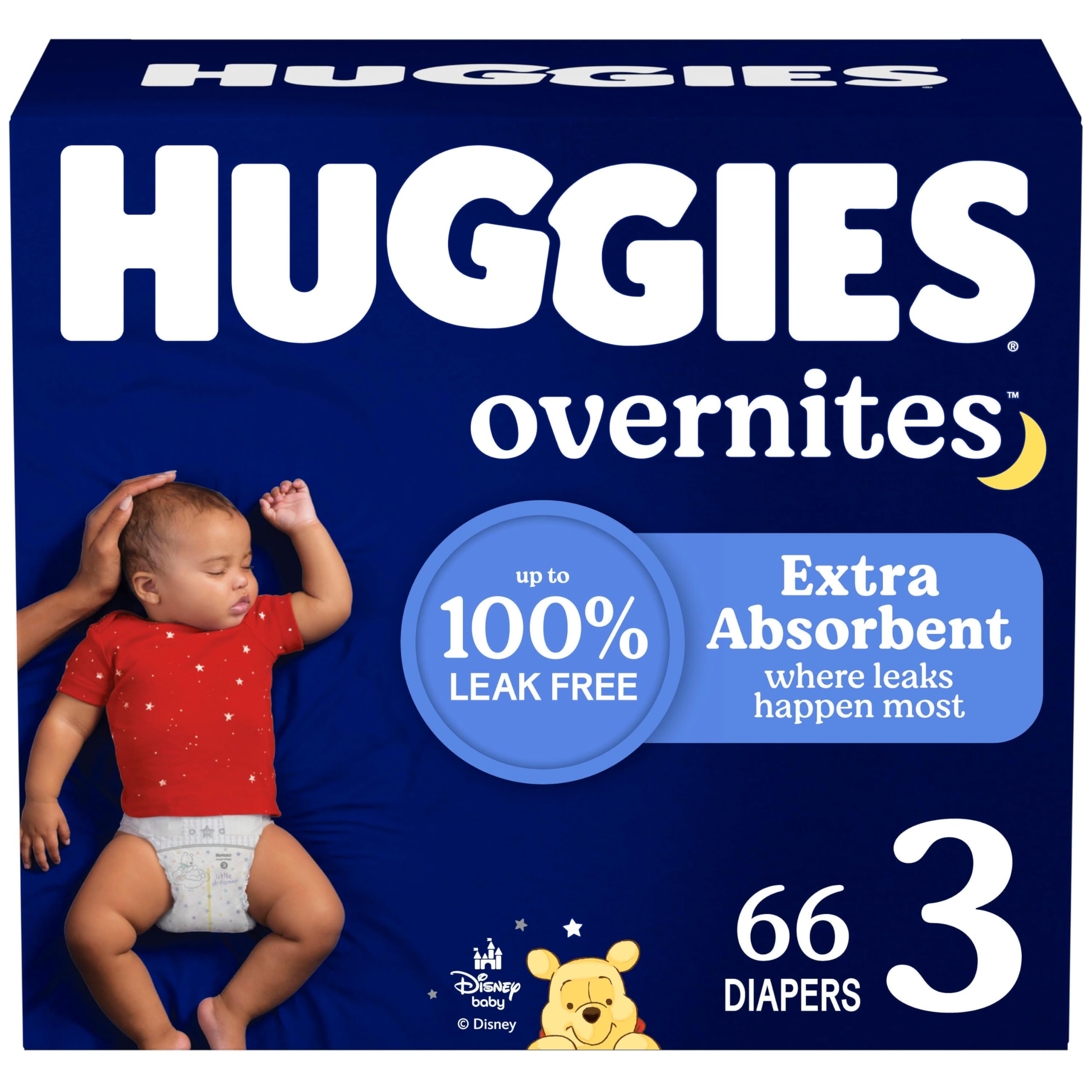 Huggies Overnites |
|
| $28.49 / 66ct (Size 3) | Check price $28.49 |
| Top Pick | 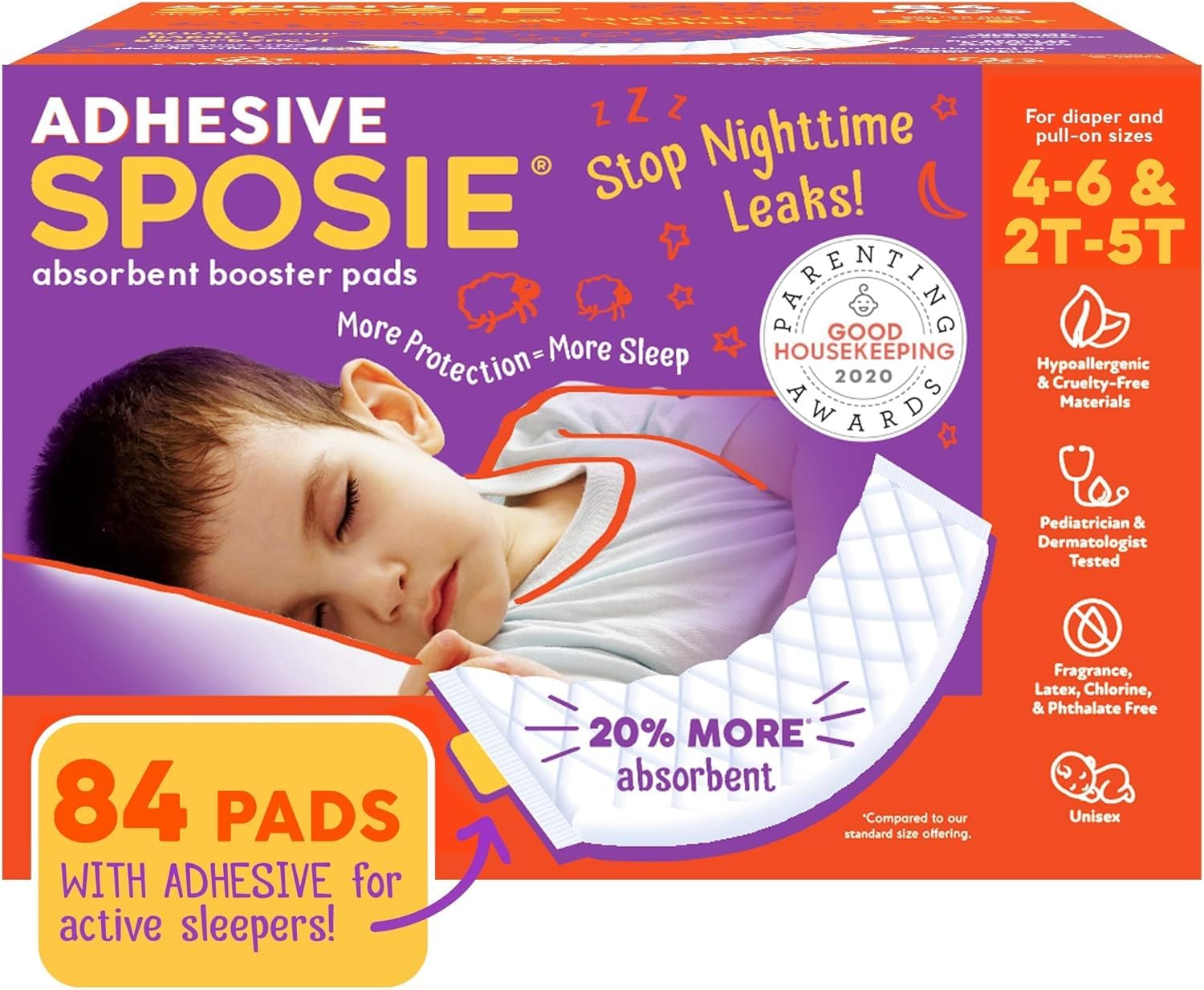 Sposie Booster Pads |
|
| $36.49 / 84ct | Check price $36.49 |
Pampers ZZZ Overnights
Check price on Amazon $27.97
Huggies Overnites
Check price on Amazon $28.49
Sposie Booster Pads
Check price on Amazon $36.49
Pampers ZZZ Overnights — full review
Pampers redesigned their overnight line (previously Swaddlers Overnights, now branded ZZZ) with one goal: keep heavy wetters dry for a full 12-hour stretch. Across the overnight diapers we reviewed, the core technology centers on 50% more absorbent zones compared to their standard Swaddlers, using LockAway Channels that distribute fluid evenly across the diaper rather than pooling in one spot.
The ZZZ lists the highest published absorption capacity of the three, and owners consistently rank it top for total volume. The Blowout Barrier at the rear waistband is a meaningful upgrade — back leaks are the #1 overnight complaint from parents, and this addresses it directly. The BreatheFree Liner creates a moisture-wicking layer between the absorbent core and baby’s skin, reducing the contact time that leads to irritation and rash.
The one caveat: Pampers ZZZ contains a mild fragrance and lotion treatment. While the formula is dermatologist-tested and hypoallergenic, parents of babies with diagnosed eczema or contact sensitivities may prefer the completely additive-free Huggies Overnites below. At ~$0.60 per diaper, ZZZ is also the priciest option — but for extreme heavy wetters who saturate everything else, the absorbency premium is worth it.
Check price on Amazon → $27.97
Huggies Overnites — full review
Huggies takes a different engineering approach. Their “4X Sleep Protection” system combines four features: a curved contoured fit that follows the body’s natural shape, DryTouch Liner for rapid surface absorption, Double Grip Strips that keep the diaper locked in position regardless of how much your baby rolls, and extra absorbency in the core.
Where Huggies truly differentiates is the skin-safety profile. These diapers are completely free of fragrance, lotion, parabens, phthalates, elemental chlorine, and natural rubber latex. The American Academy of Dermatology consistently recommends fragrance-free and lotion-free diapers for babies with eczema or contact dermatitis — and Huggies Overnites meet that standard.
The trade-off is a slightly lower total absorption ceiling compared to Pampers ZZZ. For moderate-to-heavy wetters, Huggies handles the job beautifully at the lowest per-diaper cost of the three options reviewed here (~$0.38 each). For extreme heavy wetters (the babies who saturate everything by 4 AM), Pampers ZZZ or a Huggies + Sposie Booster combination may be the better path. The 66-count Size 3 pack lasts most families about 9 weeks at one overnight per night.
Check price on Amazon → $28.49
Sposie Booster Pads — full review
Sposie Booster Pads take a fundamentally different approach: instead of buying a separate overnight diaper, you add an ultra-absorbent insert to whatever diaper your baby already wears. This is brilliant for two reasons — you save money by using your existing diaper supply, and you get to customize absorbency by layering one or two pads as needed.
The adhesive strip on the back of each pad is designed to keep it in place, even for active sleepers who twist and turn. A booster pad works by adding absorbent capacity inside the diaper you already use, which is often enough to carry a daytime diaper through the night — how much extra time you get depends entirely on your child, so treat it as an experiment worth $0.40 a night. The pads themselves are hypoallergenic and free of fragrance, latex, chlorine, and phthalates.
The ideal use case: pair a Sposie pad with your preferred daytime diaper for a cost-effective overnight solution, or layer one inside one of the best overnight diapers above for extreme heavy wetters who overwhelm even dedicated nighttime products. The 84-count pack at $36.49 works out to ~$0.40 per pad — and at one pad per night, a single pack lasts roughly 12 weeks. The most economical path to leak-free mornings, especially when paired with diapers you already buy.
Check price on Amazon → $36.49
What to look for when buying the best overnight diapers
Before you click “add to cart,” here are the key factors we evaluated:
Absorption capacity and speed
The best overnight diapers use super absorbent polymer (SAP) technology that locks fluid into the core and away from baby’s skin. Look for diapers that specifically claim 12-hour protection — standard daytime diapers typically max out at 4-6 hours.
Leak barrier design
Dual leg cuffs and rear waistband barriers are non-negotiable for heavy wetters. Single-barrier diapers allow fluid to escape at the legs and back when your baby shifts sleeping positions.
Skin safety and ingredients
Prolonged contact with moisture degrades the skin barrier. Prioritize diapers with moisture-wicking liners and verify the ingredient list is free of known irritants — especially if your baby has eczema or sensitive skin.
Sizing strategy
Sizing up for overnight diapers is a widely recommended strategy. A slightly larger diaper provides more absorbent material without compromising leg seal. If your baby is between sizes during the day, go up one size at night.
How to choose overnight diapers (and when to start)
Picking an overnight diaper is really four decisions: when to start, how much absorbency your wetter needs, what size, and what’s touching the skin. Here’s the order I’d work through them.
1. Time the switch to the sleep, not the calendar
Start overnight diapers once your baby strings together a roughly 6-hour sleep stretch — for most babies that lands around 6 to 8 months. The trigger isn’t age; it’s the morning you find a soaked diaper or leaked pajamas. Before that, if you’re still up feeding every few hours, a daytime diaper covers the gap.
2. Match the core to your wetter
For extreme wetters who overwhelm everything, reach for Pampers ZZZ, which lists the highest published absorption capacity of the three. For sensitive or eczema-prone skin, the fragrance- and lotion-free Huggies Overnites. To keep the diapers you already buy, drop a Sposie Booster Pad into your current diaper instead of buying a new box.
3. Size up one and seal the cuffs
Go one size larger than daytime — more core, same leg seal. Then run a finger around the leg cuffs to pull the ruffle outward, and tuck the back waistband up over the Blowout Barrier. Most overnight leaks are a fit problem, not a capacity problem.
4. Read the ingredient panel if skin is reactive
Pampers ZZZ contains a mild fragrance and lotion; Huggies Overnites and Sposie pads are fragrance-, lotion-, and latex-free. If your baby has diagnosed eczema or contact dermatitis, choose the additive-free option and pair it with a barrier cream at bedtime.
Quick answers: When do you start? Around 6–8 months, once sleep stretches pass ~6 hours. How long do they last? A full 10–12 hour night for most heavy wetters. Can you use them in the daytime? Yes, but change every 2–3 hours anyway — capacity doesn’t replace fresh skin.
The best accessories for overnight diapers
The diaper is only part of a leak-free, rash-free morning. These three pair with any of the picks above — and they’re what actually separate an overnight diaper that works from a regular diaper you just hoped would last the night.
Waterproof crib mattress protector
Even the ZZZ blows out occasionally, and a saturated 3 AM leak should soak a cheap pad, not the mattress. Check waterproof crib protectors on Amazon → Fit tip: buy the fitted, fully-encasing style — flat pads slide out of place the moment your baby rolls.
40% zinc oxide overnight barrier cream
For a 10–12 hour stretch you want the strongest over-the-counter zinc, applied like frosting before bed so it physically blocks urine from the skin all night. Check 40% zinc overnight creams on Amazon → Fit tip: 40% zinc (the max OTC concentration) outlasts a 13% everyday cream overnight — see our barrier cream picks for specific tubes.
Footed zip-up sleeper, sized up
A snug blanket sleeper one size larger acts as a second wall — it holds the diaper against the body so a back leak has nowhere to travel. Check footed zip sleepers on Amazon → Fit tip: zip, not snap — snaps pop open under a full overnight diaper, and sizing up keeps the sleeper from compressing the core.
Frequently asked questions
Most babies benefit from the best overnight diapers once they begin sleeping longer stretches — typically around 6 to 8 months. If your baby is regularly waking up with a soaked diaper, leaking through pajamas, or developing rash from prolonged moisture contact, it’s time to switch.
Yes — this is one of the most effective strategies for preventing overnight leaks. A diaper one size up provides more absorbent material in the core while still maintaining an adequate seal at the legs. If your baby wears Size 4 during the day, try Size 5 for overnight.
Absolutely — this is the nuclear option for extreme heavy wetters and it works. Place a Sposie Booster Pad inside your overnight diaper for maximum absorbency. This combination can handle even the heaviest nighttime output without requiring a mid-sleep change.
The best overnight diapers from reputable brands are designed and tested for 12-hour wear. The key is ensuring the diaper has a moisture-wicking liner that pulls fluid away from the skin surface. Change the diaper as soon as your baby wakes up, and apply a barrier cream before bed to provide an additional layer of skin protection.
You can — an overnight diaper is just a daytime diaper with more absorbent polymer and taller leg cuffs, so there’s nothing unsafe about it. The two reasons most parents don’t: cost (a Pampers ZZZ runs roughly double a standard diaper) and change discipline. Because overnights are built to hold 10–12 hours, it’s easy to leave one on too long; keep changing every 2–3 hours while your baby is awake regardless of capacity. Save the overnight for the one long stretch where the extra absorbency actually earns its price.
Reputable overnight diapers like Pampers ZZZ and Huggies Overnites are engineered for a 10–12 hour stretch, and most heavy wetters make it to morning in one. What usually ends the run early is fit, not capacity — a gap at the leg cuff or an untucked back waistband lets urine escape before the core is full. If your baby soaks through before the 8-hour mark, size up one, pull the ruffled leg cuffs outward, or add a Sposie Booster Pad before you switch brands.
Most kids stop needing a dedicated overnight diaper once they reliably wake up dry — commonly between ages 3 and 5. Nighttime bladder control is developmental, though, and running later is normal, especially for deep sleepers. Let the diaper tell you: several dry-ish mornings in a row is your green light, not a birthday. When you see that pattern, step down to a regular diaper or training pant and keep a waterproof mattress protector on the bed through the transition.
Mostly, yes — the formula holds, but the volume goes up. Both Pampers ZZZ and Huggies Overnites run through Size 7 (41+ lbs), so heavy-wetting toddlers stay covered. Keep the same playbook: size up one from the daytime diaper, and if mornings are still soaked, layer in a Sposie Booster Pad.
For extreme heavy wetters: Pampers ZZZ Overnights
The highest absorption capacity, best leak protection, and 12-hour skin health support make this the diaper we’d recommend to any parent of a heavy wetter.
Check price on Amazon → $27.97
Prices and availability: Prices shown reflect typical Amazon pricing as of April 2026 and may vary by size and pack count. Click any product link for the current price.
Medical disclaimer: Content is for informational and educational purposes only. It does not constitute medical advice or replace professional pediatric consultations.
- Agrawal R. Diaper Dermatitis (Diaper Rash). Medscape Drugs & Diseases (eMedicine); updated Jun 30, 2025. Irritant diaper dermatitis from overhydration, maceration and prolonged urine/feces contact; Candida commonly complicates the rash after 48–72 hours and with antibiotic use.
- Silverberg NB. Pediatric Contact Dermatitis. Medscape Drugs & Diseases (eMedicine); updated Mar 19, 2026. Contact dermatitis affects at least a quarter of children; irritant injury damages the protective upper epidermis, and skin protection with emollients is advised.