
Disposable vs. Reusable Swim Diapers: Which Is Better? (RN)
The disposable vs. reusable swim diapers debate comes down to three factors: containment, cost, and convenience. Both types serve the same purpose — containing solid waste in the pool while allowing water to flow through — but they achieve it very differently. Disposable swim diapers offer grab-and-go simplicity, while reusable swim diapers deliver better containment and dramatically lower long-term cost. This disposable vs. reusable swim diapers comparison breaks down exactly when each type makes sense, so you can choose the right one for your family’s swim routine.
Our top reusable swim diapers (the clear winner)
Better containment, lower long-term cost, and less waste — reusable wins for regular swimmers.
Do you put a swim diaper over or under a regular diaper?
Short answer: a swim diaper goes on by itself — skin first, then the swim diaper, then the swimsuit. You never put a regular diaper underneath it. A regular diaper hidden under a swim diaper would soak up pool water, swell to several times its size, and become the waterlogged sag this whole disposable vs. reusable swim diapers comparison is meant to help you avoid.
1. The correct order: skin → swim diaper → swimsuit
A reusable like the Green Sprouts Eco Snap or the ALVABABY 2-Pack sits directly against the skin, snugged at the legs and waist, with the swimsuit or swim trunks pulled on over the top. A disposable pull-on works the same way — it is the only diaper in the water.
2. Never layer a regular diaper underneath
This is the single most common swim-diaper mistake I see poolside. A regular diaper is built to absorb, so under a swim diaper it fills with pool water, balloons, and either falls apart or drags the swim diaper down off your baby’s hips — wrecking the snug leg seal that actually contains solids.
3. The one exception: doubling up for containment
Some facilities ask for a disposable swim diaper worn under a reusable swim diaper as a double barrier against blowouts — two swim diapers, never a regular one. Confirm what your pool wants before you go; our swim diaper pool-rules guide breaks down the common facility policies.
4. After the swim, switch back to a regular diaper
Because no swim diaper absorbs urine, a wet swim diaper against the skin is just cold and irritating once you are out of the water. Peel it off, dry your baby, and put a normal absorbent diaper back on for the ride home.
Why trust Pediatric Picks?
We compared disposable and reusable swim diapers across five criteria: solid containment (leg-opening design and layer construction compared, against the CDC’s healthy-swimming guidance on what a swim diaper can and cannot hold back), fit adjustability (how well each adapts to chunky vs. slim babies), comfort over a long session (fabric, leg gussets, and UPF rating compared), long-term cost per swim session over two seasons, and ease of cleaning for reusable options (each manufacturer’s published wash guidance and expected lifespan).
Reusable swim diapers: side-by-side comparison
| Pick | Product | Key strengths | Watch-outs | Price | Where to buy |
|---|---|---|---|---|---|
| Best Overall | 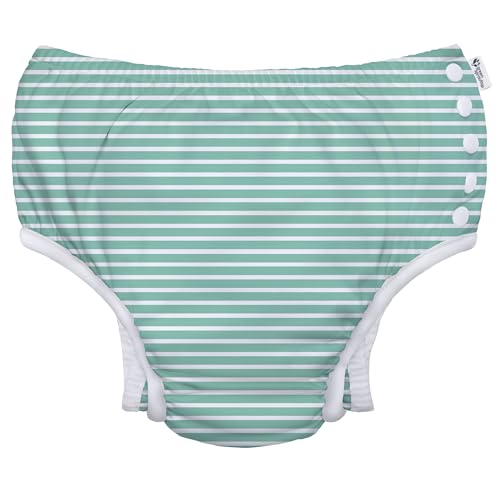 Green Sprouts Eco Snap |
|
| ~$13.99 | Check price |
| Runner-Up |  iPlay Snap Swim Diaper |
|
| ~$24.99 | Check price |
| Best Value | 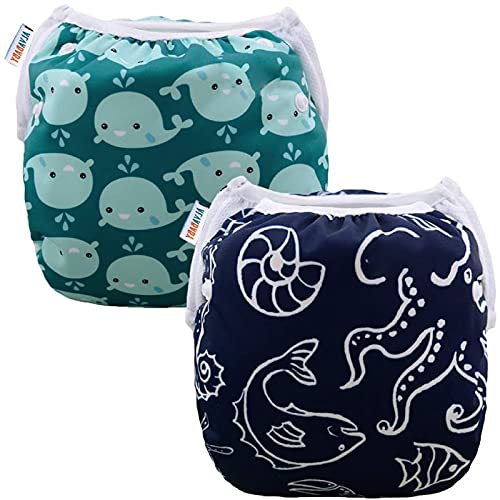 ALVABABY Swim Diapers (2-Pack) |
|
| ~$8.99 / 2-pack | Check price |
Green Sprouts Eco Snap
iPlay Snap Swim Diaper
ALVABABY Swim Diapers (2-Pack)
The core difference: what swim diapers actually do
Before comparing disposable vs. reusable swim diapers, it’s critical to understand what swim diapers do — and what they don’t do. Swim diapers of both types are designed exclusively to contain solid waste. They do not absorb urine. If a regular diaper went into a pool, it would absorb water, swell to several times its size, and become a waterlogged weight on your baby. Swim diapers use mesh or non-absorbent liners that let water pass through freely while catching solids. This is true for both sides of the disposable vs. reusable swim diapers comparison.
A swim diaper will not prevent drowning — never leave a child unattended in or near water; maintain constant, arm’s-reach supervision. A swim diaper only helps contain solid waste; it does not make a child safe in the water and is no substitute for a caregiver’s constant, hands-on watch.
Disposable vs. reusable swim diapers: which contains better?
Reusable swim diapers win on containment — and it’s not close. Reusable designs like the Green Sprouts Eco Snap use multi-layer construction with snug, adjustable elastic at the legs and waist. The tighter fit creates a seal that holds solids reliably. Disposable swim diapers have a looser fit by nature (they’re designed as one-size-range pull-ons) and use thinner materials that can gap at the legs during active kicking.
In the disposable vs. reusable swim diapers comparison, the biggest real-world difference appears during loose stool incidents. Reusable diapers with their multi-layer mesh and waterproof outer shell contain loose stool significantly better than disposable single-layer designs. For babies who have recently eaten new foods or are teething (when stool tends to be looser), reusable swim diapers provide a much higher margin against leaks. The CDC’s healthy swimming guidelines emphasize that no swim diaper is 100% leak-proof — frequent bathroom breaks remain essential regardless of type.
Winner: Reusable swim diapers — tighter adjustable fit and multi-layer construction contain solids more reliably than disposable alternatives.
Disposable vs. reusable swim diapers: the real cost comparison
Disposable swim diapers cost roughly $0.80–$1.20 per diaper. If you swim twice a week over a 4-month summer season, that’s approximately 32 swim sessions × $1.00 = $32 per season. Over two swim seasons (which most babies span before potty training), that’s $64+ in disposable swim diapers — plus they go to landfill after every use.
Reusable swim diapers cost $10–$15 each. Buying 2–3 for rotation costs $25–$45 total. They last 2–3 swim seasons with proper washing, making the per-session cost roughly $0.40–$0.70 — less than half the cost of disposables. In the disposable vs. reusable swim diapers cost comparison, reusable options pay for themselves within the first swim season. The ALVABABY 2-Pack at ~$8.99 for two diapers offers the fastest breakeven point — just 5 swim sessions to match the cost of disposables.
Winner: Reusable swim diapers — significantly cheaper over a swim season and dramatically cheaper over multiple seasons.
Disposable vs. reusable swim diapers: which is easier?
Disposable swim diapers win on pure convenience. Open the package, put it on, swim, toss it in the trash. No washing, no drying, no packing a wet bag. For travel, vacation pools, or occasional swim sessions at a friend’s house, disposables require zero planning. You can keep a few in the diaper bag as backup without thinking about rotation or washing schedules.
Reusable swim diapers require a small routine: rinse after each session, machine wash regularly, dry between uses, and carry a wet bag to transport the soiled diaper home. This is minimal effort for regular swimmers, but it is effort. In the disposable vs. reusable swim diapers convenience comparison, the question is how often you swim. Regular swimmers (2+ times per week) quickly build the reusable routine into habit. Occasional swimmers may find the washing overhead not worth the savings.
Winner: Disposable swim diapers — zero maintenance, zero planning, use-and-toss simplicity.
When to choose reusable vs. disposable
Choose reusable swim diapers if you swim weekly or more
Regular swimmers benefit most from reusable swim diapers. The better containment, lower per-session cost, and reduced waste justify the small washing routine. Buy 2–3 reusable diapers like the Green Sprouts Eco Snap for rotation and you’re set for the entire season in the disposable vs. reusable swim diapers choice.
Choose disposable swim diapers for travel and vacation
When you’re at a hotel pool, a beach vacation, or visiting family, disposables eliminate the need to rinse and transport wet diapers. Pack 4–6 disposables for a week-long trip. The convenience premium is worth it when you don’t have access to laundry facilities.
Choose both for maximum flexibility
The smartest approach in the disposable vs. reusable swim diapers debate: own 2–3 reusable swim diapers for regular use and keep a small pack of disposables for travel, spontaneous pool visits, and backup. This gives you the cost savings and containment of reusables day-to-day with the convenience of disposables when routine isn’t possible.
Check your pool’s policy first
Some pools require specific types. A few require disposable swim diapers underneath a reusable for double protection. Others accept reusable only. Before investing in either side of the disposable vs. reusable swim diapers comparison, confirm what your primary pool allows. Most public pools accept both types.
Waste comparison: disposable vs. reusable swim diapers
A family that swims twice weekly over a 4-month season uses roughly 32 disposable swim diapers per year — all going to landfill, where mixed-material disposables are widely estimated to take centuries to break down. Over 2–3 swim seasons, that’s 64–96 diapers in the trash. Reusable swim diapers produce zero ongoing waste. The initial manufacturing impact of 2–3 reusable diapers is offset within the first season of use. If environmental impact matters in your disposable vs. reusable swim diapers decision, reusable is the clear choice.
The one caveat: reusable swim diapers require water and energy for washing. A quick cold rinse after each session plus a weekly machine wash adds a small water and energy footprint. However, even accounting for washing, the total environmental impact of reusable swim diapers is substantially lower than the manufacturing, packaging, shipping, and landfill burden of disposable alternatives over the same usage period.
Frequently asked questions
Neither. Both sides of the disposable vs. reusable swim diapers comparison allow urine to pass through. Swim diapers are designed solely to contain solid waste. If they absorbed liquid, they’d balloon with pool water and become unwearable. This is by design — all swim diapers let liquids through while catching solids.
No. Regular diapers absorb water rapidly, swelling to several times their size and becoming a heavy, saggy mass that falls off your baby. They’re also useless for containment once waterlogged. Whether you choose disposable or reusable swim diapers, a purpose-built swim diaper is required for pool use. Most pools will not allow babies in regular diapers.
Two to three reusable swim diapers in rotation replace an entire season’s worth of disposables — typically 20–40 diapers depending on how often you swim. At $9–$15 per reusable diaper vs. $0.80–$1.20 per disposable, the reusable set pays for itself within the first 15–20 swim sessions. That’s the most compelling number in the disposable vs. reusable swim diapers cost comparison.
Reusable swim diapers with adjustable snap closures fit better because you can customize the tightness at the waist and legs independently. Disposable swim diapers use a one-size-range pull-on design that works well for average body proportions but can gap on chunky or slim babies. In the disposable vs. reusable swim diapers fit comparison, snaps give reusables a clear advantage for babies whose proportions don’t match standard sizing.
Check with the program first — many swim schools require a reusable swim diaper, and some ask for a disposable layered under a snug reusable. If lessons run weekly, a snap-adjustable reusable is the more economical pick; keep a couple of disposables in the bag as backup for travel days.
Yes — containing solid stool is their entire job, and both disposable and reusable versions do it while letting water pass through. The limit is consistency: formed or soft stool is held reliably, but very loose or watery stool can escape at the leg openings, especially with looser-fitting disposables. Reusables with a snug fit — like the triple-layer, gusseted Green Sprouts Eco Snap — contain loose stool better than looser-fitting styles. Clinically, if your child has had any diarrhea in the past two weeks, keep them out of the pool entirely — no swim diaper is a substitute for that.
Not exactly. Disposable swim diapers follow their own weight-based chart and run snugger than a same-labeled regular diaper, because a loose fit is a leaking fit. Reusable snap diapers like the ALVABABY 2-Pack skip fixed sizes altogether — you dial in the fit with rows of snaps at the waist and legs. The rule either way: a swim diaper should sit tight at the leg openings, tight enough that you cannot easily slip a finger through the gap. If your baby is between sizes, size down.
Either is fine for a short session, but for eczema-prone skin I lean reusable — soft fabric leg gussets rub less than the paper-like edges of a disposable. Whichever you use, rinse your baby off afterward and change into a dry regular diaper promptly; lingering chlorine irritates skin more than either diaper.
Within the same swim session, usually yes. Because a disposable swim diaper never absorbs urine in the first place, a diaper that has only been peed in is not “full” the way a regular diaper would be — the liquid passed straight through. If it is still intact, free of any stool, and has not stretched out, you can put it back on for the rest of that outing. What you should not do is dry it out and save it for another day: once a disposable has been soaked and dried, the leg elastic relaxes and the fit loosens, which is where containment fails. If genuine reuse is the goal, that is exactly what a reusable swim diaper is for.
Reusable. Sand works into the pulp edges of a disposable and stays there, while a fabric reusable rinses clean in the surf and dries for a second wear the same day. Salt water is hard on elastic, so give a reusable a fresh-water rinse afterward. The containment job doesn’t change at the ocean.
Can you use a swim diaper as a regular diaper?
It is a fair question when you are staring at a leftover swim diaper in the bag — but a swim diaper is essentially the opposite of a regular diaper, and wearing one off the pool deck ends in a puddle.
No absorbency — by design
Every swim diaper in this comparison, disposable or reusable, uses a mesh or non-absorbent liner engineered to let liquid flow straight through so it will not balloon in the pool. That is exactly the property that makes it useless as a day diaper: there is nothing inside to hold urine.
What actually happens
Put a reusable swim diaper on a baby in the car seat and the first pee runs down the leg and into the seat. A disposable swim diaper does the same. There is no gel core and no absorbent pulp — nothing to catch what a regular diaper is built to lock away.
The skin-health reason to skip it
As a nurse, this is my real objection: a non-absorbent liner holds wetness against the skin instead of wicking it away, and prolonged skin-to-moisture contact is the fast track to diaper rash. A swim diaper is fine for a 30-minute pool session; it is a poor choice for hours of everyday wear.
Keep the two jobs separate
Buy swim diapers for the water and regular diapers for everything else. If you want something you can genuinely reuse session after session, that is the case for a reusable swim diaper — not for repurposing a regular one, or the reverse.
How do you wash a reusable swim diaper?
The washing routine is the one genuine cost of going reusable, and it is smaller than most parents expect. Here is exactly how to keep a Green Sprouts Eco Snap or an iPlay snap diaper in rotation across a full swim season, following each manufacturer’s published wash guidance.
1. Rinse it right away
Chlorine and salt water break down elastic and the waterproof outer shell over time, so give the diaper a cold-water rinse in the shower or a poolside tap as soon as you are out. Carry the wet diaper home in a waterproof wet bag rather than a plastic grocery sack, which traps odor.
2. Machine wash on a normal cycle
Reusable swim diapers are machine washable — cold or warm water, a mild detergent, regular cycle. The two things to skip: fabric softener, which coats the fabric and kills its quick-dry, water-shedding finish, and chlorine bleach, which eats the leg gussets and elastic that do the actual containing.
3. Air dry, don’t bake it
Hang the diaper to dry instead of running it through a hot dryer. High heat is what degrades the waterproof layer and relaxes the snap-adjustable elastic. A quick-dry reusable is usually ready for an afternoon session by the next morning — part of why keeping two in rotation works so well.
4. Handle a solid accident first
If your baby had a bowel movement, knock the solids into the toilet before rinsing, then wash as above. Once or twice a season, an extra warm wash with a splash of vinegar helps freshen them — but day to day, a rinse and a regular wash keep them clean and safe against the skin.
Our recommendation: reusable for regular swimmers
Green Sprouts Eco Snap — triple-layer containment, UPF 50+, and adjustable snaps that last 2–3 swim seasons.
Check price on Amazon →Medical disclaimer: Content is for informational and educational purposes only. It does not constitute medical advice or replace professional pediatric consultations.
- Tomczak E. Cryptosporidiosis. Medscape Drugs & Diseases (eMedicine); updated Jan 7, 2025. Diarrheal protozoan infection transmitted by the fecal-oral route — the basis for keeping children with diarrhea out of shared water.