
Top Electric Nasal Aspirators for Congestion Relief
The best baby nasal aspirator can be the difference between a sleeping baby and a 3 AM ER visit. This guide is a research-driven review by a critical-care RN, evaluating electric models against published pediatric-suction guidance and verifiable manufacturer specs to find the picks that clear congestion without traumatizing your baby.
Babies are obligate nose breathers for the first three to four months, which means a clogged nose isn’t just uncomfortable — it can interrupt feeding, sleep, and (per the American Academy of Pediatrics) the steady oxygenation that makes infants comfortable. Evaluated against published pediatric-suction guidance and manufacturer specs, three baby nasal aspirator picks stand out across price tiers: the BabySmile S-503 medical-grade unit (roughly $120, notable for adjustable continuous suction rated up to 200 mmHg), the FridaBaby NoseFrida Electric (roughly $35, a quiet sub-65 dB unit that is easy to clean), and the Watolt rechargeable aspirator (roughly $35, a budget pick with three suction levels and built-in music distractions).
All three solve the same problem differently: extracting trapped mucus from a baby’s narrow nasal passages without the harsh, traumatic suction of a bulb syringe or the parent-powered awkwardness of an oral manual sucker. A Cochrane systematic review of saline nasal irrigation for acute upper-respiratory infections found it may modestly ease congestion symptoms, though the review authors flagged the supporting trials as small and at high risk of bias — reason enough to pair saline with gentle suction rather than rely on either alone.
The right baby nasal aspirator pick depends on how often you’ll use it, how much noise tolerance your baby has, and whether you want a tool that doubles as a hospital-grade unit or just a Sunday-night cold helper. Pair this with our most accurate clinical thermometers guide for fever monitoring during the same illnesses, or our complete baby first aid kit guide if you’re stocking the nursery from scratch.
The best baby nasal aspirator picks for cold-season congestion
The medical-grade unit with adjustable continuous suction for severe congestion and RSV recovery, the quiet rechargeable that babies actually tolerate for everyday colds, and the budget pick that delivers serious suction without the premium price tag.
Check price on Amazon $119.99
Check price on Amazon $35.49
Check price on Amazon $34.99
Safety first: don’t over-suction, and watch for red-flag symptoms
A baby nasal aspirator is a comfort tool, not a treatment for serious respiratory illness. Limit suction to three or four sessions per day — over-suctioning irritates the delicate nasal mucosa, which can paradoxically increase swelling and congestion. Always loosen mucus with two or three drops of sterile saline 30–60 seconds before suctioning, never insert the tip past the visible nostril opening, and stop the moment your baby actively resists.
Call your pediatrician (or the CDC respiratory-illness guidance) if you see retractions (skin pulling in around the ribs or collarbone with each breath), grunting, lips or fingertips turning bluish, a respiratory rate above 60 breaths per minute in an infant under 12 months, a fever above 100.4°F in a baby under 3 months, or congestion that worsens over 72 hours despite saline and suction. These signal RSV, bronchiolitis, or pneumonia — conditions an aspirator can’t fix.
How we review baby nasal aspirators
An electric nasal aspirator that’s too loud will terrify your baby into a screaming fit, one that’s too weak won’t clear stubborn dried mucus, and one that’s a pain to clean ends up in the back of a drawer by the second cold. We weigh each unit on four things that matter, against published guidance and manufacturer specs:
Suction strength and clinical efficacy. We compare each unit’s manufacturer-rated peak negative pressure in mmHg at both the lowest and highest settings against published pediatric guidance. Those guidelines cite 100–150 mmHg as the safe effective range for infant home suction; medical-grade units extend to 200 mmHg under clinical supervision. Units rated below roughly 60 mmHg are unlikely to clear thick obstructions.
Noise level and baby tolerance. We compare each unit’s manufacturer-rated noise output on each suction setting. Louder motors are more likely to startle young infants, while quieter sub-65 dB units make it easier to complete a full suction session without upsetting the baby. We also weigh tip design — whether silicone tips are shaped to flex gently around nostril rims rather than press rigidly against tender skin.
Cleaning burden and disassembly. Electric aspirators are mucus-handling devices — cleaning matters enormously. We assess how the unit disassembles, how many parts touch mucus and need individual cleaning, and whether the manufacturer rates components as dishwasher-safe. Sealed motor housings that keep mucus from reaching internals rate highest; designs where mucus can backflow into the motor rate lowest.
Runtime, charging, and durability. For rechargeable units we compare the manufacturer’s rated full-charge runtime and charge time, plus warranty length as a proxy for expected durability. Plug-in medical units are weighed on cord length and footprint on the changing table. Build quality and warranty coverage carry real weight — a unit that fails within a season is no bargain at any price.
Best baby nasal aspirators: side-by-side comparison
| Pick | Product | Key strengths | Watch-outs | Price | Where to buy |
|---|---|---|---|---|---|
| Top Pick |  BabySmile S-503 |
|
| $119.99 | Check price $119.99 |
| Quietest |  FridaBaby NoseFrida Electric |
|
| $35.49 | Check price $35.49 |
| Budget | 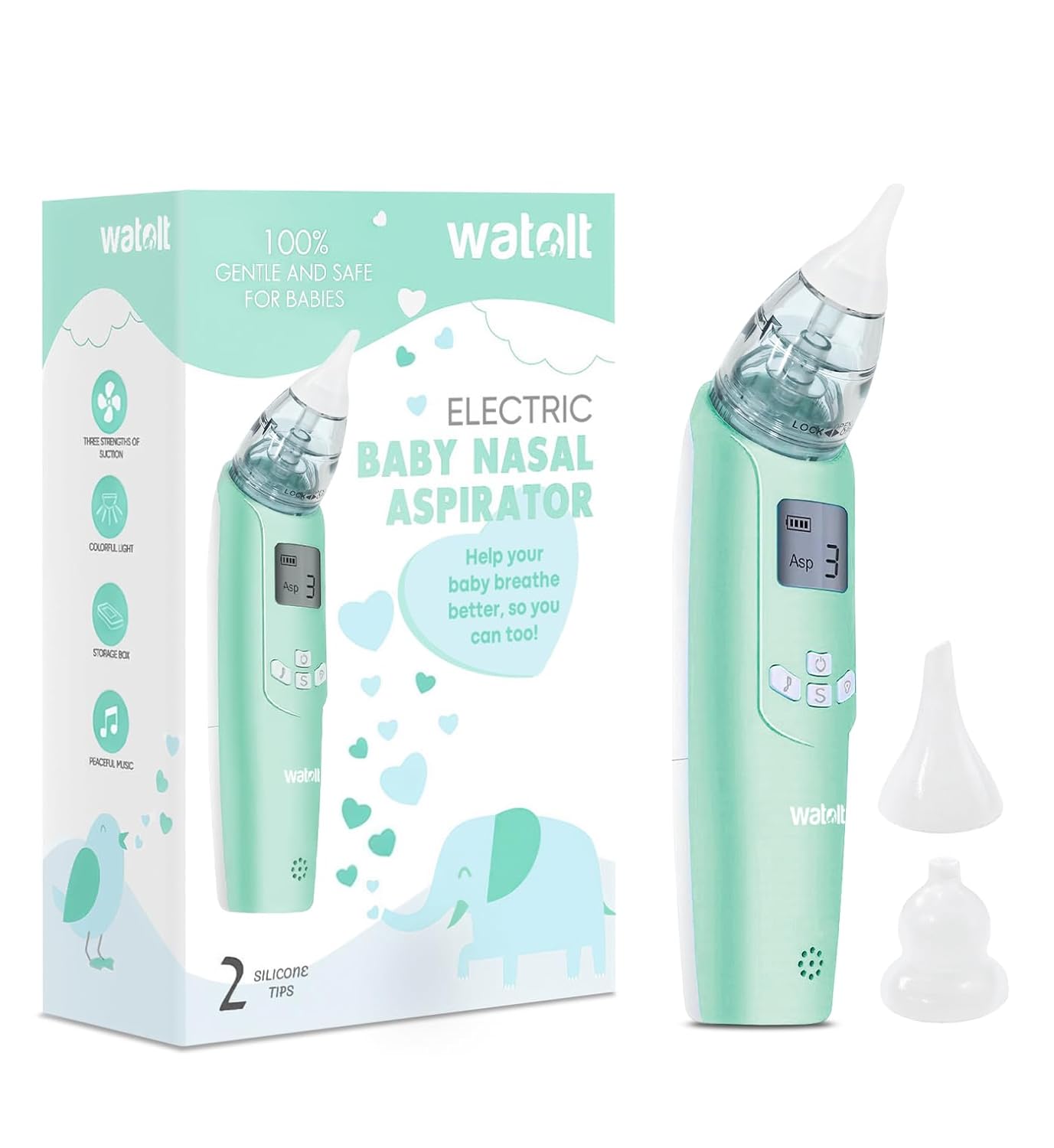 Watolt Baby Nasal Aspirator |
|
| $34.99 | Check price $34.99 |
BabySmile S-503
Check price on Amazon $119.99
FridaBaby NoseFrida Electric
Check price on Amazon $35.49
Watolt Baby Nasal Aspirator
Check price on Amazon $34.99
BabySmile S-503 — full breakdown
The BabySmile S-503 is the closest thing to a hospital-grade baby nasal aspirator a parent can plug in at home. Engineered in Japan (where electric aspirators are standard pediatric care rather than a novelty), the S-503 produces continuous adjustable suction from roughly 60 mmHg up to 200 mmHg — a level normally reserved for use under clinical supervision. The continuous vacuum makes the practical difference: where pulse-suction budget units chip away at thick mucus over multiple passes, a steady continuous draw is better suited to clearing a dried plug. For RSV recovery, bronchiolitis after-care, or any congestion where dried thick mucus is blocking nasal airflow, that capability is genuinely useful.
Among consumer units, the S-503’s continuous adjustable suction is best positioned to clear a dried mucus plug without repeated passes. It can be a strong option for parents whose babies are recovering from RSV-related hospitalization or who have chronic congestion from craniofacial anatomy. The sealed mucus collection chamber and replaceable filters prevent mucus from ever reaching the motor — a meaningful hygiene win over cheaper units where backflow into the motor is a real concern after months of use. Build quality reflects the price: the housing is rigid, the silicone tips are soft and flexible, and the manufacturer backs the unit with a 5-year warranty.
The trade-offs are noise and corded operation. On its max setting, the S-503 is the loudest of our picks and can startle a young infant on first use. Working at low-to-mid suction settings brings the noise down considerably, which older babies generally tolerate better.
The unit is plug-in only (no battery), so you’re tethered to an outlet during use — not a problem on a changing table or nursery floor, but inconvenient for travel. At roughly $120 it’s also a real commitment, but for families dealing with severe congestion or chronic issues, it’s the best baby nasal aspirator pick if peak suction is your priority.
Check price on Amazon → $119.99
FridaBaby NoseFrida Electric — full breakdown
The FridaBaby NoseFrida Electric earns its place as the best baby nasal aspirator for everyday colds and allergies because of a single design choice: the engineers prioritized low noise over peak suction. On its low setting it runs at a rated sub-65 dB — quiet enough that many parents can complete a suction session mid-nap without waking the baby. That low noise floor separates it from most other rechargeable baby nasal aspirators. The motor is positioned and damped specifically to keep noise low; the trade-off shows up at the top end, where peak suction caps at around 110 mmHg — plenty for thin and medium mucus, not enough for thick dried obstructions.
The NoseFrida Electric inherits everything good about the original manual NoseFrida: the same hygienic single-use filter system that prevents mucus from passing the silicone chamber, the same generous silicone tip design that flexes around tender nostril rims, and the same Swedish-pediatrician design philosophy. The electric version adds three tip sizes (newborn, standard, toddler) and a USB-C rechargeable battery that runs about 45 minutes of continuous use per charge — meaningfully better than the AAA-battery rechargeables in the budget tier. Disassembly is the fastest of our picks: silicone tip, collection chamber, and filter pop apart in under 10 seconds for sink rinsing, and all silicone parts are top-rack dishwasher safe.
The trade-off is value-versus-suction. At roughly $35, the NoseFrida Electric now costs about the same as the Watolt for similar peak suction performance — the premium here is the noise reduction, the silicone tip variety, and the brand’s pediatric reputation, not a price gap. For families with sound-sensitive babies, allergy-prone toddlers needing daily congestion management, or anyone who used and loved the manual NoseFrida, that’s a worthwhile premium. For families who only need an aspirator for the occasional cold and don’t mind louder operation, the budget pick delivers similar suction at a comparable price.
Check price on Amazon → $35.49
Watolt Baby Nasal Aspirator — full breakdown
The Watolt is the baby nasal aspirator we’d recommend a first-time parent buy if they’re not sure whether they actually need an electric unit. At roughly $35 it’s still about a third the price of the BabySmile and now priced similarly to the NoseFrida Electric, yet its top setting is rated around 130 mmHg — well above the roughly 100 mmHg commonly cited as an effective threshold for infant home suction. Three discrete suction levels let you start gentle for newborns and ramp up only when needed. The unit has been a top-seller on Amazon for years because it overdelivers at its price — not because it’s the best baby nasal aspirator on the market, but because it’s the most aspirator you can buy for under $40.
The novelty feature that turns out to matter more than expected: built-in lullabies and white-noise tracks. The Watolt has 12 pre-loaded short audio clips that play during operation, and the music can help distract a baby long enough to complete a suction session with less resistance. It’s not magic — if your baby actively hates being held down, no song will fix that — but a built-in distraction is a genuine advantage over a silent unit. Cleaning is straightforward: the silicone tip and clear collection chamber unscrew for rinsing, and disposable filter inserts protect the motor, replaced every few weeks during active cold-season use per the manufacturer’s guidance.
The trade-offs are build quality and longevity. The plastic housing feels less rigid than the premium picks and can develop a rattle on the high suction setting over time, and the rechargeable battery’s runtime is likely to shorten with age — expected trade-offs at this price point rather than dealbreakers.
For families with chronic congestion needs (recurring ear infections, allergies, craniofacial issues), the Watolt won’t last as long as the BabySmile. For families who’ll use it 4–6 times a year during cold season, it’s the best baby nasal aspirator under $40 and will serve through the entire under-2 phase without issue. Pair it with our most accurate clinical thermometers guide and you’ve covered the core sick-day toolkit for well under $80.
Check price on Amazon → $34.99
5 things to know before buying a baby nasal aspirator
Saline first, suction second — always
Electric aspirators work best on softened, loosened mucus — not dried plugs. Drip two or three drops of sterile saline (preservative-free baby saline like Little Remedies or NeilMed) into each nostril 30–60 seconds before suctioning. The saline rehydrates the mucus, breaks the surface tension holding it to the nasal lining, and dramatically increases the amount of material the aspirator can actually remove. Suctioning a dry nose with high-strength settings is the single most common cause of nasal irritation and minor nosebleeds in infants.
Suction strength tiers map to congestion severity
Match peak suction to your typical use case. Budget units peaking at 100–130 mmHg handle ordinary colds, mild allergies, and post-feed milk residue cleanly. Mid-tier units at 110–150 mmHg cover most cold and flu seasons including thicker mucus. Medical-grade units reaching 180–200 mmHg are worth the upgrade only if you have chronic congestion (recurring ear infections, RSV history, structural issues) or you’ve been frustrated by a budget unit failing on thick mucus. Most families never need above 150 mmHg.
Noise tolerance varies dramatically by baby
Some infants are unfazed by a loud motor; others wake at the slightest hum. If your baby already startles at the vacuum cleaner or the blender, prioritize the quietest unit in your budget range. A seemingly small difference in noise on paper can be the difference between completing a suction session and a lengthy meltdown afterward, so compare manufacturers’ rated noise levels before buying. A calm, unhurried approach helps too — babies tend to resist more when a caregiver is tense or rushed.
Cleaning compliance predicts long-term value
An electric aspirator that’s annoying to clean ends up unused. Before buying, count the parts that touch mucus: silicone tip, collection chamber, filter insert. Anything beyond three parts adds real friction. Look for sealed motor housings (mucus never reaches the motor), top-rack dishwasher-safe silicone, and disposable filter inserts that replace easily. The cheapest aspirator that you’ll actually clean and use beats the best aspirator that lives unwashed in a drawer after the third illness.
Electric isn’t always better than manual or saline alone
For mild congestion in older babies (6+ months) who can clear most mucus by sneezing, swallowing, and feeding, saline drops alone are often sufficient and avoid the suction trauma entirely. Manual oral suckers like the original NoseFrida deliver controllable, immediately-modulating suction that some pediatricians prefer over electric units for newborns under 4 weeks. Reach for the electric aspirator when (a) saline alone isn’t moving the mucus, (b) feeding or sleeping is being disrupted, or (c) you’re dealing with an active illness rather than baseline newborn congestion (which often resolves on its own).
Best baby nasal aspirator: frequently asked questions
Limit baby nasal aspirator use to three or four sessions per day during active illness, and stop using once congestion resolves. Each session should last under 10 seconds per nostril. Over-suctioning irritates the nasal mucosa and can paradoxically increase swelling and mucus production — making congestion worse rather than better.
If your baby seems to need suction more than four times daily for more than three days running, that’s a signal to call the pediatrician rather than to suction more aggressively. Our complete baby first aid kit guide covers when to escalate to your pediatrician versus when home care is enough.
Daily baby nasal aspirator use during active illness (cold, flu, RSV recovery) is safe when limited to three or four short sessions and paired with saline drops first. Daily preventive use without congestion is not recommended — an unstimulated, healthy infant nose self-clears via mucociliary transport, swallowing, and sneezing. Routine suction of a clear nose can damage the nasal lining and trigger reflex swelling that creates the very congestion you were trying to prevent. Treat the electric aspirator as a sick-day tool, not a daily hygiene routine.
Almost always — yes. Two or three drops of sterile preservative-free saline (Little Remedies, NeilMed, or generic equivalents from any pharmacy) per nostril, given 30–60 seconds before suction, rehydrate dried mucus and dramatically improve what the aspirator can remove. The AAP recommends saline-then-suction as the standard home approach for infant nasal congestion. Skip the saline only if your baby’s discharge is already thin and watery from a fresh-onset runny nose; for anything thicker, saline first is the rule.
Different baby nasal aspirator tools for different jobs. Manual oral suckers like the original NoseFrida give parents fingertip control over suction strength — you start gentle and ramp up only if needed, which some pediatricians prefer for newborns under one month. Bulb syringes are cheap and travel well but deliver inconsistent, hard-to-modulate pressure that can traumatize delicate nasal tissue if you squeeze too aggressively.
An electric baby nasal aspirator shines when you need consistent steady suction for thick mucus, when one-handed operation matters (you’re holding the baby with the other), or when manual suction isn’t keeping up with active illness. Most families end up owning both a manual and an electric — manual for travel and quick clears, electric for serious congestion.
Yes — if you use too-high suction settings, suction for too long, suction too frequently, or insert the tip past the visible nostril rim. The most common injuries are minor nosebleeds from over-suction of a dry nose (prevent with saline first), small abrasions from too-rigid or too-deeply-inserted tips (prevent by using soft silicone tips and never inserting past the nostril opening), and reflex mucosal swelling from over-frequent use (prevent by limiting sessions to 3–4 per day during illness).
Used correctly — saline first, gentle insertion, short sessions, low-to-mid suction settings — a baby nasal aspirator is very safe. Used as a daily routine on a healthy nose, it can cause real harm.
After every use of your baby nasal aspirator, disassemble the silicone tip, the collection chamber, and any disposable filter, then rinse all mucus-contacting parts under hot running water. Wash with mild soap (Dawn or any baby-bottle dish soap) and a small bottle brush, rinse thoroughly, and air-dry on a clean towel.
Silicone tips and collection chambers from quality units are top-rack dishwasher safe — run them weekly during active illness, or after every fourth or fifth use otherwise. Replace disposable filter inserts every 2–3 weeks of regular use or whenever they look discolored. Never submerge the motor housing or run water into the suction port — that’s how cheap aspirators die early.
Our #1 baby nasal aspirator pick: BabySmile S-503 Electric Aspirator
The consumer electric nasal aspirator with the strongest rated suction in our lineup — up to 200 mmHg. For families dealing with serious congestion, RSV recovery, recurring ear infections, or chronic structural issues, the BabySmile S-503 is the only unit that consistently clears what budget electrics can’t. Higher upfront cost, but a 5-year warranty and the kind of build quality that survives multiple children means the per-illness cost works out lower than replacing a budget unit every 12–18 months.
Check price on Amazon → $119.99
Medical disclaimer: Not medical advice. Electric nasal aspirator selection and use should be discussed with a pediatrician, especially for infants under 3 months, premature babies, or babies with known respiratory or craniofacial conditions. The information here is educational and reflects current clinical guidance as of last review. Consult HealthyChildren.org (AAP) and the CDC respiratory illness guidance for additional pediatric guidance, and call your pediatrician immediately for retractions, grunting, blue-tinged lips, or rapid breathing.
Prices: Reflect typical Amazon pricing as of May 2026 and may vary. Bundle contents and tip-size options occasionally change — verify on the linked product page before ordering. The peer-reviewed research referenced is the 2015 Cochrane systematic review of saline nasal irrigation for acute upper respiratory tract infections, available via PubMed.
- Maraqa NF. Bronchiolitis. Medscape Drugs & Diseases (eMedicine); updated Oct 16, 2025. Bronchiolitis is an acute viral inflammatory injury of the small airways with severe symptoms mostly in young infants, whose narrow airways are easily obstructed by mucus and edema.
- King D, Mitchell B, Williams CP, Spurling GK. Saline nasal irrigation for acute upper respiratory tract infections. Cochrane Database Syst Rev. 2015;(4):CD006821. PMID:25892369. Saline nasal irrigation possibly has benefits for relieving acute URI symptoms, though the included trials were generally small and at high risk of bias.