
Best Baby Mosquito Repellent 2026: 3 DEET-Free Picks Reviewed
The best baby mosquito repellent for your infant needs to block bites without exposing baby skin to ingredients that aren’t appropriate for the under-2 set. We compared 3 top contenders on active ingredient and concentration, EPA registration status, the age minimums set by the manufacturer and by the AAP, and how practical each format is to apply on a wiggling baby. Three products came out as the ones we would trust on infant and toddler skin: YAYA Organics Baby Bug BAN (100% Plant-Based, DEET-Free, 4oz) at roughly $14 as our top natural pick, Babyganics Mosquito Repellent Lotion 4oz at roughly $14 as our best lotion pick for face-area application, and OFF Clean Feel Insect Repellent Aerosol with 20% Picaridin (DEET-Free, Fragrance-Free, 2-Pack) at roughly $12 as our best picaridin pick for older toddlers in high-pressure mosquito conditions. Each pick was reviewed against EPA registration data and the American Academy of Pediatrics insect repellent guidance for kids.
Bite prevention isn’t just about comfort. Per CDC mosquito-borne disease guidance, mosquitoes transmit West Nile, Zika, dengue, and Eastern equine encephalitis across the US, and infants under 2 months should be protected primarily with physical barriers (clothing, nets, stroller covers) because no chemical repellent is rated for that age group. The best baby mosquito repellent for any older infant has to balance EPA-validated efficacy with safety on developing skin. Pair this guide with our best mineral sunscreen for baby for layered sun-and-bug protection, and read our best baby sun hat and tent guide for the physical-barrier piece of the strategy.
Best baby mosquito repellent top picks: 3 DEET-free formulas compared
The plant-oil natural spray that’s safe enough for the under-2 set and gentle enough for daily backyard use, the non-greasy lotion that lets you apply face-adjacent without aerosol mist, and the picaridin aerosol that holds up in high-pressure mosquito conditions for toddlers 2 and older.
Safety first: under 2 months, skip the repellent entirely
For infants under 2 months, the AAP and EPA both recommend zero chemical repellents on skin — including plant oils. Protect newborns with physical barriers: long-sleeve lightweight clothing, mosquito netting over the stroller or carrier, and avoidance of peak dusk hours when mosquito activity is highest. The best baby mosquito repellent for a 6-week-old is a stroller net, not a spray — the Enovoe Mosquito Net for Stroller is the elastic-edge netting barrier we point parents to for that age window.
From 2 months to 2 years, plant-oil sprays and lotions with citronella, soybean oil, or rosemary blends are the appropriate first line. From 2 years and up, EPA-registered picaridin (10–20%) becomes acceptable for higher-pressure mosquito conditions. Oil of lemon eucalyptus is specifically not approved for children under 3 per CDC guidance.
How we evaluated the best baby mosquito repellent picks
A baby mosquito repellent that smells nice but lets bites through is worse than not having one — it generates false confidence that costs you sleep three nights later when the welts itch. We reviewed three things:
Documented bite-blocking efficacy. We started with the active ingredient: what it is, at what concentration, and what the EPA registration and the published comparative-efficacy literature say about how long that combination protects. Plant-oil blends have a documented shorter protection window than registered picaridin or DEET, so we ranked them against the light-to-moderate conditions they actually suit rather than against a picaridin can.
Skin-tolerance profile on the label. We read each ingredient panel for added fragrance, preservatives and botanical actives documented as contact-dermatitis triggers in children, and we flag below where a patch test before first full use is the sensible precaution — that is a step for you to run at home, not one we ran for you.
Application format on a wiggling baby. Format decides a lot here: a pump lotion can be placed with fingertips near (never on) the face, an aerosol cannot. We weighed each format against the EPA’s own application instructions, and read owner reports for the practical failures — sprays that pulse instead of atomizing, lotions that stay tacky, caps that will not dispense upside down. Every product that aced efficacy but failed application ergonomics lost points in the final ranking, because a repellent you can’t actually apply at 7:15 pm with a fussy toddler isn’t a repellent — it’s a shelf decoration.
Best baby mosquito repellent: side-by-side comparison
| Pick | Product | Key strengths | Watch-outs | Price | Where to buy |
|---|---|---|---|---|---|
| Top Natural Spray |  YAYA Organics Baby Bug BAN |
|
| $14.25 | Check price |
| Best Lotion |  Babyganics Mosquito Repellent Lotion 4oz |
|
| $14.29 | Check price |
| Best Picaridin (2+) | 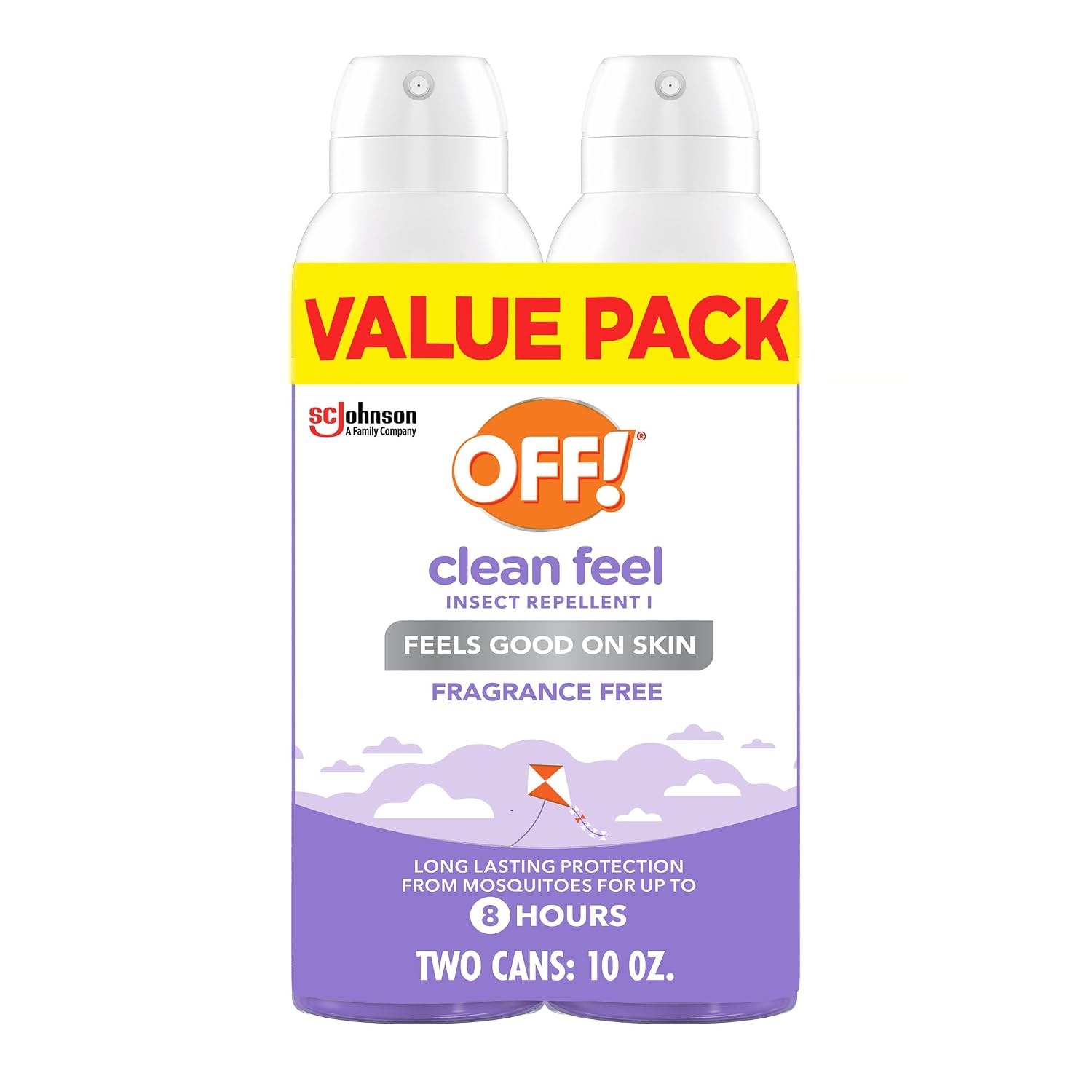 OFF Clean Feel 20% Picaridin Aerosol (2-Pack) |
|
| $11.99 | Check price |
YAYA Organics Baby Bug BAN
Babyganics Mosquito Repellent Lotion 4oz
OFF Clean Feel 20% Picaridin Aerosol (2-Pack)
YAYA Organics Baby Bug BAN — full breakdown
The YAYA Organics Baby Bug BAN spray — our top infant mosquito spray pick — is the best baby mosquito repellent for the daily-use case that most parents actually face: 30–90 minutes in the backyard at dusk, a walk to the park, a stroller ride past a wooded path. The active blend — organic soybean oil, organic castor oil, and rose geranium essential oil — relies on volatile aromatic compounds that mosquitoes find disorienting, blocking the carbon-dioxide and lactic-acid signals they use to find skin. It’s not as bulletproof as a 25% DEET formula in worst-case lakefront conditions, but it’s appropriate for babies 6 months and up (and is also marketed for pregnant and nursing mothers) while DEET and picaridin generally aren’t recommended below 2 months and 2 years respectively.
YAYA Organics doesn't publish a specific hours-of-protection figure for this formula. The published comparative-efficacy work on botanical repellents generally shows a shorter protection window than DEET or picaridin, so the safer default is to reapply based on observed mosquito activity and the manufacturer’s label directions rather than assuming an all-day window.
Picaridin is the better-tolerated choice on sensitive or eczema-prone skin — it is far less likely to sting or irritate than DEET, which is why it is the DEET-free option worth paying for. The plant-derived scent here comes from rose geranium oil rather than a synthetic chemical note.
The trade-offs are real but predictable for any DEET-free plant-oil formula. Without a manufacturer-stated reapplication interval, the safer approach is to reapply whenever you notice renewed mosquito activity, which likely means the 4oz bottle still empties faster than a comparable picaridin can over a long day outdoors. The protection ceiling is lower than picaridin or DEET in worst-case conditions — if you’re hiking in Minnesota wetlands at sunset in late July, this isn’t the formula you want.
For routine backyard, park, and stroller use across the under-2 age window where chemical alternatives aren’t appropriate, this is the best baby mosquito repellent we reviewed. At ~$14 for the 4oz bottle, it’s priced close to our lotion pick and still well under $20, which makes it practical to keep one in the diaper bag, one in the stroller console, and one in the car.
Babyganics Mosquito Repellent Lotion 4oz — full breakdown
The Babyganics lotion solves the problem the spray format can’t: how do you protect the face, ears, and neck of a baby without aerosolizing a repellent near their eyes and airway? The EPA explicitly warns against spray application near a child’s face, but bites cluster exactly there — behind the ears, along the hairline, on the cheeks, under the chin. The lotion lets a parent dispense product onto their own fingertips and apply with deliberate control to those zones (always avoiding direct application on the eyelids, lips, and hands a baby might suck on), which makes this the best baby mosquito repellent for face-adjacent protection.
The active chemistry is Babyganics' own plant-oil blend — lemongrass, citronella, peppermint, rosemary, geranium — formulated specifically for this lotion. Expect a similar reapplication cadence to other plant-oil formulas: roughly every 2–3 hours in heavy mosquito pressure.
The advantage isn’t longer duration; it’s controlled placement. Bites cluster on the cheeks, neck and behind the ears, and those are exactly the zones the EPA tells you never to spray — a fingertip-applied lotion is the only format that can cover them within the label instructions.
The chemistry is identical to the spray, so the skin-tolerance considerations are the same: patch-test on the inner forearm before the first full application, especially on eczema-prone skin. Babyganics rates the lotion as absorbing without a tacky residue, which is the failure mode that ruins most baby-skin lotions. Pump-cap delivery is also more controlled than an aerosol, which matters most for the neck and behind-the-ear zones.
The trade-offs: application is slower than spray (budget 2–3 minutes per child versus 30–45 seconds with the spray), and the duration is the same 2–3 hour window, so it’s not a 6-hour solution. The 4oz bottle at ~$14 delivers more applications-per-dollar than two 2oz sprays would, making it the best baby mosquito repellent value for high-frequency users. Stock both the spray and the lotion in tandem — spray for limbs, lotion for face-adjacent zones — and you have full coverage on a baby under 2 with appropriate-chemistry formulas across the body.
OFF Clean Feel 20% Picaridin Aerosol — full breakdown
The OFF Clean Feel picaridin aerosol is the best baby mosquito repellent for toddlers 2 and older in conditions where plant oils run out of headroom — lakefront evenings, wooded hikes, July dusk in mosquito country. Picaridin is a synthetic compound derived from black pepper that works through a similar receptor-blocking mechanism as DEET but without the plastic-melting reputation, the strong odor, or the skin-feel issues. The EPA has registered picaridin at concentrations up to 20% for use on humans, and the AAP considers 5–20% picaridin appropriate for children 2 years and older.
OFF’s EPA-registered label claims up to 8 hours of protection at 20% picaridin, and the published comparative-efficacy work supports a substantially longer protection window for registered actives at that concentration than for botanical blends. The fragrance-free formulation sidesteps the toddler-refuses-application problem that plagues citronella-heavy formulas.
Picaridin is well tolerated on young skin — but check the label age minimum before you use it, and patch-test a small area first. Check the concentration on the can as well — picaridin is sold at 5%, 10% and 20%, and only the higher concentrations carry the longer protection window.
The trade-offs are mostly about age and format. AAP guidance limits picaridin use to children 2 years and older, so this is not the best baby mosquito repellent for the under-2 set — use the YAYA Organics spray or the Babyganics lotion for that age window. The aerosol format is also inappropriate for face application: spray the product onto your own hands and apply to the face with controlled fingertip placement, never directly to the child’s face.
The two-pack pricing at ~$12 delivers two cans of an EPA-registered 20% picaridin formula for less than the cost of a single can of many premium repellent brands. For families with one toddler past the 2-year mark who spend meaningful time outdoors in mosquito-heavy regions, this is the high-efficacy DEET-free pick that closes the protection gap without the chemistry compromises of DEET itself.
5 things to know before buying a baby mosquito repellent
Mosquito protection for newborns: under 2 months, use physical barriers only
Every major pediatric guideline — AAP, EPA, CDC — agrees that no chemical mosquito repellent should be applied to the skin of infants under 2 months. The best baby mosquito repellent for a newborn is mosquito netting over the stroller or carrier, long lightweight sleeves, and avoidance of dusk hours. A dedicated net like the Enovoe Mosquito Net for Stroller covers the stroller-and-carrier piece for under $10. For the period from 2–6 months, AAP guidance permits limited plant-oil application on exposed skin with a strong preference for clothing-based protection first. Combine this with our best baby sun hat and tent guide for layered outdoor protection.
Match the active ingredient to your child’s age
Plant-oil blends (citronella, lemongrass, soybean oil, rosemary) are appropriate from 2–6 months and up, with caveats. Picaridin at 5–20% is appropriate from 2 years and older per AAP, with EPA-registered efficacy through 8 hours at the 20% concentration. DEET at 10–30% is appropriate from 2 months and older per AAP but causes more skin and chemistry concerns than picaridin. Oil of lemon eucalyptus (OLE / PMD) is specifically NOT approved for children under 3 per CDC. Match the chemistry to the age first, then optimize for efficacy and skin feel.
Never spray on hands, faces, or near the eyes
EPA application guidance is explicit: do not apply mosquito repellent to a child’s hands (they go in mouths), faces (eyes, lips), or open cuts. The best baby mosquito repellent application protocol is to spray or pump product onto the parent’s hands first, then transfer with deliberate fingertip placement to the child’s exposed limbs and (carefully) face-adjacent zones avoiding eyes and mouth. The aerosol format is fine for limbs and torso, but the lotion is the right tool for face-area zones — spray near the face is never appropriate.
Reapplication frequency matters more than headline duration
A best baby mosquito repellent that claims “up to 8 hours” of protection may deliver that in the controlled chamber tests EPA registration uses, but real-world reapplication should track sweat, splashing, and clothing-rubbing. Plant-oil formulas need reapplication every 2–3 hours in heavy mosquito pressure. Picaridin holds longer — 6–8 hours is realistic. After swimming, towel drying, or significant sweating, reapply regardless of the duration claim. Per EPA repellent ingredient guidance, real-world duration depends on activity, temperature, and skin chemistry.
Wash repellent off at the end of the day
The EPA application instructions for every registered repellent include “wash treated skin with soap and water when returning indoors.” This isn’t optional — especially with the best baby mosquito repellent picks, residue on overnight skin contributes to dryness, irritation, and (rarely) reaction. A standard bath with fragrance-free baby wash at end of day clears the product cleanly. For toddlers and older children, the EPA recommends also washing clothing that has been treated or sprayed before re-wear. Pair end-of-day washing with our best baby eczema washes guide for sensitive-skin children.
Best baby mosquito repellent: frequently asked questions
The best baby mosquito repellent for the safest profile depends on age. For infants 2–24 months, plant-oil blends like the YAYA Organics Baby Bug BAN spray or the Babyganics Mosquito Repellent Lotion are the appropriate first line — DEET-free, plant-oil-based, and rated by their manufacturers for use on babies 6 months and older. For toddlers 2 years and older, EPA-registered picaridin at 10–20% (such as OFF Clean Feel 20%) is also acceptable and delivers meaningfully longer protection duration. For infants under 2 months, no chemical repellent is appropriate — use mosquito netting, lightweight long-sleeve clothing, and dusk-hour avoidance instead.
Both are EPA-registered and considered safe at appropriate concentrations and ages, but picaridin has a meaningfully better skin-feel and odor profile and doesn’t dissolve plastics or synthetic fabrics the way DEET can. The AAP permits DEET at 10–30% from 2 months and older, and picaridin at 5–20% from 2 years and older. For most family situations, picaridin at 20% delivers DEET-equivalent efficacy without the strong odor, sticky feel, or plastic-damaging properties. Per FDA and EPA guidance, both actives have decades of safety data when used at registered concentrations.
For infants under 2 months: no chemical repellent on skin. Protect with mosquito netting, lightweight long-sleeve clothing, and avoidance of peak mosquito hours (dusk and dawn). For 2–6 months: plant-oil blends like YAYA Organics or Babyganics are generally appropriate per manufacturer guidance, with strong preference for clothing-and-netting protection first. For 6 months to 2 years: plant-oil sprays and lotions are the first-line picks.
For 2 years and older: picaridin (5–20%) becomes acceptable for higher-pressure mosquito conditions. Per the AAP HealthyChildren.org insect repellent guidance, always patch-test new products and consult your pediatrician for any specific concerns.
Yes, with caveats. Plant-oil blends (such as soybean oil, castor oil, and geranium oil, or citronella-and-lemongrass blends) deliver real bite-blocking efficacy in light-to-moderate mosquito pressure, but the protection ceiling and duration are both lower than picaridin or DEET. Manufacturers don’t always publish an exact hours-of-protection figure for plant-oil sprays, and controlled comparative testing published in the New England Journal of Medicine found botanical repellents protect for a shorter window than DEET-based products — real protection, with a lower ceiling. For routine backyard, stroller, and park use under 2 years of age where chemical alternatives aren’t appropriate, plant-oil formulas are the right tool. For peak-season lakefront or wooded conditions in toddlers 2 and older, picaridin closes the efficacy gap.
Yes, with sequencing. Apply sunscreen first, let it absorb for 15–20 minutes, then apply mosquito repellent over the top. Do not use combination sunscreen+repellent products on babies and toddlers — sunscreen needs reapplication every 2 hours and after water exposure, while repellent should not be reapplied as frequently, and combination products force one to overlap the other inappropriately. Use a dedicated mineral sunscreen (see our best mineral sunscreen for baby) and a dedicated best baby mosquito repellent in sequence, never as a single mixed product.
Stop using the product immediately and wash the application zone with fragrance-free soap and warm water to remove residue. Mild redness or itch usually resolves within 24 hours without intervention — cool compresses help. For persistent redness, blistering, swelling, or any breathing or behavioral changes, contact your pediatrician or emergency services.
Always patch-test a new repellent (any new best baby mosquito repellent product) on the inner forearm 24 hours before full-body application, especially in eczema-prone or sensitive-skin children. If reaction history exists, consult your pediatrician for a personalized recommendation before introducing any new repellent — including plant-oil formulas, which can also trigger contact dermatitis in sensitive children.
Picaridin safety for infants comes down to age. The AAP does not recommend picaridin under 2 years — use plant-oil formulas from 6 months to 2 years, and physical barriers only under 2 months. Picaridin at 5–20% is appropriate only from 2 years and older.
Our #1 best baby mosquito repellent pick: YAYA Organics Baby Bug BAN
The best baby mosquito repellent for the routine daily-use case across the under-2 age window: DEET-free, 100% plant-based chemistry appropriate for babies 6 months and older, meaningful bite-blocking efficacy in light-to-moderate mosquito pressure, and a roughly $14 price point that keeps it practical to stock one in the diaper bag, stroller, and car. Pair it with the Babyganics lotion for face-adjacent zones and graduate to OFF Clean Feel picaridin once your child crosses the 2-year mark for peak-pressure conditions.
Medical disclaimer: Not medical advice. Mosquito repellent selection and application should always be made in consultation with your child’s pediatrician, especially for infants under 6 months, children with eczema or sensitive skin, or any child with prior reaction history. The information here is educational and reflects current AAP, CDC, EPA, and FDA guidance as of the last review date. Consult HealthyChildren.org (AAP), the CDC, and the EPA insect repellent program for additional pediatric guidance.
Prices: Reflect typical Amazon pricing as of May 2026 and may vary. Manufacturer formulations and concentrations occasionally change — verify EPA registration and active-ingredient concentration on the linked product page before ordering. CDC mosquito-borne disease guidance and EPA repellent ingredient guidance are publicly available at cdc.gov and epa.gov.
- Salinas JD. West Nile Virus. Medscape Drugs & Diseases (eMedicine); updated Aug 5, 2024. West Nile virus is a mosquito-transmitted flavivirus; avoiding mosquito bites is the primary means of preventing mosquito-borne illness.
- Silverberg NB. Pediatric Contact Dermatitis. Medscape Drugs & Diseases (eMedicine); updated Mar 19, 2026. Contact dermatitis affects at least a quarter of children; irritant injury damages the protective upper epidermis, and skin protection with emollients is advised.
- Fradin MS, Day JF. Comparative Efficacy of Insect Repellents against Mosquito Bites. N Engl J Med. 2002;347(1):13-18. In controlled testing, DEET-based repellents provided substantially longer protection against mosquito bites than plant-oil-based repellents such as soybean oil, which in turn outperformed other botanical products.