
Best Bottles for Breastfed Babies for 2026
Bottles for breastfed babies can mean the difference between smooth combo-feeding and weeks of bottle refusal, nipple confusion, or baby preferring the bottle and rejecting the breast. After a research-driven review of published specs, clinical guidance, and verified owner feedback, three picks stood out: Lansinoh NaturalWave ($19 for a 3-pack, the only nipple here whose maker publishes a clinical study on reducing nipple confusion), Evenflo Balance+ Wide Neck ($22 for a 6-pack, the wide-neck value pick), and Nanobebe Flexy Silicone ($19 for a 2-pack, breast-shaped silicone with triple-vented non-collapsing nipple). All three deliver slow flow, wide nipple base for deep latch, and venting that keeps the suck-swallow-breathe rhythm coordinated. Per peer-reviewed research published in NIH PMC, bottle nipple flow rates vary wildly between brands and a nipple’s label does not reliably indicate its actual flow rate — and flow that is too fast is widely cited as a leading contributor to bottle preference in breastfed babies.
The hard truth most reviews skip: there’s no such thing as a bottle that functions exactly like the breast. The goal is choosing bottles for breastfed babies that mimic breastfeeding closely enough to preserve the latch and feeding rhythm. Common lactation guidance is to wait until breastfeeding is well-established — often cited as around 4–6 weeks — before introducing a bottle; see the American Academy of Pediatrics for breastfeeding basics, and talk with your pediatrician or an IBCLC about timing for your baby. If your baby has gas or reflux concerns, our best anti-colic bottles guide covers vented systems. For material safety questions, see our glass vs plastic bottles guide. For pumping the breast milk you’ll be feeding, our wearable breast pumps guide covers the modern hands-free options. Warming expressed milk to body temperature helps the bottle mimic the breast too — our best bottle warmers guide covers gentle, even-heat options.
See our top pick on Amazon → $18.69
The best bottles for breastfed babies
The NaturalWave nipple, whose maker publishes a clinical study on reducing nipple confusion, the wide-neck value pick Evenflo says it developed with pediatric feeding specialists, and the breast-shaped silicone hybrid with triple-vented non-collapsing nipple.
Safety first: bottles for breastfed babies need slow flow and paced feeding
The biggest cause of bottle preference in breastfed babies isn’t the bottle — it’s the flow rate. Per published clinical research, bottle nipple flow rates vary wildly between brands, with some “slow flow” nipples actually delivering medium-fast flow. Always start with the slowest available flow level (Stage 1, Slow Flow, or Newborn Flow) regardless of baby’s age, and only advance flow when baby shows clear hunger frustration after 20+ minute feeds. Combine with paced bottle feeding: hold the bottle horizontally, pause every 1–2 ounces, and let baby control the rhythm. Too-fast flow, even with a well-shaped nipple, can contribute to bottle preference over a matter of weeks. Most lactation consultants recommend waiting until breastfeeding is well-established (around 4–6 weeks) before introducing a bottle to minimize the risk of nipple confusion or supply disruption. While you’re establishing that latch in the early weeks, a supportive nursing pillow does as much for positioning as any bottle feature.
How we evaluated bottles for breastfed babies
Bottles for breastfed babies have to do more than deliver milk — they have to preserve the breastfeeding relationship while baby gets bottles from caregivers. We reviewed three things:
Nipple shape and latch mechanics. A wide, gradually sloped base is what lets a baby open wide and flange the lips — the same mechanics used at the breast — while a short, stubby nipple invites a shallow, compressed latch. We compared each nipple’s published shape and base width against the lactation literature on bottle-to-breast transition.
Flow rate accuracy and feeding duration. Many “slow flow” labels are inaccurate per the NIH PMC peer-reviewed research. Bottles flowing too fast train babies to expect easier feeding from the bottle, leading to bottle preference.
Bottle-to-breast transition. We compared the features the lactation literature ties to an easy transition — slowest available flow, a wide base that requires active sucking, and venting that keeps suck-swallow-breathe coordinated — alongside published owner reports from combo-feeding households. This is the criterion that matters most for bottles for breastfed babies — one bottle session shouldn’t disrupt the next nursing session, and shouldn’t affect maternal milk supply over weeks.
Best bottles for breastfed babies: side-by-side comparison
| Pick | Product | Key strengths | Watch-outs | Price | Where to buy |
|---|---|---|---|---|---|
| Top Pick |  Lansinoh NaturalWave |
|
| $18.69 (3-pack) | Check price $18.69 |
| Best Value | 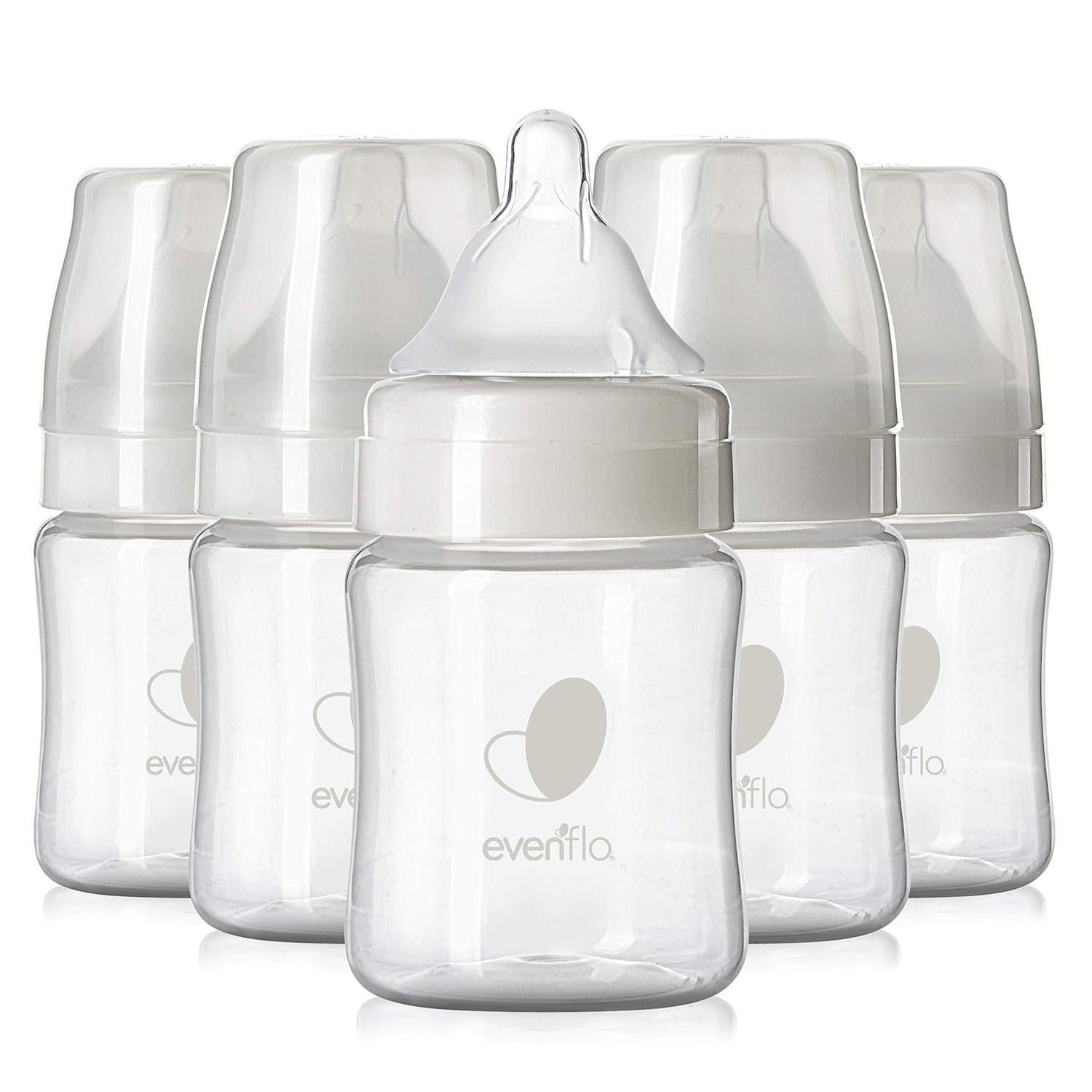 Evenflo Balance+ Wide Neck |
|
| $24.99 (6-pack) | Check price $24.99 |
| Premium Silicone |  Nanobebe Flexy Silicone |
|
| $18.99 (2-pack) | Check price $18.99 |
Lansinoh NaturalWave
Evenflo Balance+ Wide Neck
Nanobebe Flexy Silicone
Lansinoh NaturalWave — full breakdown
Lansinoh NaturalWave is the only nipple design we reviewed with a manufacturer-published clinical study specifically on nipple confusion reduction in breastfed babies. The NaturalWave design has roots in 50+ years of breastfeeding research, evolved over decades by Lansinoh — a company founded by a breastfeeding mother. The mechanism is two-part: a triangular textured base that maintains a secure latch (smooth nipples can slip during vigorous sucking), and a flexible tip that stretches and elongates with each suck just like the maternal nipple does during breastfeeding.
What parents report tends to line up with that design: combo-feeding families reviewing the NaturalWave most often describe an uneventful switch — baby takes the bottle, then goes back to the breast without a fight. That is not a controlled trial and should not be read as one, but it is the pattern you want to see in a bottle marketed for breastfed babies. The AVS anti-colic vent system is built into the nipple itself — no separate vent piece, no extra cleaning step.
The trade-offs are mild. The narrow neck shape is less obviously breast-like than wide-neck competitors (Evenflo, Comotomo), but the nipple shape compensates — what matters is what touches baby’s mouth, not the bottle profile. The slow flow nipple is genuinely slow — which is exactly what you want for a breastfed newborn, but an older baby who has outgrown it will get frustrated at the bottle, and that is a cue to move up a nipple stage rather than a defect in the bottle. At $19 for a 3-pack ($6.30/bottle), the per-bottle cost is mid-range. The 5oz size is small for older babies who take 6–8oz bottles — you’ll want to add larger Lansinoh bottles for older babies.
Evenflo Balance+ Wide Neck — full breakdown
Evenflo Balance+ Wide Neck is the wide-neck workhorse of bottles for breastfed babies. The wide-neck design encourages baby to open their mouth wide and achieve the same deep latch they use at the breast — lips flanged out, jaw working actively, tongue cupping the underside. The Proflo vent is a single-piece design integrated into the nipple base, which means there’s nothing extra to lose, scrub, or assemble. Evenflo says the bottle was developed with pediatric feeding specialists specifically for breastfeeding compatibility, not as an afterthought to a standard formula bottle.
The Evenflo Balance+ has the widest, most breast-like nipple base of these, which is the design feature that makes a breastfed baby accept a bottle without fighting it. The slow flow rate is the point: a well-paced 4-ounce bottle should run about 15–20 minutes, and only the slowest nipple stage keeps a feed in that window instead of finishing in five. The single biggest practical issue is finding it in stock. Demand often outpaces supply, and Amazon stock-outs are commonly reported by shoppers. Lactation Hub and Evenflo’s direct site are alternative places to check when Amazon is empty.
Cost is the standout positive. At its 6-pack size, it has the lowest per-unit cost of the three picks here. For combo-feeding families who need 5–8 bottles in rotation (so some are always clean while others are in use), the value is meaningful over a 12-month feeding period. The glass version is available at slightly higher price for parents prioritizing material safety. Volume markings on the plastic version can be hard to read in low light — a permanent-marker line at your usual volume is the standard fix for night feeds.
Nanobebe Flexy Silicone — full breakdown
Nanobebe Flexy Silicone is the answer for parents who want bottles for breastfed babies with the safety of medical-grade silicone plus a breast-shaped feeding profile. The triple-vented non-collapsing nipple is the technical differentiator — most silicone bottle nipples collapse during vigorous sucking, which forces baby to suck harder and gulp air. The triple-vent system is designed to hold flow steady during fast sucking phases, which is how a non-collapsing nipple avoids the air-swallowing problem soft nipples otherwise create.
It is the pick to try for a breastfed baby who has already refused other brands. The squeezable silicone body gives tactile breast-mimicking feedback during feeds — the reason a soft-bodied bottle is the usual next attempt after a rigid one is rejected. The natural-feel silicone nipple has a softer texture than rigid nipples, which matters for babies sensitive to mouthfeel differences. Silicone also removes the drop problem glass creates — a soft body has no shatter risk on a tile floor.
The trade-offs are real but manageable. Nanobebe Flexy is a newer product than Lansinoh (which has 30+ years of refinement) — less long-term real-world data exists. The 2-pack at $19 makes per-bottle cost $9.50, more expensive than Evenflo. The non-tip stable base is a meaningful design feature, however — the bottle stands upright when filled (unlike Comotomo, which can wobble). For families prioritizing material safety alongside breastfeeding compatibility, Nanobebe Flexy addresses both. The 5oz size is appropriate for breastfed-baby bottle volumes — rarely should a breastfed baby take more than 4–5 ounces per bottle.
5 things to know about bottles for breastfed babies
Wait until breastfeeding is well-established
Most lactation consultants recommend introducing bottles for breastfed babies after the 4–6 week mark, when latch and supply are well established. Earlier introduction may be necessary for medical reasons (low supply, weight gain concerns, latch pain), and waiting until feeding is established is intended to reduce the risk of nipple confusion or supply disruption. The AAP frames this as waiting until breastfeeding is well established rather than hitting a fixed calendar date — check with your pediatrician or an IBCLC about your own timing.
Slow flow matters more than bottle brand
Per the NIH PMC peer-reviewed flow rate study, “slow flow” isn’t standardized across brands — some slow-flow nipples deliver moderate flow that’s actually too fast for breastfed babies. Always start with the slowest available flow level regardless of baby’s age, and only advance when baby clearly outpaces the flow during feeds. Too-fast flow is one of the most commonly cited contributors to bottle preference.
Wide nipple base supports a deep latch
The most breastfeeding-compatible bottles for breastfed babies have a wide nipple base that gradually slopes — not a stubby short nipple labeled as “breast-like.” The wide base encourages baby to open their mouth wide and achieve the same deep latch used at the breast. Lips flanged out around a wide base means baby is using the same jaw and tongue mechanics that maintain effective breastfeeding.
Paced bottle feeding helps reduce bottle preference
Even the best bottle nipple won’t prevent bottle preference if you’re feeding wrong. Paced bottle feeding involves holding the bottle horizontally (not vertically), pausing every 1–2 ounces for breaks, and letting baby control the rhythm. The technique slows flow and forces baby to actively work for milk, just like at the breast. Combine paced feeding with slow-flow nipples for compounding protection against bottle preference.
Plan for 4–6 bottles in rotation for combo-feeding
Combo-feeding families typically need 4–6 bottles in rotation — some always clean and ready, others in use, others washing. The Evenflo Balance+ 6-pack covers a single family completely; Lansinoh and Nanobebe 2–3-packs work better as supplements. For exclusively pumped milk feeding (no breastfeeding), plan 8–10 bottles to handle 5–6 daily feeds plus the cleaning cycle. A dedicated bottle drying rack keeps that rotation moving without colonizing the whole counter.
Best bottles for breastfed babies: frequently asked questions
Most lactation consultants recommend introducing bottles for breastfed babies around 4–6 weeks of age, after breastfeeding is well-established; the AAP frames it as waiting until breastfeeding is well established rather than a fixed date. This window minimizes nipple confusion risk while keeping baby flexible enough to accept the new feeding method. Earlier introduction may be necessary for medical reasons. Later introduction (after 8 weeks) sometimes meets bottle refusal — older babies can develop strong breast preference. The 4–6 week sweet spot works for most healthy term babies.
Always start with the slowest available flow level — Stage 1, Slow Flow, or Newborn Flow — regardless of baby’s age. Per the published flow rate research, “slow” isn’t standardized between brands; some slow-flow nipples are actually moderate-flow. A 4-ounce bottle should take 15–20 minutes to finish at the right flow rate for breastfed babies. If your baby finishes in under 10 minutes, the flow is likely too fast, which can encourage bottle preference.
Modern research suggests “nipple confusion” is more accurately “flow preference” — babies don’t get confused by the physical difference between breast and bottle, they prefer the easier flow of fast bottles. This is why bottle nipple choice matters: a slow-flow, wide-base nipple that requires baby to actively work for milk preserves the breastfeeding relationship. The right bottle plus paced feeding makes what was traditionally called nipple confusion much less likely.
Counterintuitively, yes — some “breast-shaped” bottles have stubby short nipples that promote a shallow latch. Many lactation consultants favor bottles with a gradually sloped wide-base nipple over those marketed as “breast-shaped.” What matters is what happens inside baby’s mouth, not what the bottle looks like on the outside. A flat, wide nipple base that encourages a deep latch is the actual breastfeeding-compatible design, regardless of overall bottle silhouette.
Yes — the difference is mostly the nipple. Standard bottles often pair a narrow base with a faster flow, which encourages a shallow latch and quick milk delivery. Every pick here combines the slowest available flow, a wide nipple base for a deep latch, and venting that keeps the suck-swallow-breathe rhythm intact.
Yes — all bottles for breastfed babies work with both breast milk and formula. There’s no chemical or mechanical reason to use separate bottle sets. Lansinoh, Evenflo Balance+, and Nanobebe Flexy all handle both equally well. For combo-feeding families who supplement with formula occasionally, the same bottle inventory covers both. Make sure to label or color-code if you’re mixing breast milk and formula in the same household to avoid accidentally giving formula when breast milk was intended.
For combo-feeding families giving 1–3 bottles per day, plan 4–6 bottles in rotation — some always clean and ready, others in use, others in the cleaning cycle. The Evenflo Balance+ 6-pack covers a single combo-feeding family completely. For exclusively pumped milk feeding with 5–6 daily bottles, scale up to 8–10 bottles. Multi-caregiver households (daycare, grandparents) often benefit from a separate set kept at the secondary location to avoid daily transport.
Of our three picks, the Evenflo Balance+ is the one offered in glass — the same slow-flow, wide-base nipple on a glass bottle for families avoiding plastic. Glass is heavier and can break, so many parents keep glass at home and use plastic or silicone on the go. Our glass vs plastic bottles guide compares the materials in depth.
Best bottle for breastfed baby: our #1 pick is Lansinoh NaturalWave
The only nipple design in this guide with a manufacturer-published clinical study on reducing nipple confusion. The NaturalWave triangular textured base maintains secure latch, the flexible tip stretches like the breast, and the AVS anti-colic vent is built right into the nipple.
Check price on Amazon → $18.69Medical disclaimer: Not medical advice. Bottle introduction for breastfed babies should be discussed with a pediatrician or IBCLC lactation consultant when timing, supply, or latch concerns exist. The information here is educational and reflects current clinical guidance as of publication. Consult HealthyChildren.org (AAP) for additional pediatric guidance.
Prices: Reflect typical Amazon pricing as of April 2026 and may vary. Pack sizes occasionally change — verify on the linked product page before ordering. Evenflo Balance+ Wide Neck goes out of stock periodically — Lactation Hub and Evenflo’s direct site are alternative places to check when Amazon is empty.
- Wagner CL. Counseling the Breastfeeding Mother. Medscape Drugs & Diseases (eMedicine); updated Jan 19, 2024. Breastfeeding is the criterion standard for infant feeding; correct latch and proper flange/positioning are central to comfortable, effective milk transfer.
- Pados BF, Park J, Thoyre SM, Estrem H, Nix WB. Milk Flow Rates From Bottle Nipples Used After Hospital Discharge. MCN Am J Matern Child Nurs. 2016;41(4):237-243. Across 26 bottle-nipple types from 15 common brands (N=260), measured milk-flow rates varied widely and the nipple’s name did not reliably indicate its actual flow rate — “slow flow” labels are not standardized.
- Centers for Disease Control and Prevention. About Feeding From a Bottle. CDC Infant and Toddler Nutrition. Recommends responsive, paced bottle-feeding: hold the bottle at an angle so milk flows only when the baby sucks, let the baby pause, and stop when the baby shows fullness cues rather than pushing to finish.