
High Chair Footrest Guide for 2026
High chair footrest installation is the single biggest fix you can make to a non-ergonomic chair — and most parents don’t realize they need one until baby is 12 months in and chronic squirming, food refusal, or shorter mealtimes start showing up. After reviewing SLP and OT guidance, published safety standards, verified manufacturer specifications and verified owner feedback, three picks stood out depending on what chair you already own: the Nibble and Rest Woodsi Footsi for IKEA Antilop ($24, widely recommended by feeding specialists), the PandaEar bamboo Antilop alternative ($22, the generic-brand value version), and the acrylic clip-on for Inglesina Fast Table Chair ($17, one of the very few travel-booster-compatible footrests we could find on Amazon). Per SLP Kayla Richardson via the Yeahbabygoods clinical guide, “an adjustable footrest is a non-negotiable when it comes to making sure your child is supported in their high chair for mealtimes.” Yet most popular high chairs ship without one.
The hard truth most parents discover too late: the IKEA Antilop ($25, one of the most widely owned budget high chairs in the US) has zero footrest, leaving baby’s feet dangling for the entire 18-month feeding window. Even premium chairs like the Inglesina Fast Table Chair (top pick in our travel booster seats guide) ship without a footrest because they’re designed to clamp to the table. The fix isn’t buying a new chair — it’s adding the right aftermarket footrest. Feeding clinicians describe proper 90/90/90 seated posture during meals as giving a baby a stable trunk base for more coordinated chewing and swallowing, which matters because food is the most common cause of foreign body aspiration in young children. If you’re also evaluating chairs, our ergonomic high chairs guide covers the chairs that ship with adjustable footrests built in. For mealtime accessories, our suction plates and bibs guide covers what to put on the tray. And for what ends up under the chair, our best splat mats guide covers the catch-everything layer.
The best high chair footrest options depending on your chair
The right high chair footrest depends on what chair you own: specialist Antilop footrest for the most popular cheap chair, generic bamboo Antilop alternative for the budget path, or acrylic clip-on for hook-on Inglesina-style chairs.
Safety first: high chair footrest installation requires the harness every meal
Per the Nibble and Rest installation guidance and SLP Kayla Richardson’s clinical recommendations, every high chair footrest installation increases the chance that a child can use the footrest as leverage to push out of the seat. The mitigation is non-negotiable: ALWAYS securely fasten your child’s safety harness while using any aftermarket footrest. The Antilop’s built-in 3-point harness is sufficient when properly tightened — never skip it because the meal is short. Verify the footrest is securely attached (o-rings tightened, clamps engaged) before placing the child in the chair, and check stability weekly. Keep o-rings, clamps, and any small spare parts out of reach of children — they pose choking and scratch hazards. Per AAP HealthyChildren, never leave a child unattended in any high chair, with or without a footrest accessory.
How to install a high chair footrest at the right height
High chair footrest installation done wrong is worse than no footrest — if the height is off, baby’s knees won’t hit 90 degrees and you’ll still see the same squirming and food refusal. The full process takes 5 minutes per session, and you’ll re-measure every 4–6 weeks as baby grows:
Step 1: Get baby seated with the harness fastened. Place baby in the high chair with the safety harness properly tightened. Baby’s back should be flush against the seat back and bottom should be all the way at the back of the seat (not slumped forward). This is the position you’re measuring from — not how baby naturally sits without thinking about it.
Step 2: Measure to the 90/90/90 position. With baby seated correctly, measure from the seat surface (where baby’s thigh ends) straight down to where their feet should rest. Baby’s knees should bend at 90 degrees, with the lower leg hanging straight down. Mark that distance with tape on the high chair leg — this is your target footrest height. Baby’s feet should rest flat (90 degrees at the ankle) on the footrest with no toe-pointing or heel-lifting.
Step 3: Install the footrest at marked height and verify. Slide o-rings (most aftermarket footrests use o-rings on the chair legs) to the marked height and place the footrest on top. For clamp-on models, tighten the clamps below the o-rings to lock height. Place baby back in the chair with harness fastened and confirm: hips at 90, knees at 90, ankles at 90, with feet flat and weight-bearing on the footrest. Re-check fit every 4–6 weeks as baby grows; raise the footrest position when knees no longer hit 90.
High chair footrest options: side-by-side comparison
| Pick | Product | Key strengths | Watch-outs | Price | Where to buy |
|---|---|---|---|---|---|
| Best for IKEA Antilop |  Nibble and Rest Woodsi Footsi |
|
| $23.99 | Check price $23.99 |
| Best Value |  PandaEar Antilop Footrest |
|
| $20.98 | Check price $20.98 |
| Top Pick | 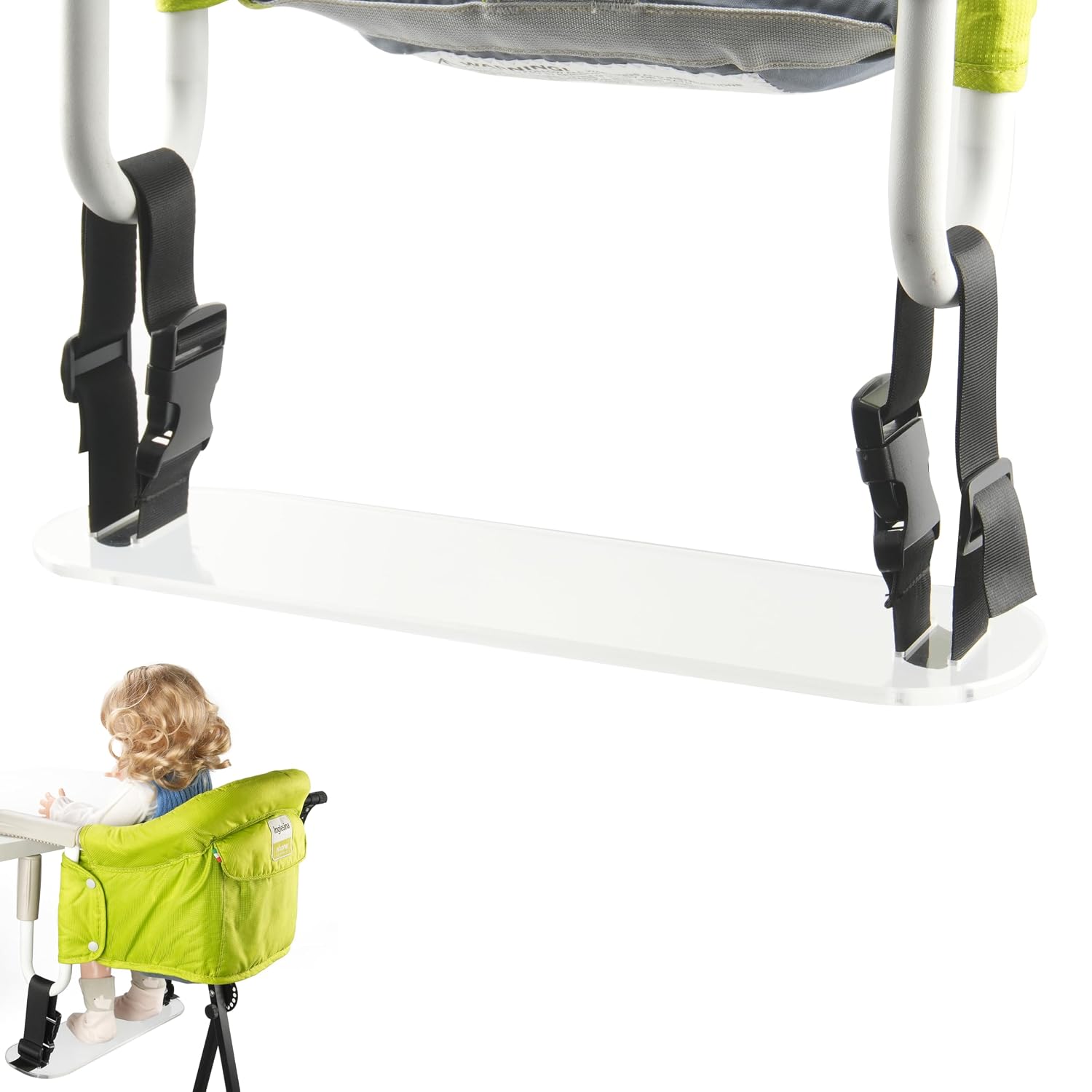 Acrylic Inglesina-Compatible Footrest |
|
| $13.99 | Check price $13.99 |
Nibble and Rest Woodsi Footsi
PandaEar Antilop Footrest
Acrylic Inglesina-Compatible Footrest
Nibble and Rest Woodsi Footsi — full breakdown
Nibble and Rest Woodsi Footsi is the specialist-branded high chair footrest for IKEA Antilop owners who want the established Footsi solution. The Australian brand Nibble and Rest created the original Footsi product line to solve the Antilop’s missing-footrest problem — and the bamboo Woodsi version is the wooden-aesthetic premium upgrade. The brand publishes detailed installation guidance referencing the 90/90/90 positioning standard and includes safety warnings about harness use that competitor generic brands rarely include.
The bamboo construction has rounded corners. The o-ring + suction-hook installation system is more secure than o-rings alone, with Velcro straps that loop around the front Antilop legs to prevent the footrest sliding down under baby’s weight. Per the brand’s installation documentation, first-time installation takes about 5 minutes; subsequent height adjustments take about a minute. Owners report the bamboo finish wipes clean with a damp cloth after the typical yogurt-and-puree messes.
The trade-offs are honest. The Woodsi Footsi only fits IKEA Antilop — if you have any other high chair, this product won’t work for you and you’ll need a different solution from this guide. The $3 premium over generic alternatives is real but reasonable given the established brand and 90/90/90 installation guide that comes with the product. For first-time parents who want the most established specialist high chair footrest option with proper installation guidance, this is the right Antilop solution. For parents who’ve already researched 90/90/90 positioning and don’t need the brand premium, the PandaEar alternative delivers the same physical product at $22.
PandaEar Antilop Footrest — full breakdown
PandaEar Antilop Footrest is the cost-conscious high chair footrest path for IKEA Antilop owners who don’t need the specialist brand. The bamboo wood construction is functionally identical to the Nibble and Rest Woodsi Footsi at $2 less. PandaEar is a known baby-accessories brand on Amazon with consistent reviews across their product line — not an unbranded knockoff. The o-ring installation system is the same as competing premium brands, sized specifically for the Antilop’s 0.98″ pole diameter.
The use case is straightforward: if you’ve already read this guide and understand the 90/90/90 installation methodology, you don’t need the Nibble and Rest brand premium. PandaEar delivers the same bamboo footrest at $22 with the same height-adjustable functionality and same Antilop-specific compatibility. The bamboo material has rounded corners that match the safety profile of the specialist-branded version. Installation takes the same 5 minutes the first time; the only difference is no manufacturer-supplied 90/90/90 guide (which our methodology section above covers regardless).
The trade-offs are minor but real. No specialist-brand heritage — if you value the established-brand narrative for peace of mind, the Nibble and Rest version may be worth the $3 premium. The PandaEar version uses o-rings only without the suction hook + Velcro strap system Nibble and Rest includes for extra slip prevention; in practice, properly-tightened o-rings hold securely, but the redundant attachment system on the premium version reduces edge-case risk. For Antilop owners who want the cheapest properly-functional high chair footrest, this is the right pick. For first-time parents wanting maximum installation safety margin, the Nibble and Rest version is the right choice.
Acrylic Inglesina-Compatible Footrest — full breakdown
The Acrylic Inglesina-Compatible Footrest fills a genuine gap in the high chair footrest market: hook-on/clamp-on travel booster seats almost never come with footrests, and the Antilop-specific bamboo solutions don’t fit clamp-on chair frames. The Inglesina Fast Table Chair (top pick in our travel booster seats guide) is one of the most popular hook-on chairs in the US — and it ships with zero footrest because it’s designed to clamp directly to the dining table. This acrylic clip-on solves that problem.
The use case is specific: families who use the Inglesina Fast Table Chair as their primary home high chair (many do, since it brings baby up to the family table) and want 90/90/90 positioning during meals. The clear acrylic construction is firm enough to support baby’s feet without flexing, light enough not to add significant weight to the Inglesina’s clamp load, and easy to wipe clean. Height adjustability tracks with baby’s growth across the typical 6–36 month feeding window. Installation requires verifying compatibility with your specific Inglesina model first — the listing specifies the dimensions clearly.
The trade-offs are real but predictable for the niche. Compatibility is limited to the Inglesina Fast Table Chair specifically — not other clamp-on brands like Phil & Teds Lobster, Chicco FastLock, or Mountain Buggy Pod. The acrylic is firmer than bamboo wood, which some toddlers find less comfortable for extended meals. For Inglesina owners who want a dedicated high chair footrest solution, this is the clearest Amazon option we found that fits the chair properly. For non-Inglesina hook-on chair owners, the DIY methods (rolled towel + Velcro strap, pool noodle footrest) covered later in this guide are the workaround.
5 things to know about high chair footrest selection
The IKEA Antilop is why this category exists
The IKEA Antilop ($25, one of the most widely owned budget high chairs in the US) ships with zero footrest. Its missing footrest is one of the most frequently discussed high chair positioning problems among pediatric feeding therapists. Per SLP Kayla Richardson via Yeahbabygoods, “the missing footrest leaves your child’s feet dangling, which can lead to shorter mealtimes, squirming in the seat, distracted eating and poor oral motor control.” If you have an Antilop, your high chair footrest is non-negotiable.
Footrest height changes every 4–6 weeks as baby grows
The right high chair footrest height isn’t a one-time setting — baby’s leg length grows fast in the 6–18 month window when most families add a footrest. Re-measure to the 90/90/90 position every 4–6 weeks. The o-ring + adjustable-board systems used by all three picks in this guide raise the footrest in 60 seconds without tools. Lock the footrest at the new height once you’ve verified knees still bend at 90 degrees.
DIY high chair footrest fixes work in a pinch
If you can’t buy an aftermarket footrest immediately, DIY fixes work. Per dietitian guidance referenced in My Little Eater clinical reviews, options include a cut pool noodle attached between the chair legs, an exercise band stretched at the right height, a fabric sling tied to the legs, or a footstool placed under the chair. The goal is consistent 90/90/90 positioning — the materials don’t matter as long as the height is right and the surface is stable.
Some high chairs already have adjustable footrests built in
If you’re still chair-shopping, our ergonomic high chairs guide covers the chairs that ship with adjustable footrests as standard equipment: Stokke Tripp Trapp, Abiie Beyond Junior, and Skip Hop EON 4-in-1. Buying one of these eliminates the need for any aftermarket high chair footrest accessory. Cost runs $161–$249 for the chair alone, vs $25 (Antilop) plus $22–$24 (footrest accessory) totaling $47–$49 with the aftermarket fix.
Travel booster seats need different solutions
Hook-on/clamp-on travel booster seats have different high chair footrest needs than freestanding chairs. The Inglesina Fast Table Chair is one of the few major travel boosters with a dedicated aftermarket footrest (the acrylic clip-on in this guide). For other clamp-on brands, DIY methods (rolled towel attached to the chair leg with Velcro, pool noodle footrest) are typically the workaround. See our travel booster seats guide for chair-specific footrest compatibility notes.
High chair footrest: frequently asked questions
Many pediatric feeding therapists (SLPs and OTs) strongly recommend one. Feeding clinicians describe proper 90/90/90 seated posture as giving a baby a stable trunk base for more coordinated chewing and swallowing. Without a footrest, baby’s legs dangle, core stability is reduced, and baby spends effort balancing instead of chewing/swallowing — which parents and therapists link to shorter mealtimes, food refusal and distracted eating. A footrest is not a guarantee against choking or aspiration, and no seating setup is — always supervise meals and use age-appropriate food shapes.
From the very first meal in the high chair — typically around 6 months when baby starts solids. Don’t wait for symptoms (squirming, food refusal, shorter mealtimes) to add the footrest. The 90/90/90 position is foundational for safe feeding from day one of solid food introduction. If you already own an IKEA Antilop or other footrest-free chair, install the aftermarket footrest before you start baby-led weaning, not after problems develop. Getting positioning right from the start is easier than correcting entrenched mealtime habits later.
Yes, if you have one at the right height that doesn’t shift during meals. The challenge is height adjustment as baby grows — a fixed-height footstool works at one age and stops working 4–6 weeks later when baby’s legs grow. The aftermarket high chair footrest accessories in this guide adjust in 60 seconds without tools, while a footstool requires you to either own multiple heights or accept worsening 90/90/90 positioning over time. Footstools also slide on hard floors during meals, which destabilizes the position. For one-time use or as a stopgap, footstools are fine; for ongoing use, get the dedicated accessory.
No — high chair footrest accessories are typically designed for specific chair models. The bamboo and acrylic options in this guide fit IKEA Antilop and Inglesina Fast Table Chair respectively. For other brands (Graco, Chicco, Fisher-Price, Boon, Joovy), check Amazon for chair-specific footrest add-ons or use DIY methods (pool noodle, exercise band, fabric sling). The o-ring + clamp installation systems used by Antilop footrests rely on the Antilop’s specific 0.98″ pole diameter and won’t fit thicker or thinner chair legs.
Bamboo is the more commonly chosen material for high chair footrest accessories — warmer feel under baby’s feet, more natural surface texture for grip, and rounded corners that don’t cut socks or skin. Acrylic is firmer (good for stable foot placement) and easier to wipe clean, but firmer surfaces can be uncomfortable for extended meals. The bamboo Antilop options in this guide are the right pick when wood compatibility exists; the acrylic Inglesina-compatible option exists because no bamboo solution fits the Inglesina’s frame.
Yes — per Nibble and Rest installation guidance, an aftermarket high chair footrest gives toddlers a leverage point to push themselves out of the seat. The mitigation is non-negotiable: ALWAYS use the safety harness fastened tightly every meal. Never skip the harness because the meal is short. Verify footrest stability weekly — o-rings can loosen over time, especially if baby kicks repeatedly. Keep small parts (spare o-rings, clamps) out of reach — choking and scratch hazards exist. Never leave a child unattended in any high chair, with or without a footrest accessory installed.
Our IKEA Antilop pick: Nibble and Rest Woodsi Footsi
The specialist bamboo high chair footrest purpose-built for IKEA Antilop — one of the most widely owned budget high chairs in the US. Bamboo wood with rounded corners, height-adjustable o-ring system, and includes 90/90/90 installation guidance from the Australian brand that created the original Footsi footrest.
Check price on Amazon → $23.99Medical disclaimer: Not medical advice. High chair footrest installation should be confirmed with a pediatric occupational therapist, speech-language pathologist, or feeding specialist when feeding-readiness, sensory processing, or developmental concerns exist. The information here is educational and reflects current clinical guidance from SLP Kayla Richardson via Yeahbabygoods, Nibble and Rest installation documentation, and AAP HealthyChildren. Never leave a child unattended in any high chair. Consult HealthyChildren.org (AAP) for additional pediatric guidance.
Prices: Reflect typical Amazon pricing as of April 2026 and may vary. The Nibble and Rest Woodsi Footsi and PandaEar Antilop Footrest are designed exclusively for IKEA Antilop — verify your high chair model before ordering. The Acrylic Inglesina-Compatible Footrest is designed exclusively for Inglesina Fast Table Chair — not compatible with other clamp-on brands like Phil & Teds Lobster or Chicco FastLock.
- Warshawsky ME. Foreign Body Aspiration. Medscape Drugs & Diseases (eMedicine); updated Mar 5, 2024. Foreign body aspiration can be a life-threatening emergency — a large object obstructing the airway can cause asphyxia — and the aspirated object is most often food.