
Best Feeding Therapy Tools for 2026
Feeding therapy tools are the SLP-and-OT-prescribed gear that addresses oral motor delays, sensory aversions, weak suck, and bite-and-chew weakness in babies and toddlers who need targeted intervention beyond standard feeding gear. After a research-driven review of published specs, clinical guidance, and verified owner feedback, three picks support the structured oral motor protocol at distinct skill targets: the ARK Z-Vibe Travel Kit ($83, the oral motor pick because the vibrating handle plus interchangeable tips covers oral awareness, bite-and-chew, and feeding-integration work in one therapist-designed system), the ARK Bear Bottle Kit / Honey Bear Straw Cup ($23, the top pick whose squeeze-assisted one-way valve lowers the suction effort required for straw-skill training), and the ARK Y-Chew Sensory Chew in Standard Softness ($14, the bite-and-chew pick whose three-extension Y-shape lets babies practice premolar, front teeth, and back molar chewing in a single tool). Oral-motor and feeding therapy is delivered by a pediatric SLP or OT, so tool selection and dosing should be directed by the clinician treating your child; see AAP HealthyChildren for general guidance on pediatric feeding concerns.
The hard truth most therapy gear reviews skip: feeding therapy tools belong in the hands of trained users. Used correctly under the guidance of a pediatric SLP, OT, or feeding therapist, they support the specific skill targets that clinician is working on. Used incorrectly without specialist coaching, they can entrench problematic oral patterns or create aspiration risk. Every recommendation on this list assumes you’re working with — or have consulted — a feeding specialist who can fit the tool to your child’s specific oral motor profile. For specialty bottles that pair with these tools for medically complex infants, see our bottles for reflux and cleft guide. For graduating from straw therapy to standard cups, see our transition cups guide. For the reflux management protocol that often pairs with feeding therapy, see our reflux management guide.
The best feeding therapy tools
The right answer in the feeding therapy tools category depends on which oral motor skill needs intervention: sensory awareness and oral motor stimulation, straw suck for kids with weak or aspirating suck patterns, or bite-and-chew strength across all dental zones.
Safety first: feeding therapy tools require specialist guidance
Per ARK Therapeutic’s own product documentation — and consistent with AAP HealthyChildren advice to supervise young children closely during feeding — these are not toys — they are therapeutic tools intended for use by professional therapists or trained caregivers under specialist supervision. The reason isn’t marketing positioning — it’s clinical. The Z-Vibe vibration intensity, the Honey Bear flow rate, and the Y-Chew firmness level all need calibration to your child’s specific oral motor profile, sensory tolerance, and treatment goals. Buying these feeding therapy tools without an SLP or OT in the loop means guessing on dose and protocol — both factors that determine whether the tool helps or harms. All chew tools require constant adult supervision; degraded chew tools (cracks, tears, deep tooth indentations) are choking hazards and must be replaced. ARK Therapeutic labels these as therapeutic tools intended for clinical or trained-caregiver use rather than general infant feeding gear, and describes the materials as meeting FDA-compliant standards. Coordinate any feeding therapy tools purchase with the SLP or OT actively treating your child.
How we evaluated feeding therapy tools
A feeding therapy tool comparison without standardized criteria is just opinion. We compared three picks against published criteria covering clinical fit, mechanism alignment, and material safety:
Published SLP or OT design credit for the specific oral motor skill. Each tool was evaluated against pediatric feeding therapy and occupational therapy practice frameworks. The ARK Z-Vibe was developed by Debra Lowsky, MS, CCC-SLP, and ARK Therapeutic publishes it as a therapist-designed oral motor tool with a documented tip system mapped to individual therapy targets. The ARK Bear Bottle (Honey Bear) is widely used in pediatric feeding therapy for straw-drinking skill development in kids with weak suck, prematurity history, Down syndrome, or aspiration risk. The Y-Chew is a widely used tool in the bite-and-chew therapy category because the three-arm Y-shape addresses bilateral chewing development across multiple dental zones in a single tool.
Mechanism alignment with the underlying therapy goal. The Z-Vibe’s vibrating handle delivers gentle, calibrated tactile input to the lips, gums, palate, cheeks, and tongue — “waking up” oral awareness in hyposensitive babies and slowly desensitizing oral tissues in hypersensitive babies. The Honey Bear’s Select-Flow Valve is a one-way valve at the base of the straw that holds liquid at the top once primed, holding the liquid column at the straw tip so the child does not have to re-draw it from the bottle on every sip, which is what makes straw skill achievable while the child builds suction strength. The Y-Chew’s three textured arms (smooth, ribbed, gentle bumps) reach the front teeth, premolars, and back molars with a single tool, supporting bilateral and graded chewing development across all dental zones.
Practical fit within active pediatric feeding therapy. Each tool was mapped to the skill target it is published for — oral awareness and sensory regulation for the Z-Vibe, straw-suck development for the Honey Bear, and graded bite-and-chew work for the Y-Chew — and checked against the manufacturer’s stated indications. We did not run a family trial and we do not report progress timelines: how quickly a child progresses is set by that child’s oral motor profile and the treatment plan their SLP or OT writes. None of these tools “cure” oral motor delays alone — they are used inside a specialist-guided treatment plan.
Feeding therapy tools: side-by-side comparison
| Pick | Product | Key strengths | Watch-outs | Price | Where to buy |
|---|---|---|---|---|---|
| Best for Oral Motor |  ARK Z-Vibe Travel Kit (with Spoons) |
|
| $82.99 | Check price $82.99 |
| Top Pick | 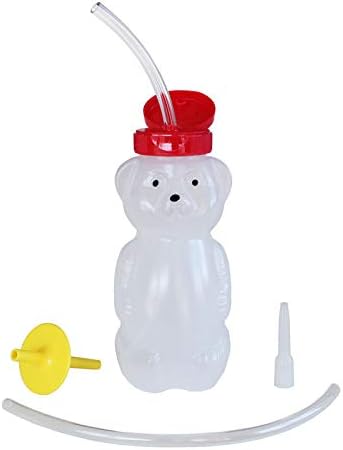 ARK Bear Bottle Kit (Honey Bear Straw Cup) |
|
| $22.99 | Check price $22.99 |
| Best for Chew Therapy |  ARK Y-Chew Sensory Chew (Standard Softness) |
|
| $13.75 | Check price $13.75 |
ARK Z-Vibe Travel Kit (with Spoons)
ARK Bear Bottle Kit (Honey Bear Straw Cup)
ARK Y-Chew Sensory Chew (Standard Softness)
ARK Z-Vibe Travel Kit — full breakdown
The ARK Z-Vibe Travel Kit is the most broadly configured tool in this guide — a vibrating handle plus an interchangeable tip system that ARK Therapeutic publishes for oral motor therapy rather than for general infant feeding. The Z-Vibe was developed by Debra Lowsky, MS, CCC-SLP, and the design reflects clinical experience rather than consumer-product compromises. The vibrating handle delivers gentle, calibrated tactile input to the lips, gums, palate, cheeks, and tongue — “waking up” oral awareness in babies with hyposensitivity (where increased sensory input drives feeding readiness) and slowly desensitizing oral tissues in babies with hypersensitivity (where the rhythmic vibration breaks defensive responses to oral input).
The interchangeable tips map to specific therapy goals: the Probe Tip provides bumpy and striated textures for general oral exploration, the Bite-n-Chew Tip introduces chew-therapy mechanics, the Tongue Depressor Tip supports mid-blade tongue elevation work, and the Spoon Tip lets the Z-Vibe deliver food during sensory-feeding integration sessions. The Travel Kit configuration pays for itself versus buying tips a la carte, and the included case keeps small tips organized between sessions. Built in the USA from medical-grade FDA-compliant plastic.
The trade-offs are honest. The $83 price point is the highest on this list and meaningfully higher than the $14 Y-Chew or $23 Honey Bear — but the per-session value across an entire treatment course is the lowest of the three because the Z-Vibe gets the most clinical mileage. The proprietary AAAA battery is harder to find at standard retailers than AA or AAA — order replacement 2-packs alongside the Travel Kit so you don’t lose therapy time when the battery dies. The Z-Vibe is explicitly not a toy and not a teether — it should never be left with a child unsupervised. For families whose oral motor therapy plan includes sensory awareness, oral motor stimulation, or feeding-integration work, this is the right pick. Families focused on straw skill should pair with the Honey Bear; families focused on chew therapy should pair with the Y-Chew.
ARK Bear Bottle Kit (Honey Bear) — full breakdown
The ARK Bear Bottle Kit — commonly called the Honey Bear straw cup in feeding therapy contexts — is the standard tool for teaching straw drinking to babies and toddlers who can’t generate enough suction to draw liquid up a regular straw. The mechanism is the Select-Flow Valve, a one-way valve that sits at the base of the straw and prevents liquid from flowing back down into the bottle once it’s been pushed up. The therapist or parent squeezes the bear’s belly to prime the straw, the liquid stays at the top, and the child only needs minimal suction to take the next sip.
Straw drinking is clinically preferred over sippy spouts because it develops the mature swallow pattern, lip closure, tongue retraction, and cheek tension that pediatric SLPs target — sippy spouts promote anterior tongue position similar to bottle-feeding and can entrench immature patterns. For kids with weak suck, oral motor delays, prematurity history, Down syndrome with hypotonia, or stroke recovery, the suction effort required by a regular straw is a non-starter. The Honey Bear’s reduced effort is designed to make the skill achievable while the child builds suction strength. It is a common tool in SLP-led straw-drinking programs; how long a child takes to progress varies and is set by the treating clinician’s plan. The Lip Blok (a yellow disc threaded onto the straw) limits how far the straw can be inserted, which helps avoid triggering the gag reflex.
The trade-offs are predictable for the therapy-cup category. The Honey Bear is best paired with thin liquids (water, milk, pulp-free juice) — thickened liquids at “honey” or “pudding” consistency don’t flow well through the standard valve and require a trimmed valve or a different system. The bottle is not fully leak-proof if tipped horizontally, which means it’s a therapy tool, not a daily cup — once your child has built straw skill, transition to a daily-use straw cup. For the right next-stage cup, see our transition cups guide. For families whose feeding therapy plan includes straw-skill training, weak-suck remediation, or aspiration-risk straw work, this is the right pick.
ARK Y-Chew Sensory Chew — full breakdown
The ARK Y-Chew is the right pick for the bite-and-chew therapy category because the three-extension Y-shape solves a problem most chew tools don’t even address: babies and toddlers in feeding therapy often need to practice chewing in different parts of the mouth, and a single-shape chewy only lets them practice one. The Y-Chew has three arms with three different textures — one smooth, one ribbed, one with gentle bumps — and reaches the front teeth, the premolars, and the back molars with a single tool. This matters for jaw strength building, where the clinical goal is bilateral and graded chewing development across all dental zones rather than just front-teeth biting.
The handle is a 2.5-inch grip that fits a toddler hand without rotating, and the three extensions are short, which is intended to reduce gag-reflex triggering when the child puts the tool in their mouth independently. ARK sells the Y-Chew in three firmness levels: Standard (ARK’s entry firmness, and the usual starting point), XT (Firm, the progression level once consistent biting motion is established), and XXT (Very Firm, for older kids or strong oral-seekers who would shred the softer versions). The Standard Softness Y-Chew is the workhorse of chew therapy: used daily under a therapist’s plan, it is the tool aimed at jaw strength and at redirecting oral-seeking behavior. The $14 price is the lowest on this list, making it practical to keep a second Y-Chew on rotation in case one is lost or needs cleaning.
The trade-offs are real for the chew-tool category. The Y-Chew, like all chew-based feeding therapy tools, is a wear item. The Standard Softness version typically lasts 6 to 12 weeks of daily therapy use before showing tooth-mark indentations that signal replacement time; the firmer XT lasts 12 to 24 weeks, and XXT can last 6+ months. Inspect before every use and replace at the first sign of cracks, tears, or persistent indentations — degraded chew tools are choking hazards. Per AAP HealthyChildren guidance, all therapy chew tools should be used under direct adult supervision. For pairing chew therapy with utensil progression, see our training utensils by age guide. For families whose feeding therapy plan includes bite-and-chew development, jaw strengthening, or oral-seeking-behavior management, this is the right pick.
5 things to know about feeding therapy tools
SLP-or-OT-developed design with published clinical use is the first quality filter
A useful first filter for feeding therapy tools is whether a feeding specialist designed them for a defined therapeutic use case. ARK Therapeutic, Talk Tools, and Beckman Oral Motor Resources are three brands commonly named in published pediatric feeding-therapy protocols and training materials. Generic chewy toys, vibrating teethers from mass-market brands, or knockoff versions of clinical tools rarely deliver the calibrated dose or material safety required for therapy use. Look for a documented SLP or OT credit on the product page before buying.
Medical-grade materials with published lab certifications
Feeding therapy tools spend extensive time in mouths that are often hypersensitive, immunocompromised, or developmentally complex. Material safety isn’t optional. Look for explicit “medical-grade” or “FDA-compliant” labeling, plus BPA-free, PVC-free, lead-free, phthalate-free, and latex-free certifications. ARK Therapeutic publishes material and lab-testing documentation for its product lines; check the manufacturer’s current certifications for the specific item you are buying. Avoid Amazon listings with no material disclosure regardless of price.
Calibrated firmness or vibration intensity options
The same chew tool at the wrong firmness either fails to provide enough proprioceptive input (too soft) or causes oral defensiveness (too firm). The same vibrating tool at the wrong intensity either underwhelms a hyposensitive child or triggers a hypersensitive child. The best feeding therapy tools come in graduated levels — ARK’s firmness scale (Standard, XT, XXT) and the Z-Vibe’s on-off vibration switch let an SLP titrate dose to the child rather than buying multiple products. Start at the entry tier and progress with specialist guidance.
Therapy tools are wear items — inspect and replace
Chew tools, straw valves, and vibrating tips are all wear items. The Y-Chew Standard Softness typically lasts 6 to 12 weeks of daily use; the firmer XT lasts 12 to 24 weeks. Honey Bear valves need replacement when they no longer hold liquid at the straw tip. Z-Vibe tips need replacement when textures wear smooth. Inspect every tool before use; replace at first cracks, tears, persistent indentations, or functional degradation. Degraded chew tools are choking hazards and degraded valves defeat the clinical mechanism.
Specialist guidance before adoption comes first
Every product on this list ships with the same caveat from its manufacturer: not a toy, intended for therapeutic use under specialist supervision. The ARK Z-Vibe specifically lists “use by a therapist or trained adult with their client or child” as a requirement. The Honey Bear is a tool, not a daily cup — SLPs use it for skill-building sessions, not all-day hydration. Coordinate any feeding therapy tools purchase with the SLP or OT actively treating your child for protocol fit, dose recommendations, and progress benchmarks. Many feeding therapy tools also qualify for HSA or FSA reimbursement with a letter of medical necessity from your child’s feeding clinician.
Feeding therapy tools: frequently asked questions
Feeding therapy tools belong in active SLP or OT-led treatment for babies and toddlers with documented oral motor delays, sensory feeding aversions, weak suck, aspiration risk, or oral-seeking behaviors that interfere with feeding. They’re not for typically-developing eaters and shouldn’t be used as general feeding gear without specialist guidance. If your child has a feeding evaluation underway or completed, ask the evaluating clinician which tools fit the treatment plan.
The Z-Vibe ships with explicit guidance to use it under therapist supervision or after caregiver training. Parents working closely with a pediatric SLP or OT typically receive home-program instructions including which tip to use, how often, and which oral structures to target. Without that calibration, parents using the Z-Vibe blind risk over-stimulating sensitive children or under-dosing kids who need more input. Ask your SLP for a home program before independent use.
The Standard (softest) firmness ARK Y-Chew typically lasts 6 to 12 weeks of daily therapy use before showing tooth-mark indentations that signal replacement time. The XT (Firm) version lasts 12 to 24 weeks, and the XXT (Very Firm) can last 6+ months. Inspect before every use; replace at first cracks, tears, or persistent indentations. Damaged chew tools are choking hazards.
No, they’re different products. The Mandy Haberman bottle is now sold as the Medela SpecialNeeds Feeder — a parent-paced compression bottle for severe cleft palate (covered in our specialty bottles guide). The ARK Honey Bear is a squeezable straw cup designed by a separate SLP for teaching straw drinking to kids who have suction but need lowered effort to learn the skill. Both are feeding therapy tools, but for different oral motor scenarios.
Many pediatric feeding therapy tools qualify for HSA or FSA reimbursement when prescribed or recommended by a licensed pediatric SLP, OT, or pediatrician. ARK Therapeutic notes that several of their tools may be HSA / FSA eligible and recommends contacting your plan administrator with the product code. A letter of medical necessity from your child’s clinician strengthens the claim.
Teethers are mass-market products designed for typically-developing infants during the eruption window (4 to 12 months), and they’re subject to standard CPSIA toy regulations. Chew tools like the ARK Y-Chew are medical-grade therapy products designed for kids with documented oral motor or sensory needs, including older toddlers and even adolescents who need oral-input regulation. Material safety standards, durability, and clinical purpose are different categories entirely.
The core toolkit spans the whole 0–36 month window, but feeding therapy for toddlers leans harder on bite-and-chew work with the Y-Chew and straw-skill practice with the Honey Bear, while the Z-Vibe handles oral awareness at any age. Your SLP or OT matches each tool to your toddler’s specific oral motor profile.
Our #1 pick: ARK Z-Vibe Travel Kit
Across the published specs, manufacturer documentation, and verified owner feedback we reviewed, the ARK Z-Vibe Travel Kit is the most broadly configured tool in this category — one handle plus a tip system that covers oral awareness, bite-and-chew, and feeding-integration work. The interchangeable tip configuration covers the full protocol range without buying tips separately, the travel case keeps small parts organized between sessions, and the manufacturer describes the construction as medical-grade and made in the USA. At $82.99 it’s the highest cost on this list, but the per-session value across an entire treatment course is the lowest. Coordinate purchase with your child’s SLP or OT for protocol guidance.
Check price on Amazon → $82.99Medical disclaimer: Not medical advice. Feeding therapy tools should be selected and used under the guidance of a pediatric speech-language pathologist, occupational therapist, or pediatric feeding specialist actively treating your child. Improper use can entrench problematic oral motor patterns or create aspiration risk in vulnerable infants. Inspect all chew tools before every use; replace immediately at first sign of cracks, tears, or persistent tooth indentations — degraded chew tools are choking hazards. Per AAP HealthyChildren guidance, all therapy chew tools should be used under direct adult supervision. Discuss any feeding therapy tools purchase with your child’s feeding team before adoption. Consult HealthyChildren.org (AAP) and your child’s feeding clinician for individualized care planning.
Prices: Reflect typical Amazon pricing as of May 2026 and may vary. ARK Z-Vibe Travel Kit (Light Grey) is $82.99 at the standard tier. ARK Bear Bottle Kit (Honey Bear Straw Cup) is $22.99 at the standard tier. ARK Y-Chew Sensory Chew Standard Softness (Light Blue) is $13.75 at the standard tier. Verify current Amazon pricing before purchase.