
Best Car Seat + Stroller Combos for 2026
The best car seat stroller combos eliminate the two biggest newborn-era hassles in one purchase: a stroller that accepts the car seat without adapters, and a car seat certified to federal crash-safety standards (FMVSS 213). We compared 14 major travel systems and analyzed three in detail — the Chicco Bravo with the gold-standard KeyFit 30 infant car seat (~$360), the modular Graco Modes Nest with Slide2Me adjustable seat ($480), and the Evenflo Pivot Xpand — the only travel system in this price range that expands to a double stroller ($500). The NHTSA recommends that all infants ride in a rear-facing car seat as long as possible, until they outgrow the seat’s weight/height limit. Every car seat stroller combo we recommend meets or exceeds that guidance. If you’re still deciding between a bundled system and a piecemeal setup, read our click-connect systems comparison before buying.
The best car seat stroller combos of the 14 systems we compared
A safety-first pick built around the most widely recommended infant car seat, the most versatile modular system with a face-to-parent adjustable seat, and the only combo at this price that grows into a double stroller.
Safety note: a travel system is only as safe as its installation
The CPSC estimates that roughly 46% of car seats are installed incorrectly — usually a loose base, incorrect recline angle, or harness straps misrouted. Every car seat stroller combo we recommend includes a base with a level indicator and either premium LATCH or a tensioning mechanism. If you’ve never installed an infant car seat before, schedule a free inspection with a certified CPST (Child Passenger Safety Technician) before your hospital discharge — the AAP recommends this for every first-time parent. Most fire stations and hospitals offer free CPST checks.
How we evaluated the best car seat stroller combos
A travel system gets used 10–20 times a day in the first year of a baby’s life. A click that doesn’t click, a fold that requires two hands, or a car seat that’s hard to install become daily frustrations multiplied across thousands of uses. We evaluated three factors across 14 car seat stroller combos:
Car seat safety and installation. We verified every infant car seat meets NHTSA FMVSS 213 standards and cross-referenced each against the NHTSA Ease of Use ratings. Anything the NHTSA Ease of Use ratings flag as difficult to install correctly got downgraded.
Click-in reliability. We compared each system’s published attachment method — adapter-free versus adapter-dependent — against owner reports of the click loosening over time. A travel system’s whole value proposition is the click — if it’s unreliable, the system fails.
Stroller daily usability. Wheel size, suspension, fold mechanism, and folded footprint decide how a stroller handles sidewalks, gravel paths, and grocery aisles — we compared those specs against what long-term owners report. A great car seat attached to an awful stroller is still an awful experience.
Best car seat stroller combos: side-by-side comparison
| Pick | Product | Key strengths | Watch-outs | Price | Where to buy |
|---|---|---|---|---|---|
| Top Pick | 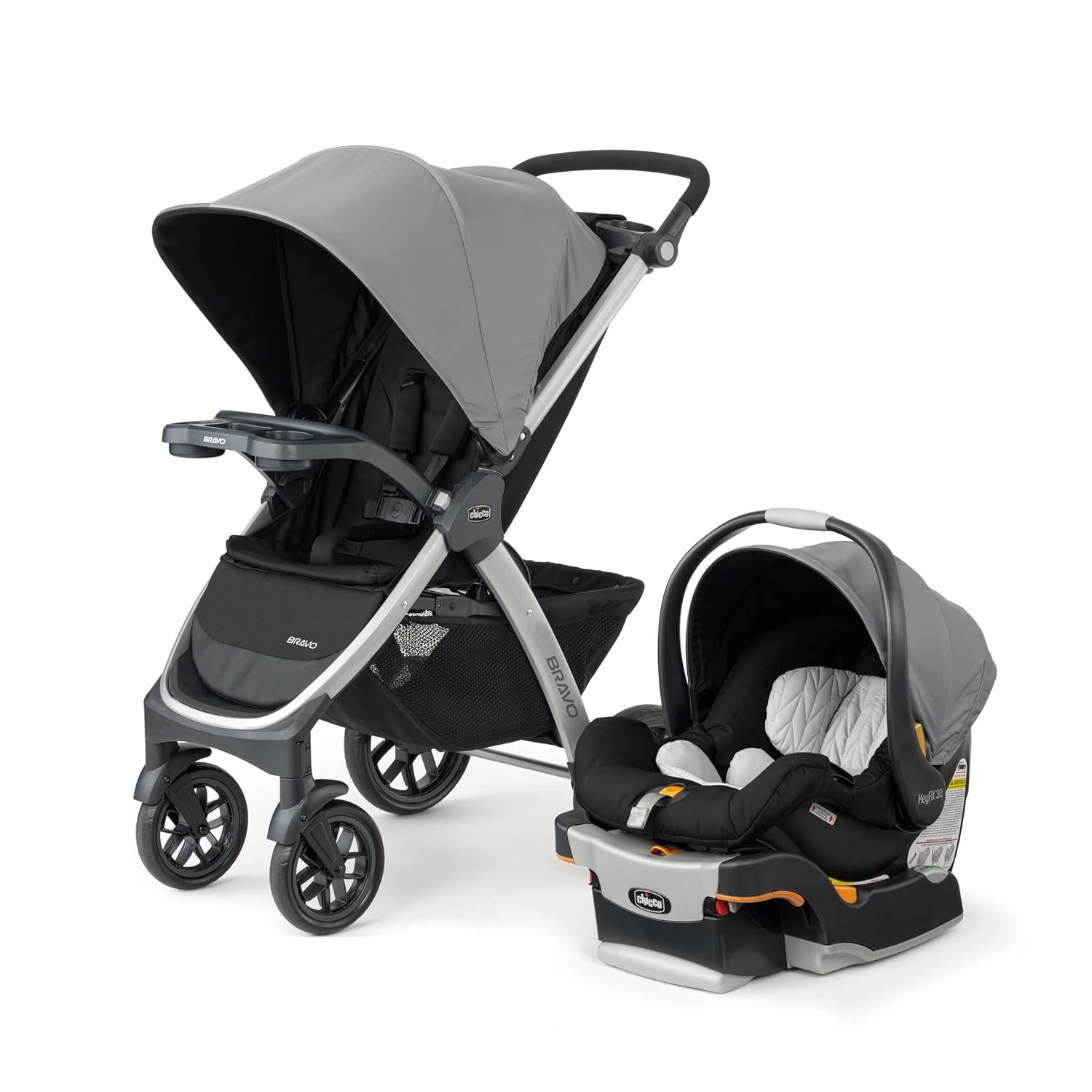 Chicco Bravo 3-in-1 Trio |
|
| ~$359.99 | Check price |
| Best Modular |  Graco Modes Nest |
|
| $479.99 | Check price |
| Best Expandable | 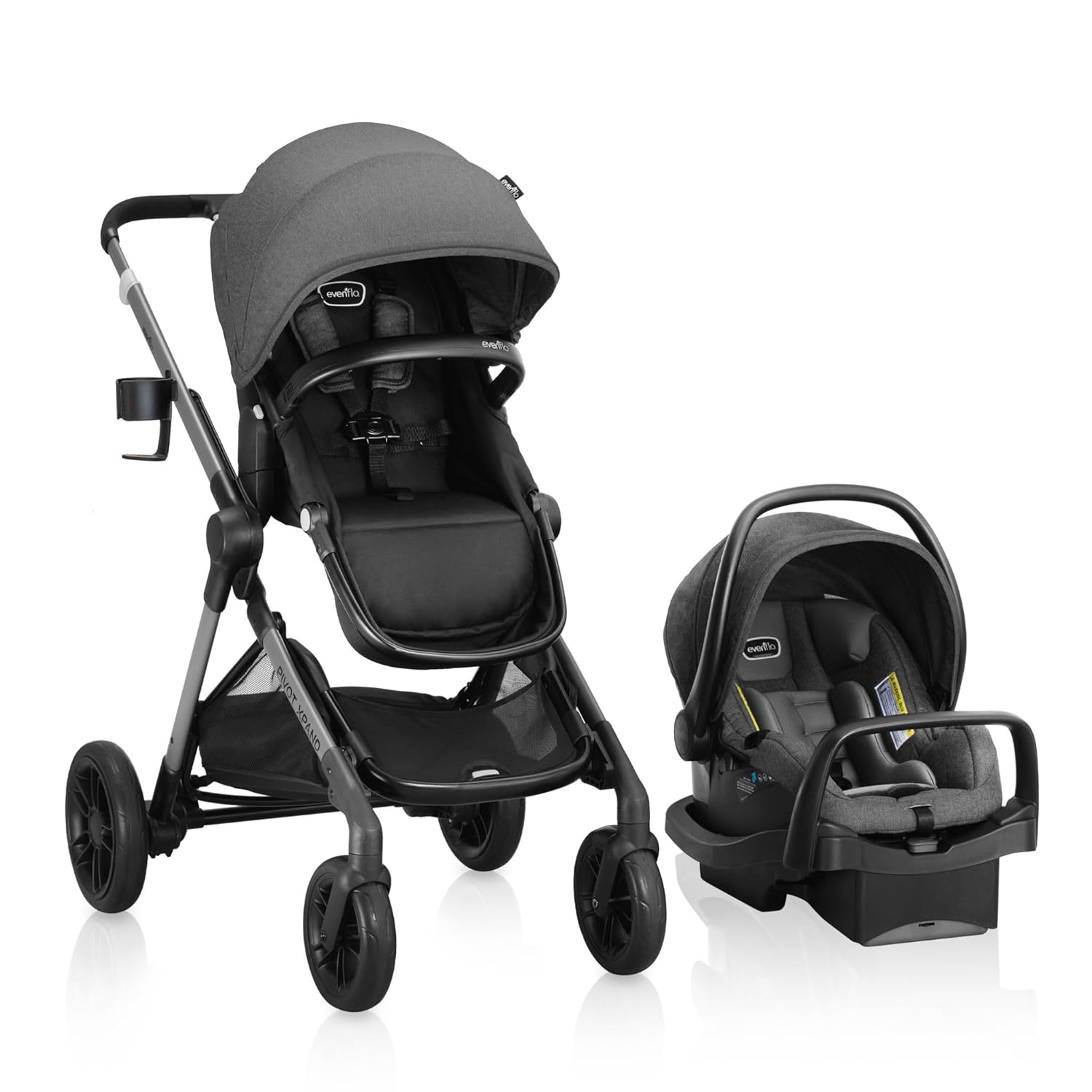 Evenflo Pivot Xpand |
|
| ~$499.99 | Check price |
Chicco Bravo 3-in-1 Trio
Graco Modes Nest
Evenflo Pivot Xpand
Chicco Bravo 3-in-1 Trio — full breakdown
The Chicco Bravo has been a widely recommended travel system for over a decade — and it earned the spot. Everything about this car seat stroller combo is designed around reducing installation error, which is the single biggest safety issue with infant car seats. The KeyFit 30’s SuperCinch LATCH tightener uses a 3:1 mechanical advantage, meaning you can achieve a rock-solid install with one firm pull instead of the whole-body wrestling match that cheaper seats demand. Owner feedback and NHTSA Ease of Use ratings consistently rank the KeyFit 30 among the easiest infant seats to install correctly.
The Bravo stroller itself is nothing flashy, and that’s the point. It folds one-handed in about 4 seconds, stands on its own when folded (no awkward lean against a wall), and the removable toddler seat converts it into a lightweight car seat carrier for quick errands. The UPF 50+ canopy has a peek-a-boo mesh window, the child tray has two cup holders, and the storage basket is the right size — not the biggest, but easily accessible from both ends. Where this car seat stroller combo falls short of competitors is the seat’s weight range: 30 lbs / 30 inches on the KeyFit 30, versus 35 lbs / 32 inches on the KeyFit 35. Most babies graduate to a convertible seat around 9–12 months regardless, so this is rarely a real-world limit — but if you want the longest infant-seat life, the Bravo LE with KeyFit 35 Zip ($100 more) addresses it.
For a first-time parent with one baby, no plans for a second within two years, and a standard midsize car, the Chicco Bravo Trio is the right choice. Simple. Safe. Proven.
Graco Modes Nest — full breakdown
The Graco Modes Nest is the car seat stroller combo for parents who want options. The Slide2Me adjustable seat moves up and down along the frame, giving you three height positions: lowest for a pramette-style face-to-parent bonding setup with a newborn, middle for standard face-to-parent, and highest for eye-level world-viewing as baby develops visual tracking. Raising the seat to eye level once a baby starts tracking faces and objects around 4 months is a genuinely useful feature — and none of the other combos in this guide offer it.
The SnugRide DLX infant car seat is solid, though not quite as foolproof to install as the Chicco KeyFit 30. Graco’s InRight LATCH uses one-second attachment clicks, but achieving proper tension still requires a firm knee-in-the-base push for most vehicles. Once installed correctly (owners often report a second attempt is needed to get the tension right), the seat is safe, comfortable, and clicks reliably into the stroller or base. The base has a multi-position recline adjuster that works well across vehicle seat angles — important for compact cars with reclined rear seats.
Where the Modes Nest shines is long-term use. The reversible toddler seat, the extra-large storage basket (fits a full diaper bag easily), and the stylish leatherette handle all feel more premium than the Bravo’s utilitarian design. At $120 more than the Chicco, it’s the car seat stroller combo for parents who want versatility and aesthetics alongside safety.
Evenflo Pivot Xpand — full breakdown
The Evenflo Pivot Xpand solves a problem most car seat stroller combos ignore: what happens when the second baby arrives. Most travel systems force you to buy an entirely new double stroller around baby #2, usually at $400–$600 for the stroller alone. The Pivot Xpand adds a second seat for about $170 when the time comes, turning your single travel system into a full side-by-side double stroller without replacing the frame or wheels. For families planning two kids under three years apart, the lifetime cost is substantially lower than buying two separate systems.
The LiteMax infant car seat uses an anti-rebound bar — a stiff arch at the foot of the base that limits the seat’s rotation during a frontal crash. This is a feature typically found on premium seats ($300+), and getting it at this price point in a complete car seat stroller combo is the Pivot Xpand’s real value. The Stability Base has a bubble level indicator and auto-adjusting recline, which owners report makes reaching a correct installation straightforward.
The tradeoff is bulk and complexity. The Pivot Xpand is the heaviest and largest-folded of our three picks — if you drive a compact car with a small trunk, measure before buying. The stroller also has six modes of use, which sounds great but means the first-time setup takes longer than the Bravo’s straightforward travel-system configuration. Once you’re set up, daily use is smooth; the learning curve is the entry cost.
How to choose the best car seat stroller combo for your family
Match the car seat to your vehicle, not just the stroller
Before buying any car seat stroller combo, measure your rear seat depth and check the car seat’s installation footprint. Compact cars (Honda Civic, Toyota Corolla) can struggle with larger infant bases like the SnugRide DLX. The NHTSA car seat installation inspection tool helps find local CPSTs who can verify fit before you commit.
Plan for the switch to a convertible car seat
Infant-only seats max out around 9–12 months for most babies. Once your baby hits the weight or height limit, you’ll need a convertible car seat that stays in the car. The stroller frame from any of these car seat stroller combos becomes a standalone toddler stroller at that point — all three work fine as solo strollers once the infant seat is removed.
Test the fold in your actual trunk
A “compact fold” in the product description doesn’t always mean it fits YOUR car’s trunk alongside a diaper bag, groceries, and a spare tire. If possible, test the fold at a retail store before buying, or buy from a retailer with free returns in case it doesn’t fit. Of our three picks, the Chicco Bravo has the smallest folded footprint; the Evenflo Pivot Xpand is the largest.
Register for recall alerts
Car seats and strollers are among the most-recalled product categories. Register your car seat stroller combo at the manufacturer’s website within the first week of purchase — it’s the only reliable way to be notified of a safety recall. You can also check CPSC’s recall database before purchasing used gear, since second-hand travel systems may have unrepaired recalls. We also keep a recall radar for strollers and car-seat gear that summarizes recent CPSC notices in plain English.
Never buy a used car seat from a stranger
The AAP explicitly warns against buying used car seats from strangers because you cannot verify the crash history. A car seat that’s been in any accident — even a minor one — must be replaced, but sellers don’t always disclose this. New is the only safe option for any car seat stroller combo, even if it costs more upfront.
Best car seat stroller combos: frequently asked questions
Not inherently safer, but often easier. A car seat stroller combo is engineered so the car seat clicks directly into the stroller without adapters — meaning no adapter-related compatibility issues, no improperly seated car seat on the stroller, and no guesswork about which accessories fit. Safety depends on correct installation of the car seat in the vehicle, which is identical whether you buy bundled or separate. The real advantage of a car seat stroller combo is convenience and guaranteed compatibility, not inherently higher crash protection.
Upgrade when your baby exceeds either the weight or height limit of the infant car seat, whichever comes first. For the KeyFit 30, that’s 30 lbs or 30 inches. For the SnugRide DLX and Evenflo LiteMax, it’s 35 lbs or 32 inches. Most babies outgrow infant car seats by height before weight — usually around 9–12 months. Once that happens, switch to a convertible car seat and keep using the stroller frame as a toddler stroller. The stroller portion of every car seat stroller combo we recommend converts to a standalone toddler stroller without the infant seat.
Yes — that’s the point. All three of our picks accept a newborn in the infant car seat starting at 4 lbs, which covers virtually every full-term baby. The infant car seat clicks directly into the stroller, creating a travel-system configuration where baby rides in the car seat (the safest position for newborns who can’t yet sit up unassisted). The AAP recommends rear-facing infant car seats from birth for as long as possible, until they reach the highest height or weight allowed by their seat — often well past age 2.
Both work when installed correctly. The base is usually faster for daily use — you install the base once and click the seat in/out as needed. The vehicle-belt method (no base) is better for taxis, rideshares, and travel. All three car seat stroller combos we recommend include a base AND allow baseless vehicle-belt installation. Chicco’s European Belt Path routing is the most intuitive for baseless install; Graco’s is slightly more fiddly. Practice at least once before you need it in a real rideshare.
Most infant car seats expire 6 years after the manufacture date (printed on the base and on the seat shell). Plastic degrades over time, harness materials weaken, and safety standards evolve — the expiration isn’t arbitrary. Never use a car seat past its expiration date, even if it looks fine. This is also why used car seats from strangers are risky: you can’t verify age or crash history. If you buy a new car seat stroller combo, you’ll have 6 years of use before expiration — plenty for one baby.
Nothing — the terms are used interchangeably by manufacturers and retailers. Both mean a stroller and compatible infant car seat sold together as a bundle, with adapter-free click-in attachment. “Travel system” is the older industry term; “car seat stroller combo” is the more search-friendly modern phrasing. Same product category either way.
Only if an adapter exists for that specific pairing. The KeyFit 30 (Chicco) has adapters available for many UPPAbaby, Baby Jogger, Bugaboo, and Mockingbird strollers. The SnugRide DLX (Graco) has adapters for fewer non-Graco strollers — Graco’s ecosystem is large but brand-specific. The LiteMax (Evenflo) has the most limited adapter availability. If you anticipate switching strollers down the road, check adapter availability before buying. Our universal adapter compatibility guide covers this in detail.
Our #1 pick: Chicco Bravo 3-in-1 Trio
KeyFit 30 car seat with SuperCinch LATCH, adapter-free stroller attachment, one-hand fold. The default safe choice.
Safety disclaimer: Every car seat stroller combo must be installed according to the manufacturer’s instructions and applicable state laws. Per NHTSA car seat guidance, approximately 46% of car seats are installed incorrectly — schedule a free inspection with a certified CPST before first use. Check the CPSC recall database before purchasing any baby gear, and register your product with the manufacturer to receive recall notifications.
Prices: Reflect typical Amazon pricing as of April 2026 and may vary.
- Durbin DR, Hoffman BD; American Academy of Pediatrics Council on Injury, Violence, and Poison Prevention. Child Passenger Safety. Pediatrics. 2018;142(5):e20182460. Infants should ride rear-facing from birth until they reach the highest weight or height allowed by their car seat, rather than to a fixed age.
- National Highway Traffic Safety Administration. National Child Restraint Use Special Study. Traffic Safety Facts Research Note. Washington, DC: U.S. Department of Transportation; June 2015. Report No. DOT HS 812 157. Overall child-restraint misuse was estimated at 46%, including 49% of rear-facing infant seats.
- National Highway Traffic Safety Administration. Federal Motor Vehicle Safety Standard No. 213, Child Restraint Systems. 49 CFR 571.213. All infant car seats sold in the United States must be certified to this mandatory federal crash-performance standard.