
Travel vs full-size stroller: which do you actually need?
The travel vs full-size stroller question isn’t about which is “better.” It’s about where you live, how you move through your day, and whether you fly more than twice a year. A travel stroller weighs under 15 lbs, folds to fit in an overhead bin, and gets you through TSA without a meltdown. A full-size stroller absorbs every sidewalk crack, carries 25 lbs of groceries under the seat, and keeps your toddler asleep on a 3-hour zoo trip. This stroller comparison weighs both categories on fold size, weight, and ride quality, cross-referencing Consumer Reports’ 2026 stroller ratings and BabyGearLab’s travel stroller testing, to help you decide — and recommends the best pick in each category.
Our top pick in each category
Best premium travel stroller for flights, best full-size daily driver for all-terrain use, and the most affordable lightweight under $80.
Check price on Amazon $399.99
The quick decision framework
Choose travel if: you fly 2+ times a year, live in an apartment, rely on transit/rideshare, or need a compact-trunk stroller.
Choose full-size if: you walk 30+ minutes daily, navigate parks and uneven sidewalks, need under-seat storage, or want all-day comfort at zoos and theme parks.
Consider both if: you travel often AND do long daily walks. Per AAP stroller safety guidelines, the best stroller is the one that fits your routine.
How we evaluated the travel vs full-size stroller question
Portability. Weight, folded dimensions, one-hand fold, and whether it fits in an airline overhead bin (IATA: 22″×18″×10″). This is where the gap between categories is widest.
Ride quality over distance. We compared published wheel size, tire type and suspension design, then cross-referenced Consumer Reports’ and BabyGearLab’s ride-quality ratings for vibration, tracking and comfort.
Storage capacity. Published basket capacity, and whether the basket is designed for front-and-rear access rather than only from behind the seat.
Daily-use ergonomics. Handlebar adjustability, recline positions, canopy coverage, harness ease.
Transition speed. Published fold mechanism and folded dimensions — one-hand versus two-hand fold, and whether the folded frame stands on its own. Travel strollers are typically specified under 5 seconds; full-size, over 10.
Travel vs full-size stroller: comparison
| Pick | Product | Key strengths | Watch-outs | Price | Where to buy |
|---|---|---|---|---|---|
| Best Travel |  Joolz Aer2 |
|
| $549.00 | Check price $549.00 |
| Best Full-Size | 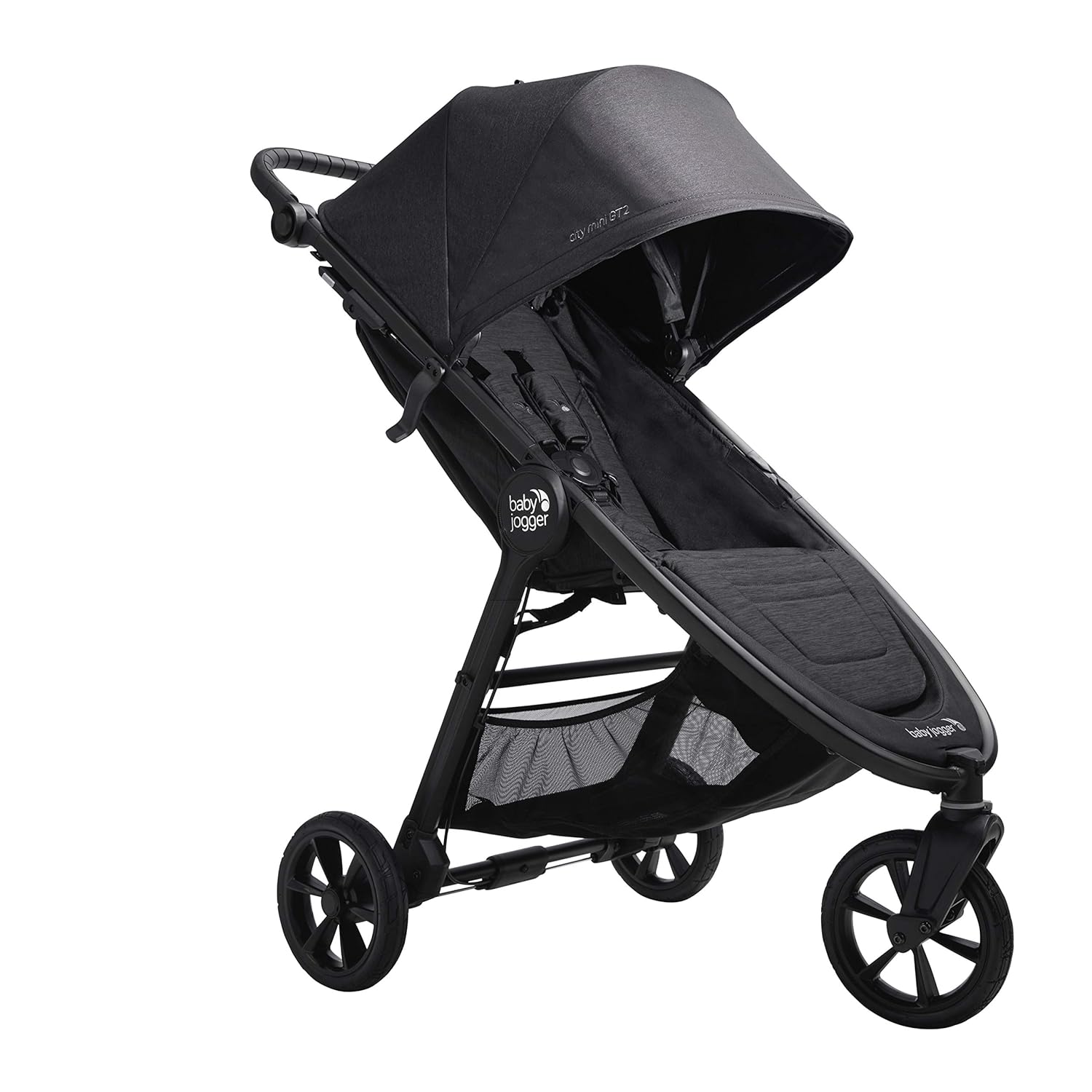 Baby Jogger City Mini GT2 |
|
| $399.99 | Check price $399.99 |
| Budget Travel |  Ingenuity 3Dlite |
|
| $109.99 | Check price $109.99 |
Joolz Aer2
Check price on Amazon $549.00
Baby Jogger City Mini GT2
Check price on Amazon $399.99
Ingenuity 3Dlite
Check price on Amazon $109.99
Why a travel stroller wins the debate for flying families
If you fly with your child more than once or twice a year, a dedicated travel stroller makes air travel survivable. The Joolz Aer2 is the benchmark. Its fold takes under 2 seconds one-handed, fits within IATA carry-on dimensions, and weighs ~13 pounds. Fathercraft’s 2026 team — who tested across six airports and five road trips — called it the best travel stroller fold they’d ever tested.
Overhead-bin compatibility separates the Joolz from most travel strollers. Gate-checking means your stroller goes into the cargo hold and gets thrown around with luggage. Overhead-bin stowage means it stays with you, arrives intact, and is ready when you deplane. The reclining seat with adjustable leg rest also lets your child nap during layovers — something ultra-budget lightweights can’t do.
The trade-off: the Joolz is a poor substitute for a full-size stroller on all-day outings. The basket barely fits a small purse. Ride quality over uneven surfaces can’t match the Baby Jogger GT2. And $549 is premium for a stroller you might only use on travel days. For the specific job of airports, Ubers, and short destination walks — nothing matched it.
Check price on Amazon → $549.00
Why a full-size stroller wins the debate for daily use
If your stroller leaves the house 5+ days a week, a full-size stroller makes those outings comfortable instead of endured. The Baby Jogger City Mini GT2 is the daily-driver benchmark. All-wheel suspension and forever-air tires absorb every sidewalk crack and park trail root that makes travel strollers rattle.
The storage basket is the underappreciated hero. A full diaper bag, packed lunch, and jacket fit underneath — accessible from front and rear without removing the child. Combined with an adjustable handlebar, hand brake, and a one-hand fold that’s fast for a full-size stroller, the City Mini GT2 does everything except fit in an overhead bin.
For families who also use a jogging stroller or a modular double, the City Mini GT2 serves as the compact single-child option. If you own only one stroller, this is the one most families should buy — then add a travel stroller when flying becomes frequent.
Check price on Amazon → $399.99
Best budget lightweight stroller for travel and light daily use
The Ingenuity 3Dlite debate on math: at $109.99, it costs less than a single airline baggage fee on some international flights. That makes it the default for families who need a second stroller for grandma’s house, an airport backup, or rideshare use when you don’t want to risk your primary stroller.
At 14 pounds with an aluminum frame, it’s genuinely light — comparable to the Joolz at a seventh of the price. The auto-lock fold keeps it contained, and the 4-position recline lets your child nap during layovers. Anti-shock front wheels provide marginal improvement over fixed wheels but can’t compete with real suspension.
Where it falls short: not overhead-bin compatible, minimal canopy, and a storage basket that’s “extra large for a lightweight” but still far smaller than any full-size. For families choosing on a tight budget, the 3Dlite does much of what both categories promise at a fraction of the Joolz’s cost.
Check price on Amazon → $109.99
Travel vs full-size stroller: key differences
Weight Biggest gap
Travel: 10–15 lbs. Full-size: 20–30 lbs. A 10–15 lb difference matters when carrying a stroller up stairs, through security, or from a parking lot with a child in the other arm. The single biggest factor in the decision. And on days when even 13 lbs is too much to haul, babywearing wins — our ring sling vs structured carrier comparison covers the no-stroller option.
Fold size Travel-critical
Overhead-bin strollers fold to ~22″×18″×10″. Full-size folds are 2–3x that volume. If you fly regularly, fold size determines whether your stroller stays with you or goes to cargo.
Suspension Daily-use-critical
Full-size strollers have all-wheel or rear suspension that absorbs cracks and curbs. Travel strollers usually have none. On a 2-mile walk, this is the gap between a sleeping child and a crying one.
Storage basket Daily-use-critical
Full-size: 20–30 lbs of cargo underneath. Travel: barely a small purse. If your routine involves errands or carrying a diaper bag + jacket + snacks, the basket alone can decide the question.
Forever-air vs. rubber wheels Maintenance
Forever-air tires (Baby Jogger GT2) are puncture-proof rubber that mimics pneumatic feel. Standard rubber wheels (travel strollers) are smaller and harder. Air-filled tires (jogging strollers) provide the best ride but need inflation.
Car seat compatibility Newborns
Both categories offer car seat adapters for using an infant car seat on the frame. The Joolz Aer2 and Baby Jogger GT2 accept adapters. The Ingenuity 3Dlite does not.
How to decide: travel vs full-size stroller
Start with your most frequent use case
If you walk daily but fly yearly, you need a full-size. If you fly monthly and use rideshare, you need a travel stroller. Match the stroller to what you do most, not occasionally.
Measure your trunk before buying full-size
Full-size strollers vary in folded dimensions. The City Mini GT2 fits most midsize sedan trunks, but larger full-size options and modular doubles may require an SUV.
Buy full-size first, travel second
You’ll use a full-size stroller daily from day one. You won’t need a travel stroller until your first flight. The 3Dlite at $109.99 makes owning both accessible.
Check airline overhead policies before assuming fit
IATA limits are 22″×18″×10″, but airlines enforce differently. The Joolz Aer2 fits on most major carriers, but budget airlines may require gate-checking regardless.
Gate-checking is free but risky
All major U.S. airlines allow free gate-checking. But gate-checked strollers go to cargo and can be damaged. A $30–$50 travel bag protects your investment, or choose an overhead-bin stroller to avoid the risk.
FAQ about choosing a travel vs full-size stroller
For light daily use (short walks, errands, indoor spaces): yes. For heavy daily use (long walks, parks, all-day outings): no. Travel strollers lack the suspension, storage, and ride comfort for 2+ hours of continuous use. This decision often ends with “both.”
If you fly 3+ times per year: yes. Overhead-bin fold, sub-2-second collapse, and reclining seat save stress on every flight. If you fly once a year or less: the 3Dlite handles gate-checking perfectly. The roughly $470 difference buys overhead-bin convenience — meaningful for frequent flyers, overkill for occasional travelers.
Yes — all major U.S. airlines allow free gate-checking of any stroller. Only ultra-compact strollers meeting IATA limits (like the Joolz Aer2) can go in the overhead bin. Gate-checked strollers go to cargo and are returned at the destination gate or baggage claim.
It’s the best full-size for families who want some travel flexibility. At ~22 lbs with a one-hand fold, it’s lighter than most full-size options and gate-checks easily. But it won’t fit in an overhead bin. For 1–2 flights per year, the GT2 alone may be enough. For frequent flying, pair it with a dedicated travel stroller.
From birth, if the stroller fully reclines or accepts a bassinet or infant car seat adapter. The Baby Jogger GT2 reclines nearly flat and accepts adapters. The Joolz Aer2 accepts adapters. The 3Dlite does NOT recline flat and lacks car seat compatibility — best for 6 months+.
Full-size first. You’ll use it daily from day one. Add a travel stroller before your first flight. The 3Dlite at $109.99 makes the two-stroller approach accessible — it’s not ideal for either role but functional for both and cheap enough to upgrade later.
Need a travel stroller? Joolz Aer2. Need a daily driver? Baby Jogger City Mini GT2.
Two different strollers for two different jobs. Most families eventually own both. Registering for just one to start? Our baby registry starter kit takes the one-per-category approach, so you can add the specialist later.
Joolz Aer2 on Amazon → $549.00
Safety disclaimer: Always follow your stroller’s manual for age, weight, and safety requirements. Per AAP stroller safety guidelines, always use the five-point harness and parking brake. Check CPSC’s recall database before purchasing.
Prices: Reflect typical Amazon pricing as of April 2026 and may vary.