
Hospital Bag Checklist for 2026: What Nurses Actually See Used
Most hospital bag checklist articles start with everything you could bring and leave you dragging two roller bags into a room the size of a walk-in closet. As a registered nurse, I’ve watched hundreds of families unpack at the bedside, and the pattern is consistent: what gets used fits in one bag, and half of what people bring never leaves it. Hospitals stock far more than first-time parents expect — mesh underwear, pads, peri bottles, diapers, wipes, swaddle blankets — so the smart move is packing what the hospital can’t give you: your comfort, clothes that fit a postpartum body, and the going-home items for the baby.
This checklist is organized the way your stay actually unfolds — labor and delivery, recovery, baby, and partner — with the products worth buying linked inline, plus a full section on what to deliberately skip because the hospital provides it. The whole linked list runs about $650, and every item carries over into the first months at home. If you’re building your everyday carry too, pair this with our diaper bag checklist, and if you plan to breastfeed, see our guides to the best nursing pillows and best wearable breast pumps.
The three hospital bag items worth buying before anything else
If you buy nothing else on this hospital bag checklist, buy these: the bag that organizes everything and becomes your daily diaper bag afterward, the nursing-friendly sleep set you’ll live in for the whole stay, and the bra you’ll wear around the clock whether you breastfeed or not.
Check price on Amazon $199.98
Check price on Amazon $128.00
Check price on Amazon $52.89
Shortcut: add this whole checklist to a baby registry
Every product on this page can go straight onto an Amazon Baby Registry — friends and family buy the hospital bag for you at the shower, and anything left over qualifies for the registry completion discount before your due date. Create the registry first, add items as you read, and buy whatever’s still unpurchased at 35 weeks. Perks like the welcome box and discount percentage change periodically, so check the registry page for current terms. Building the registry from scratch? Our complete RN baby registry checklist covers every category beyond what’s on this page.
The three core buys, side by side
| Pick | Product | Key strengths | Watch-outs | Price | Where to buy |
|---|---|---|---|---|---|
| The Bag Itself |  Itzy Ritzy Boss Plus Diaper Bag Backpack |
|
| $199.98 | Check price $199.98 |
| Comfort MVP |  HATCH Collection Maternity & Nursing Jumpsuit |
|
| $128.00 | Check price $128.00 |
| Round-the-Clock Wear |  Kindred Bravely Sublime Simply Nursing Bra |
|
| $52.89 | Check price $52.89 |
Itzy Ritzy Boss Plus Diaper Bag Backpack
Check price on Amazon $199.98
HATCH Collection Maternity & Nursing Jumpsuit
Check price on Amazon $128.00
Kindred Bravely Sublime Simply Nursing Bra
Check price on Amazon $52.89
What to pack for labor (spoiler: almost nothing product-wise)
Labor is the stage people over-pack for and use the least. The hospital supplies the gown, the bed, and every clinical item. What actually gets used from the bag is paperwork, electronics, and small comforts:
- Photo ID, insurance card, and your birth-preferences sheet — registration wants these first. Keep them in the top zip pocket of the Itzy Ritzy Boss Plus $199.98 so nobody’s excavating during contractions.
- Phone + a 10-foot charging cable — outlets are always behind the bed. The long cable is the most-borrowed item on any L&D unit.
- Lip balm and hair ties — labor breathing dries lips out fast.
- Your own travel-size toiletries — hospital soap is institutional.
- Glasses if you wear contacts — long labors and lenses don’t mix.
That’s genuinely it for stage 1. Everything else people pack “for labor” mostly serves the partner — covered in stage 4.
Recovery is where the bag earns its keep
The 24–72 hours after delivery are the real reason to pack deliberately. The hospital covers the clinical basics (see the skip-list below); the comfort tier is on you:
- HATCH Collection Maternity & Nursing Jumpsuit $128.00 (about $128) — change into it once the initial post-delivery cleanup is done. Dark colors are deliberate.
- Kindred Bravely Sublime Simply Nursing Bra $52.89 (about $53) — on from day one, slept in.
-
 $21.97✓ In Stock
Nipple tenderness peaks in the first days of latching, exactly when you’re in the building. Your own tube means no waiting on a supply run.
Check price on Amazon $21.97
-
 $194.85✓ In Stock
The all-in-one option: upgraded peri bottle, disposable underwear, ice-pack pads, witch hazel liners and more in one box. The “I don’t want to think about this” purchase, and genuinely well designed.
Check price on Amazon $194.85
-
Or build the recovery kit yourself for about $32: the Frida Mom Upside Down Peri Bottle $13.99 ($13.99) with its angled neck is a real upgrade over the straight hospital bottle, plus Tucks Medicated Cooling Pads $7.68 ($7.68) and Frida Mom Witch Hazel Perineal Cooling Pad Liners $10.31 ($9.99) layered on the pad for perineal comfort.
-
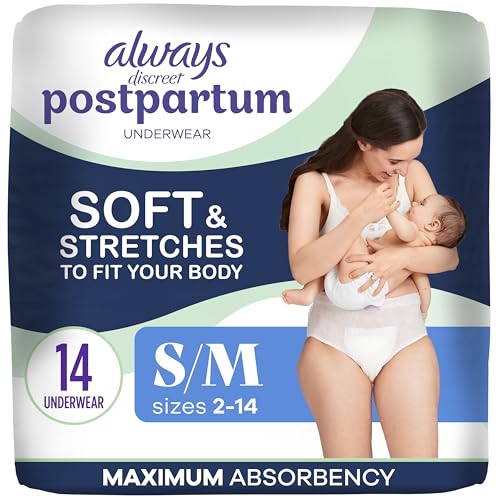 $13.84✓ In Stock
The hospital’s mesh underwear covers the stay; these are for the ride home and the first week.
Check price on Amazon $13.84
- Going-home outfit for you — plan for roughly your 6-month-pregnant size. That’s physiology, not pessimism: the uterus takes weeks to involute.


An RN note on warning signs: comfort products manage normal recovery. Soaking a pad in an hour, clots larger than an egg, severe headache with vision changes, or fever of 100.4°F or higher are not normal — call your nurse in-house, or your OB provider after discharge, immediately.
The baby needs less than you think — until discharge day
During the stay, the hospital supplies nearly everything the baby touches: diapers, wipes, swaddle blankets, hats, and formula if needed. Your packing job is the going-home kit:
-
 $34.95✓ In Stock
The going-home sleep layer, and the same wearable-blanket approach the AAP’s safe sleep guidance favors over loose blankets. Many mother-baby units use HALO in-house, so the transition home is seamless. Stop swaddling arms-in at the first signs of rolling.
Check price on Amazon $34.95
- Two going-home outfits in two sizes — one newborn, one 0–3 months. You won’t know which fits until the baby is on the scale. Front-zip footies beat anything with snaps.
-
 $13.19✓ In Stock
The attached plush keeps the pacifier findable and off the hospital floor. Safety note: because of the attached animal, a WubbaNub is for supervised, awake use only — for sleep, the AAP supports a plain pacifier with nothing attached, once feeding is established.
Check price on Amazon $13.19
-
 $26.99✓ In Stock
A nursing cover for a room with rotating visitors, then a car-seat canopy for the walk to the parking garage. Use it as a canopy over the carrier handle with airflow, never draped against the baby’s face, and remove it once the seat is in the car.
Check price on Amazon $26.99
- Installed infant car seat — not in the bag, but the hospital can’t discharge the baby without it. Install the base by 36 weeks and have it checked (many fire stations and hospitals offer CPST checks). No aftermarket inserts, no puffy coats under the harness, per AAP car seat guidance.
The partner bag: small, boring, essential
Partners consistently under-pack for themselves and over-pack for everyone else. The job is staying functional through a possible 72-hour stay on a fold-out chair. One small bag:
- Two changes of clothes and basic toiletries — L&D rooms run warm; layers beat one heavy sweatshirt.
- Snacks and cash/card for vending machines — the cafeteria closes; labor doesn’t. Protein, not just candy.
- Their own long charging cable — do not plan to share yours.
- Any daily medications — the hospital pharmacy cannot dispense to visitors.
- A pillow from home with a colored pillowcase — white cases get absorbed into hospital linen.
- The agreed-on list of who to text, and when — decide together before labor. This prevents the classic delivery-room argument.
If the partner is the designated bag-carrier, the backpack straps on the Boss Plus $199.98 pay off — bag on the back, car seat in one hand, discharge paperwork in the other.
What the hospital provides — 6 things an RN says to skip packing
Mesh underwear and heavy-flow pads
Every postpartum unit stocks these in quantity, and the mesh underwear is genuinely good at its job — stretchy, disposable, holds an ice pack. Use the hospital’s supply for the whole stay and ask your nurse for extras before discharge; opened packages in your room are typically discarded after you leave anyway. Your packed Always Discreet pairs $13.84 are for home.
A basic peri bottle
You will be handed one — it’s standard postpartum stock. The only reason to pack your own is the upgrade argument: the Frida Mom angled-neck bottle $13.99 aims where the straight hospital bottle can’t, which matters more at home when nobody’s helping.
Diapers, wipes, and newborn hats
The nursery cart is stocked with newborn diapers, wipes, and the classic striped hat. You do not need to bring a single diaper to the hospital. Take the opened packs home, then start your own supply.
Swaddle blankets for the stay
Hospital receiving blankets are unlimited, and the nurses will teach you their swaddle with them. Your packed HALO SleepSack Swaddle $34.95 is for discharge day and home — a wearable blanket you can’t over-tighten or kick loose.
Pain medication and stool softeners
Ibuprofen, acetaminophen, and stool softeners are dispensed on the unit per your provider’s orders — don’t bring your own bottles, and don’t take your own meds during the stay without telling your nurse; it genuinely matters for dosing and interactions. Do fill discharge prescriptions at the hospital pharmacy before you leave, so nobody’s making a pharmacy run with a two-day-old in the car.
Formula, bottles, and nipples for the stay
If you’re formula feeding or supplementing, the hospital provides ready-to-feed bottles and nipples for the duration; your home feeding setup stays home. The one feeding item that earns bag space is the lanolin $21.97, because nipple comfort is on you, not the supply cart.
Hospital bag checklist: frequently asked questions
Have the bag packed and staged by the door at 35–36 weeks. About one in ten US births is preterm, and the last thing you want during unexpected early labor is a scavenger hunt. If you’re carrying multiples or have a higher-risk pregnancy, your provider may suggest being ready earlier — ask at your 32-week visit. Order anything you’re buying by week 33 so shipping is never the constraint.
US postpartum units routinely provide mesh underwear, heavy-flow pads, ice packs, a basic peri bottle, gowns, newborn diapers, wipes, swaddle blankets, hats, and formula with bottles if needed — plus all medications, dispensed per your provider’s orders. That’s roughly half of what generic checklists tell you to pack. Pack for comfort and the trip home, and ask your nurse which opened supplies you can take at discharge.
Two, in two sizes: one newborn and one 0–3 months. Birth weight predictions are estimates, and you won’t know which fits until the baby arrives. The hospital dresses the baby in its own shirts and swaddles during the stay, so your outfits are really for photos and the drive home. Choose front-zip footies — you’ll be dressing a floppy newborn, likely for the first time.
Both are legitimate. The full kit (about $190) bundles the upgraded peri bottle, disposable underwear, ice-pack pads, and witch hazel liners in one box — the convenience play. Building it yourself with the Frida peri bottle, Tucks pads, and Frida witch hazel liners runs about $32, with the hospital’s free mesh underwear and pads filling the gaps. If someone else is buying off your registry, add the kit; if you’re buying, the DIY version is the value move.
Two changes of clothes, toiletries, their own daily medications (hospital pharmacies can’t dispense to visitors), a long phone cable, snacks with protein, cash or card for vending machines, and a pillow from home with a colored pillowcase. Pack for a possible 72-hour stay on a fold-out chair. The most common partner mistake is bringing entertainment and forgetting food — labor units at 3 a.m. are a food desert.
Yes — and you probably should. The diaper bag, nursing pajamas, nursing bra, recovery kit, swaddle, and pacifier are all in the sweet spot of gifts people actually want to buy. Add them to an Amazon Baby Registry early, and whatever isn’t gifted by 35 weeks, buy yourself with the registry completion discount. The bag needs to be packed before the shower thank-you notes are written, so don’t wait past week 33 to close the gaps.
Start with the bag: Itzy Ritzy Boss Plus
Every hospital bag checklist lives or dies on whether you can find things one-handed at 3 a.m. — and the 19-pocket Boss Plus is the difference between packing by stage and packing by pile. Buy it first, pack it by 35 weeks using the stage lists above, and let the hospital’s supply cart cover the skip list. Or put the whole list on an Amazon Baby Registry and let the shower do the packing for you.
Check price on Amazon → $199.98
Medical disclaimer: Not medical advice. Follow your OB provider’s and your hospital’s specific guidance, which overrides any general checklist. Postpartum warning signs (soaking a pad in an hour, clots larger than an egg, fever of 100.4°F or higher, severe headache, vision changes, chest pain, or trouble breathing) require immediate medical attention. Infant safe sleep and car seat guidance referenced here follows the American Academy of Pediatrics; see HealthyChildren.org (AAP) for current recommendations.
Prices: Reflect typical Amazon pricing as of July 2026 and may vary. Hospital-provided supplies vary by facility — the skip-list reflects common US postpartum unit stocking, but confirm specifics at your delivery hospital’s pre-admission tour or childbirth class.
- Wagner CL. Counseling the Breastfeeding Mother. Medscape Drugs & Diseases (eMedicine); updated Jan 19, 2024. Breastfeeding is the criterion standard for infant feeding; correct latch and proper flange/positioning are central to comfortable, effective milk transfer.
- Lim KH. Preeclampsia. Medscape Drugs & Diseases (eMedicine); updated Mar 14, 2025. Preeclampsia is a hypertensive disorder of pregnancy that can present or persist after delivery (postpartum preeclampsia), requiring prompt recognition.
- Burnett LB. Sudden Infant Death Syndrome (SIDS). Medscape Drugs & Diseases (eMedicine); updated Mar 10, 2026. SIDS (now grouped under Sudden Unexpected Infant Death) is a leading cause of death at 1-12 months, peaking at 1-3 months; a bare, separate back-sleep surface and avoiding soft bedding and overheating are central to risk reduction.